WASHINGTON — The board of the John F. Kennedy Center for the Performing Arts voted 20-3 on Thursday to close its main building for up to two years and permanently inscribe the president’s name on its marble facade, a decision the three dissenting Democratic members immediately characterized as a deliberate effort to work around a federal judge’s prior ruling blocking those same actions.
Commerce Secretary Howard Lutnick, the architect of the renaming proposal, brought two designations before the board. The building would be called “The John F. Kennedy Center for the Performing Arts Restored and Renovated by President Donald J. Trump.” The outdoor plaza would become “President Donald J. Trump Plaza.” The board, filled predominantly with Trump appointees who have given the administration effective institutional control since 2025, approved both by the same margin.
Trump, who holds the position of board chairman, briefly joined the virtual meeting as the vote took place.
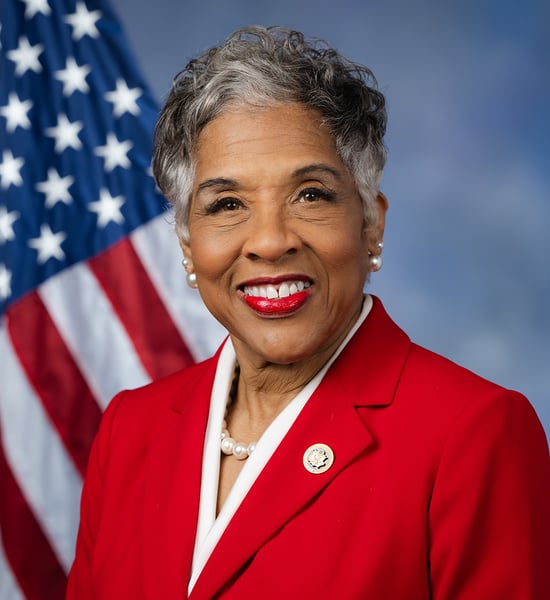
The three who voted against, Representative Joyce Beatty of Ohio, Senator Sheldon Whitehouse of Rhode Island, and Representative Rick Larsen of Washington, all Democrats who hold board seats under federal statute, were outvoted but not quiet. Beatty released a statement Thursday afternoon calling the action “a transparent effort to circumvent the Court’s ruling” and saying the board was violating congressional statutes that protect the Kennedy Center’s identity as a living memorial to President John F. Kennedy.
The court ruling Beatty invoked produced a memorable scene on the Washington waterfront two months ago. In June, construction workers stripped Trump’s name from the Kennedy Center facade following an order from U.S. District Judge Christopher Cooper, who had found the December 2025 board vote installing the presidential designation unlawful. Cooper’s same ruling blocked the administration’s planned two-year closure for a renovation estimated at approximately $700 million.
But Cooper’s order was not an absolute prohibition. He wrote that a future closure would be permissible if the board was “independently balancing its multiple obligations to the Center in a prudent fashion,” a phrase the administration’s lawyers appear to have read as an opening for a board-driven decision that could be distinguished from the executive overreach he previously blocked. A board vote, the argument would run, is categorically different from an executive directive, and a board that documents independent deliberation may clear the standard Cooper established.
Whether that argument survives scrutiny is the question now hanging over the Kennedy Center’s near future. Beatty’s statement signals that a legal challenge is coming, and the swiftness with which she characterized Thursday’s action as court circumvention suggests the three dissenters are prepared to go back before Cooper on an emergency basis.
The immediate practical consequence falls on the National Symphony Orchestra. The ensemble, which has been based at the Kennedy Center since the building opened in 1971, will lose access to the Concert Hall, its primary home, for the duration of any closure. Music Director Giancarlo Noseda has not publicly addressed where the orchestra will perform during a two-year renovation. Washington has no second venue of comparable scale and acoustic quality available for a full symphonic season. The logistical problem has no easy resolution.
The smaller Reach addition, completed in 2019, will remain open for select programming under the terms the board approved. It does not have the capacity to absorb the NSO’s full schedule. The question of what happens to the orchestra’s season, and to the thousands of subscription holders who planned their cultural calendar around the Concert Hall, was not addressed in Thursday’s board action.
The Kennedy Center’s legal record under the current administration has accumulated against it. Earlier this week, a federal judge ordered the Kennedy Center to pay jazz drummer Chuck Redd more than $252,000 in legal fees after the institution sued him for canceling a Christmas Eve concert in protest of the December 2025 renaming vote. The court found the lawsuit without merit, meaning the institution spent litigation resources pursuing a case it could not win against a musician who made a principled and legal choice.
That ruling, the June name-removal order, and now the legal challenge expected in response to Thursday’s vote form a pattern: the administration pursues institutional control of the Kennedy Center, courts push back, and the administration finds a new mechanism to try again. The board vote on Thursday is the latest iteration of a contest that Cooper has adjudicated once and may be asked to adjudicate again before the building is scheduled to close.
The renovation itself is not purely political theater. The Kennedy Center’s main building, opened under President Nixon in 1971, has genuine deferred maintenance and infrastructure needs that a serious renovation could address. The question is whether the naming provisions embedded in Thursday’s vote are separable from the construction work, or whether they are the point of the exercise, and whether a federal judge would treat them that way.
In a broader context, the federal courts have repeatedly blocked Trump administration actions when judges found the procedural vehicle did not cure the underlying constitutional problem. The administration’s theory in the Kennedy Center case is that a board vote is a different kind of action than a presidential directive. Courts weighing that argument will look at who sits on the board, who proposed the names, and whether any of the 20 affirmative voters had a meaningful reason to support the names beyond deference to the president who appointed them.
Neither the Kennedy Center nor the White House responded to requests for comment Thursday, according to NBC News, which first reported the vote. The three dissenters did not hold a joint press conference, and no timeline was announced for when the main building would close.