
NAIROBI — Twelve Sudanese survivors walked into Kenya’s justice system on Tuesday carrying something the International Criminal Court cannot offer them: a chance to name the men who tortured them in Khartoum, in a country where some of those men are believed to still live.
The complaint, submitted to Kenya’s Director of Public Prosecutions by Legal Action Worldwide and the African Centre for Justice and Peace Studies, asks prosecutors to open charges against ten members of the Rapid Support Forces under Kenya’s International Crimes Act of 2008. It is the first known attempt to pursue criminal accountability for RSF atrocities in any foreign jurisdiction since the group launched its war against Sudan’s armed forces in April 2023.
The filing places Nairobi in a position it has spent three years trying to avoid. President William Ruto hosted RSF commander Gen. Mohamed Hamdan Dagalo for talks as recently as last year, framing the meetings as efforts to advance peace in Sudan. Sudan’s military government condemned those meetings as evidence of Kenyan complicity, formally rejecting Nairobi’s leadership of a regional mediation team on those grounds. Now, Kenya’s own legal architecture is being invoked to do what diplomacy has not.
The complaint describes conditions that the victims say persisted across multiple RSF detention sites in and around Khartoum, where famine has gripped Sudan’s cities as the massacre death toll passed 1,500, between April 2023 and March 2025 — the period during which the paramilitaries controlled the Sudanese capital. According to the document, the twelve individuals were held with minimal food and water, subjected to beatings, burning, electric shocks, and suffocation. Several of them, the complaint states, were raped. Some were ordered to remove dead bodies from the facilities where they were held.
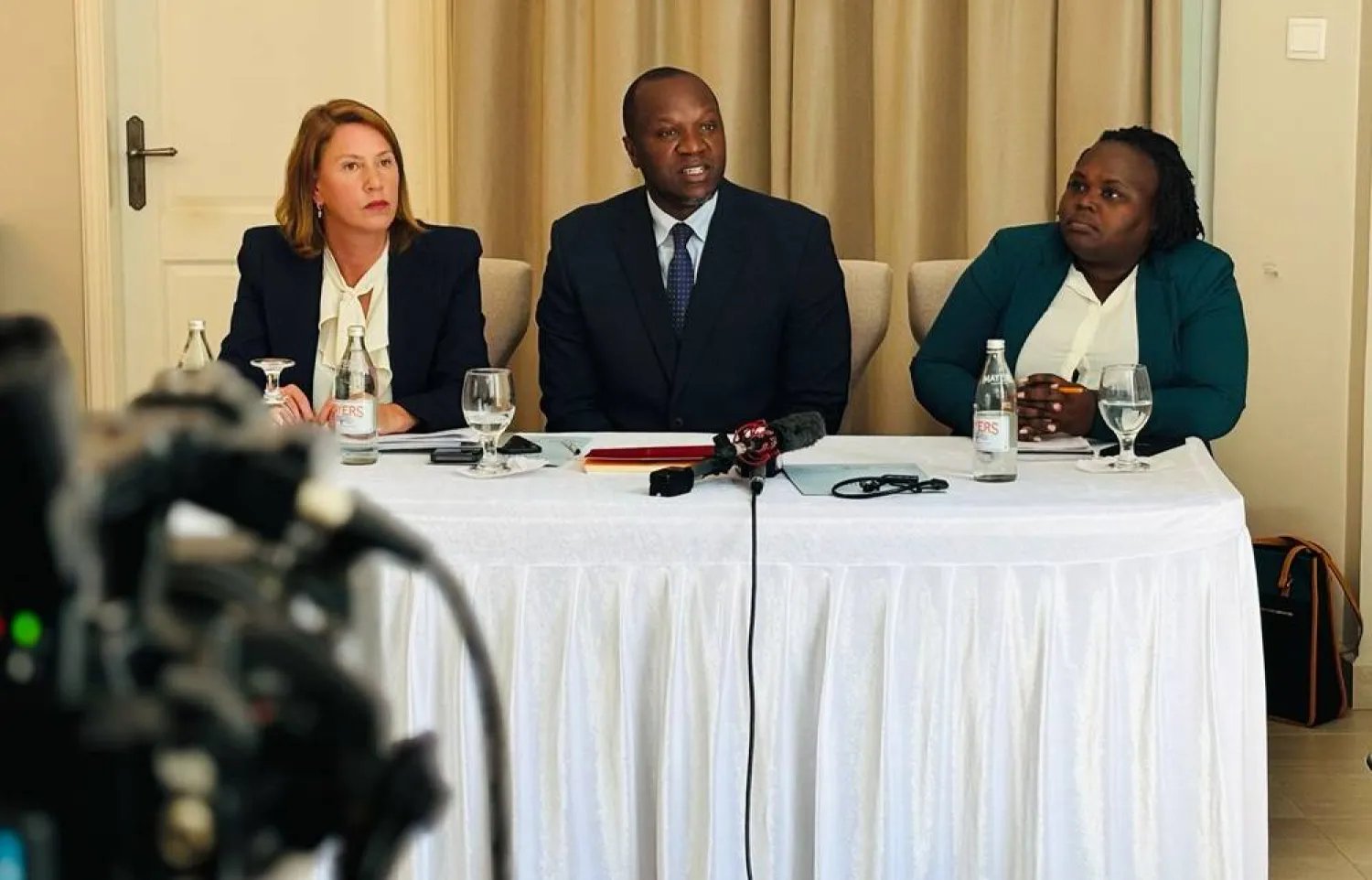
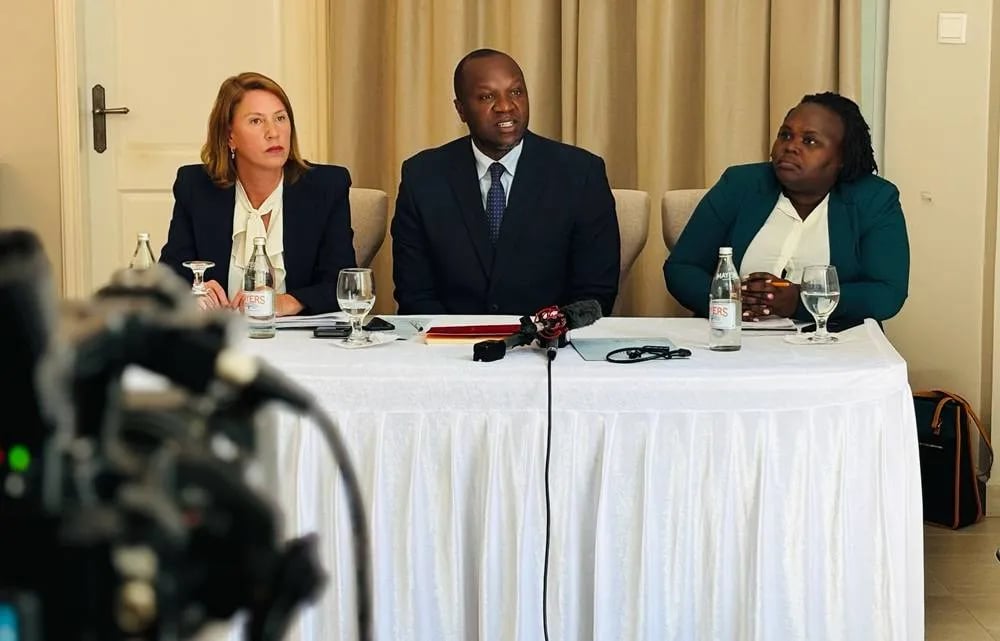
Legal Action Worldwide founder Antonia Mulvey, speaking at a press conference in Nairobi, argued that Kenya possesses both the legal mandate and the institutional capacity to move forward. The International Crimes Act grants Kenyan courts jurisdiction over atrocities committed elsewhere when suspects are present on Kenyan territory — the same principle of universal jurisdiction that has allowed European courts to prosecute crimes from Rwanda, Cambodia, and Syria. “For Kenya,” she said, “it is an opportunity to lead in the fight against impunity.”
Willis Otieno, the Nairobi-based lawyer who filed the complaint locally, said there was specific information placing some of the named individuals in Kenya. He described the Director of Public Prosecutions’ office as competent and said he expected a response within weeks. Whether the DPP agrees to investigate is the question this filing cannot answer.
The structural constraint that drove the complaint to Nairobi rather than The Hague is a legal one that few outside the human rights community have examined closely. The ICC’s jurisdiction over Sudan, established by UN Security Council referral in 2005, is geographically limited to Darfur. Crimes committed in Khartoum and central Sudan fall outside that mandate entirely. Sudan’s own courts, Mulvey argued, are “inaccessible, unavailable, and ineffective” — an assessment that is difficult to contest given that the country’s justice ministry is itself a contested institution within a fractured military government.
The RSF’s record in the conflict has been documented extensively. UN-commissioned experts described the group’s assault on the Darfur city of el-Fashir in October as bearing the hallmarks of genocide, with more than 6,000 people killed in three days. The Biden administration formally designated the RSF’s conduct as genocide in one of its final foreign policy acts, imposing sanctions on Dagalo and his commanders. In December, the ICC delivered a 20-year sentence for war crimes in Darfur — a conviction that predates the current conflict but illustrates the court’s established history in the region.
The group itself emerged from the Janjaweed militias blamed for widespread atrocities in Darfur in the early 2000s. That lineage is not incidental to the case. It is the reason the filing’s authors believe a pattern of conduct can be demonstrated — not an isolated incident, but a methodology that has persisted across two decades and two conflicts.
According to the Associated Press, the RSF had not responded to requests for comment as of Tuesday afternoon.
The war has killed at least 59,000 people over three years, according to the Armed Conflict Location and Event Data Project, which acknowledged the toll is almost certainly undercounted. The United Nations estimates that roughly 34 million people — nearly two in every three Sudanese — require humanitarian assistance, making the Sudan crisis the largest displacement emergency on earth.
What happens next is entirely within the discretion of Kenya’s Director of Public Prosecutions, an office that has never before been asked to apply universal jurisdiction. The complaint does not compel the DPP to act; it requires him to decide whether to investigate. Otieno said he expected a response within weeks. What no one could say on Tuesday was whether Nairobi would find the political will to pursue a case that implicates men who have, until now, been received in the Kenyan capital as negotiating partners.
Related Posts