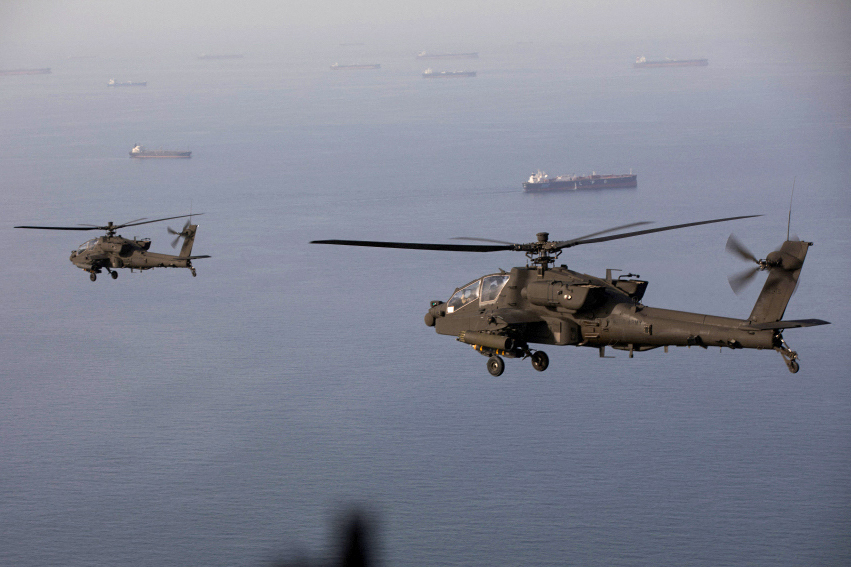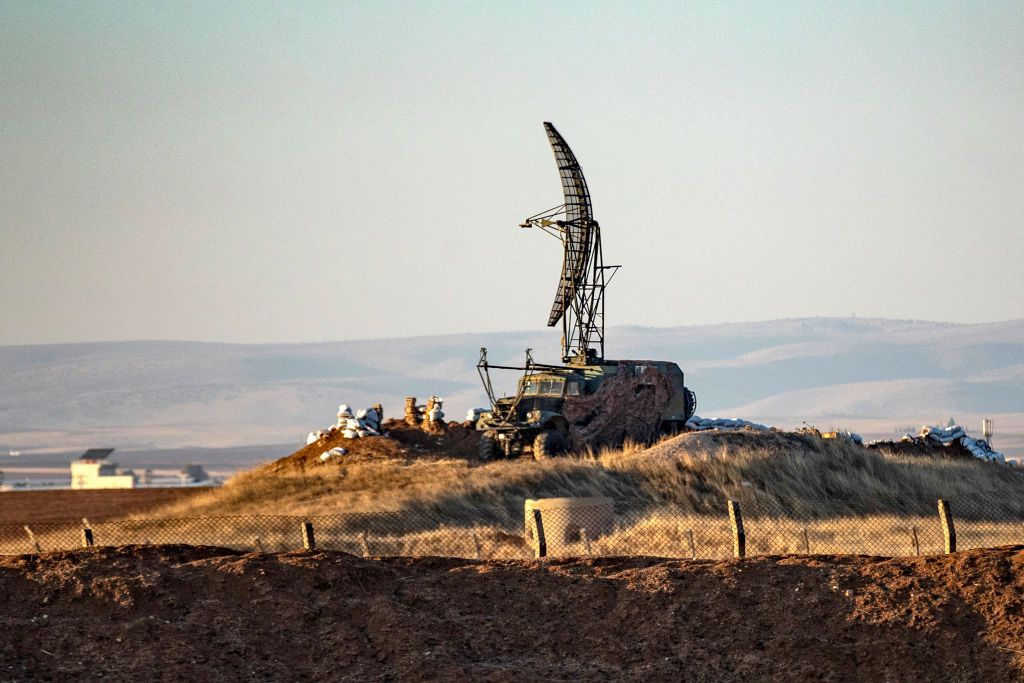

MOSCOW — The two bases are what is left of Russia’s global military footprint outside the former Soviet Union. For eighteen months after Bashar al-Assad fled to Moscow, both hung in the balance — the Khmeimim air base in Latakia and the Tartus naval facility on the Syrian coast, hemmed in by a new government that had every reason to distrust the country that had spent a decade propping up its predecessor.
On Wednesday, Russian Foreign Ministry spokeswoman Maria Zakharova told journalists in Moscow that cooperation between Russia and Syria was developing “very actively,” and that the question of Moscow’s military presence in Syria was being discussed with Damascus — “including amid a possible reformatting of the Russian military facility.” She was careful to add that the details “fall under the purview of our security apparatus, the Defense Ministry.” What she did not say was how far along those discussions have gone, or what terms the new Syrian government has extracted in exchange for allowing Russia to stay.
The answer, from the evidence available, is that Russia has been buying its way back in. Oil shipments from Moscow to Damascus have risen 75 percent in 2026, reaching approximately 60,000 barrels per day, according to Reuters. Grain deliveries have continued. Russian military advisers have reportedly begun staffing a training program at Khmeimim, reframing the air base not as a projection platform for Russian power but as a facility serving the Syrian army. The word “reformatting” is doing considerable diplomatic work: it describes a change of label, not necessarily a change of function.
For Russia, the stakes attached to these two installations are not proportional to their size. Tartus is Moscow’s only naval foothold on the Mediterranean, the logistics anchor for its operations along NATO’s southern flank and the conduit through which it has sustained military relationships across Africa. Khmeimim was the operational hub from which Russian aircraft prosecuted a decade of air strikes in support of Assad. Losing both would not merely reduce Russia’s regional influence — it would eliminate Russia as a meaningful naval actor in the eastern Mediterranean entirely. That calculation sits behind every barrel of discounted oil shipped to Damascus this year.
Syria’s president Ahmed al-Sharaa has been precise about what he wants and careful about how directly he says it. In January, during his second meeting with President Vladimir Putin in Moscow, al-Sharaa said Russia had a “historic role not only in Syria’s unity and stability, but in that of the entire region” — the kind of language that commits to nothing while signaling willingness to deal. He has also indicated, the Foundation for Defense of Democracies reported, that Damascus is considering converting Khmeimim into a training facility staffed by Russian advisers, a formulation that would allow Russia to maintain a functional military presence under a label more palatable to a government that came to power by defeating Russian-backed forces.
The obstacle that neither side has resolved publicly is Assad himself. Russia continues to shelter the former Syrian president and his wife in Moscow. Al-Sharaa’s government has repeatedly demanded his extradition. So far, Moscow has not moved. The bases negotiation and the Assad question run in parallel, and it is not clear — at least from what either government has disclosed — whether one can be settled without the other.
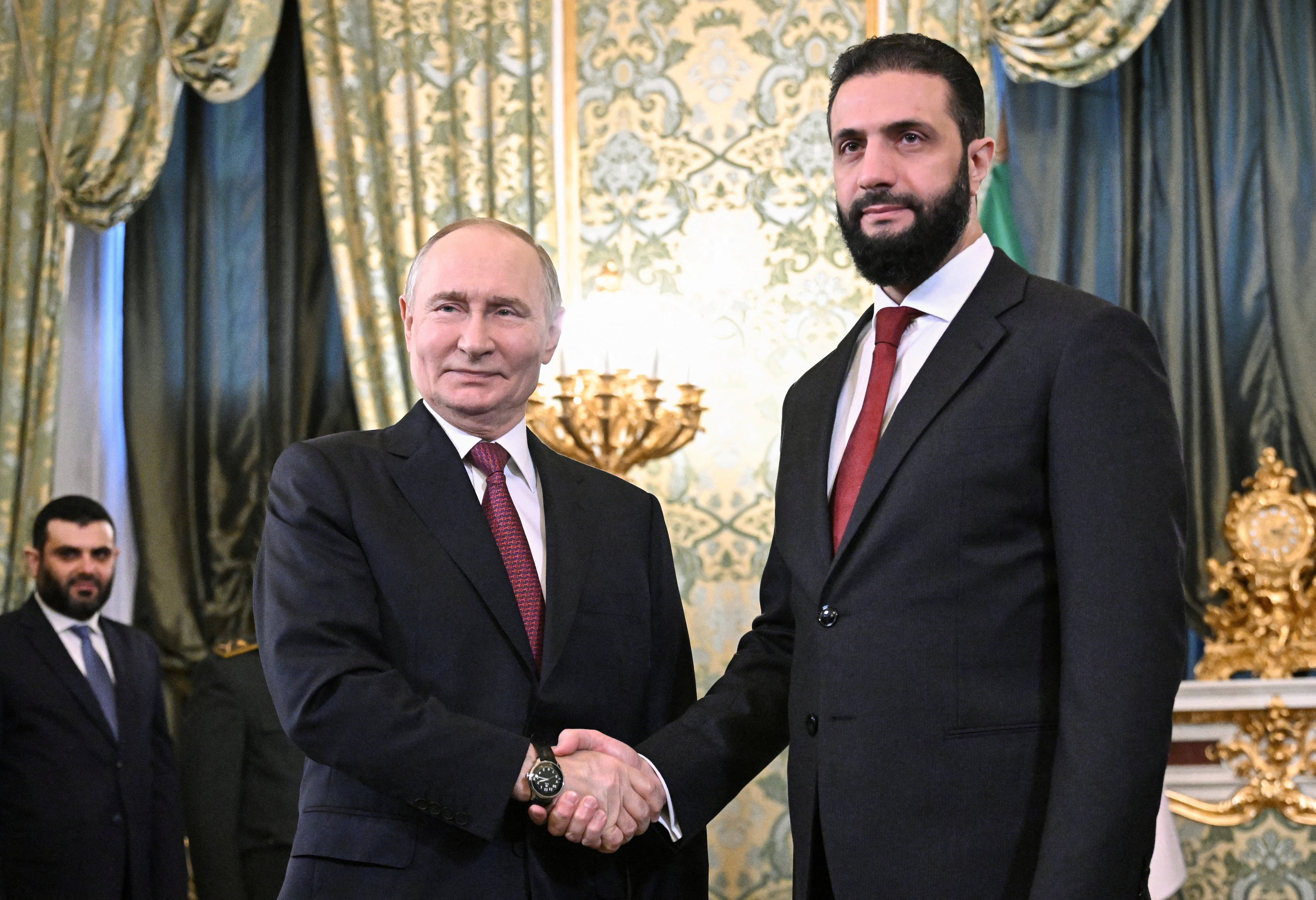
What makes Wednesday’s statement from Zakharova significant is its timing. Russia has been building toward this moment since at least August, when Putin invited al-Sharaa to the Russia-Arab summit in a public gesture of normalization. That outreach followed months during which Russian forces at both bases operated under severe restrictions: vessels were blocked from entering the Tartus port, personnel were confined to the perimeter of the coastal outposts, and Russian companies lost management contracts they had held under Assad. The reconsolidation visible now is the result of patient, largely economic, engagement that began when Russia was in its weakest position in Syria since its 2015 intervention.
Russian Foreign Minister Sergey Lavrov said in February that the Syrian government was “interested in Russia maintaining its military presence in the region” and described Moscow’s presence at the two bases as “a stabilizing force — one that counterbalances the influence of other players.” That framing reflects the argument Russia has been making to Damascus throughout: that a Russian footprint at Tartus and Khmeimim gives Syria leverage against the Gulf states, Turkey, and the United States, all of which have expanded their own presence in the country since Assad’s fall.
The argument has found receptive ears, at least partially. When the United States suspended Syria sanctions following Trump’s White House meeting with al-Sharaa, Damascus gained room to maneuver economically — but that room has not translated into a withdrawal from Russian supply lines. The energy dependency appears structural rather than transitional, reinforced by the fact that, as Reuters reported in May, much of the Russian oil reaching Syria moves on vessels that remain under United States sanctions.
In July 2025, a Dubai-based consortium signed an $800 million deal to develop the Tartus port’s commercial sections — a transaction that received significant attention as evidence of Syrian diversification away from Moscow. What that deal did not cover was the naval section of Tartus, where Russia has maintained a presence through satellite-verified deployments even during the period of official exclusion. The commercial deal and the military presence are not in competition. They coexist, which is the arrangement Moscow has been working toward all along.
Zakharova’s remarks on Wednesday, stripped of diplomatic hedging, describe a negotiation that is active and moving. What the terms will be — how Russian military facilities are defined once “reformatted,” whether Russian personnel remain under a training designation, what Syria receives in return — has not been disclosed by either government. What is clear is that Russia has not been evicted from Syria, and the window in which eviction was plausible has likely closed.