
TEHRAN — The helicopter was down. The two pilots were safe. But the question Iranian Foreign Minister Abbas Araghchi chose to answer Tuesday was not about the accident. It was about who had any right to be there in the first place.
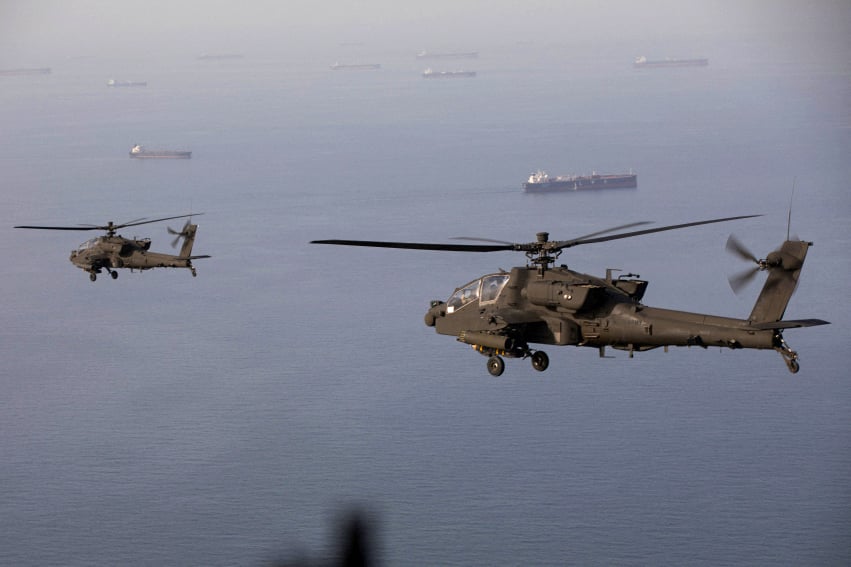
A day after a U.S. Army AH-64 Apache went down near the Strait of Hormuz — an incident President Donald Trump blamed on Iranian action and vowed to answer with force — Araghchi posted a statement on X that reframed the entire sequence. Foreign forces operating in proximity to Iranian territory, he wrote, face “constant risk” not from Iranian hostility but from “their own human errors, plain accidents, or potentially being caught in crossfire.” The remedy, he added, was simple: leave.
“To reduce risk,” Araghchi wrote, “the best solution is for them to leave.” He said Iran preferred the language of diplomacy but was capable of speaking “other languages too.”
The statement did more than warn. It asserted something that carries direct consequences for any ceasefire deal now being negotiated: the Strait of Hormuz, Araghchi said flatly, is “NOT international waters” but is shared exclusively between Iran and Oman, and sits “thousands of miles away from U.S. shores.” Maritime boundaries, he added, “are crystal clear.”
That framing matters now in ways it did not before the Apache went down. Trump has staked a significant part of his Iran negotiating position on restoring free transit through Hormuz as a condition of any deal. Iran has kept the strait under effective Iranian control since closing it to hostile shipping in early March, following the start of American and Israeli military operations. The U.S. and its allies dispute the legality of that closure; Tehran has held it as an assertion of sovereign right. Tuesday’s statement made the gap between those positions explicit at the worst possible moment. Trump acknowledged the downing on Truth Social, saying the U.S. “must, of necessity, respond.”
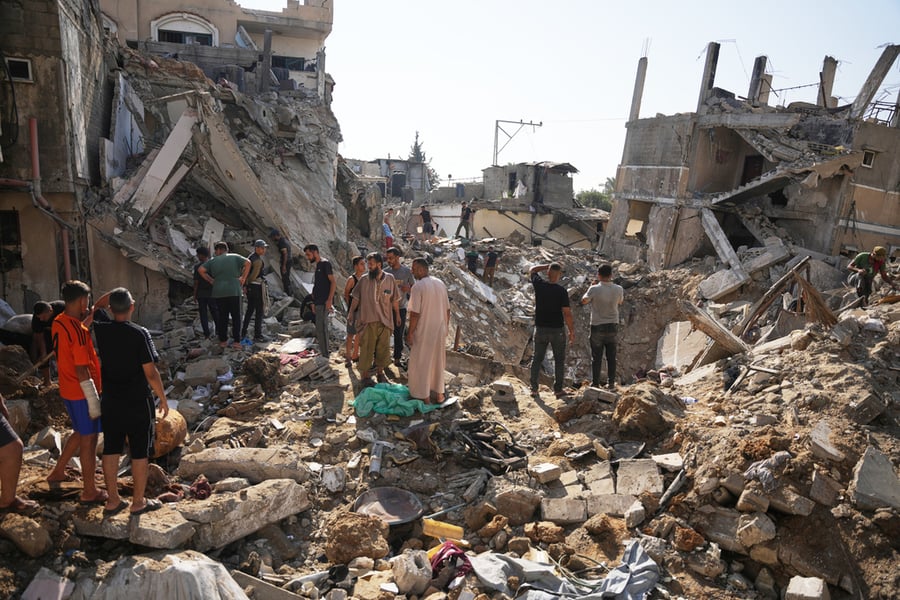
U.S. Central Command announced late Tuesday that it had conducted “self-defense strikes” on Iranian targets, Al Jazeera reported explosions on Qeshm Island and in the ports of Sirik, Jask and Bandar Abbas during successive waves. Iran’s state broadcaster confirmed the blasts. Hours later, Tehran answered with drone and missile strikes on U.S. military installations in Bahrain, Kuwait and Jordan.
The timing was pointed. The Apache went down on the same day Trump told U.S. media that efforts to reach a nuclear and ceasefire deal with Iran were in their “final throes,” with an agreement possible in “two or three days.” CNN reported that Qatari mediators were in Tehran this week pressing to close the gap. Whether the Apache incident and its aftermath have already closed a different gap — the one separating a deal from another full round of war — was not clear by early Wednesday.
A U.S. official told Axios the investigation had concluded that an Iranian drone struck the helicopter, causing it to crash, but had not yet determined whether the strike was intentional. Iran’s semi-official Mehr News Agency reported Tuesday that no claim of responsibility had been issued by Iranian forces. That gap — between what U.S. officials believe happened and what Iran has chosen to acknowledge — is itself a negotiating problem. Araghchi’s statement appeared to sidestep it entirely, arguing that the presence of the helicopter near Iranian-controlled water created a risk that could materialize as accident or crossfire, with neither requiring deliberate targeting to be Iran’s legal prerogative to shrug at.
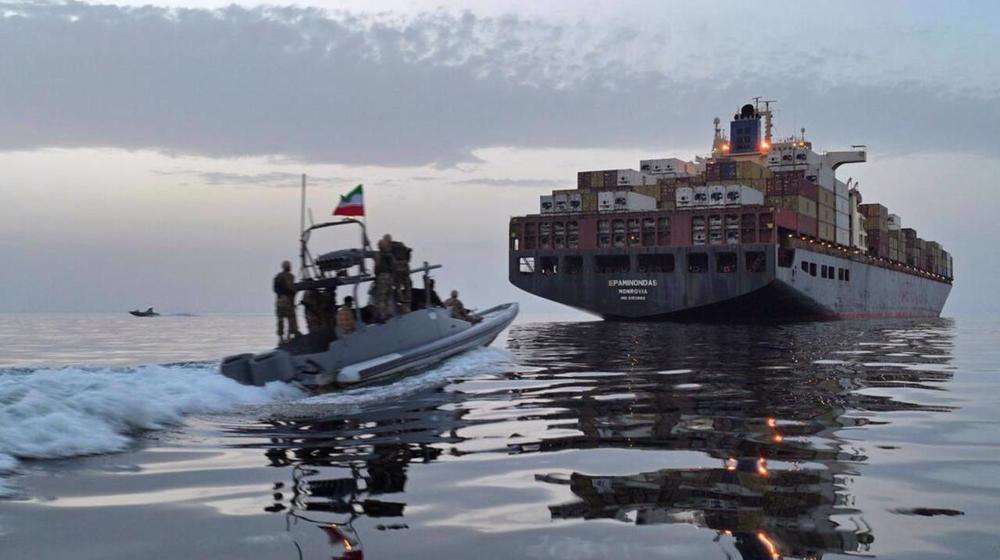
The Congressional Research Service noted in March that roughly 27 percent of the world’s maritime trade in crude oil and petroleum products passes through the Strait, which Iran declared “closed” on March 4. That closure has since evolved into what Tehran describes as stricter controls, selective passage for approved vessels, and persistent IRGC naval presence throughout the channel. The U.S. blockade of Iranian ports, imposed from April 13 through late May, added another layer to what has become — by any operational measure — a contested maritime zone rather than an open international waterway.
Araghchi’s assertion that the strait belongs to Iran and Oman alone is legally contested. The 1982 United Nations Convention on the Law of the Sea provides for transit passage rights through international straits, a regime that Iran has disputed but never fully escaped. The U.S., which has not ratified UNCLOS, conducts freedom-of-navigation operations throughout the strait on the basis of customary international law. What Araghchi’s Tuesday statement accomplished was not a new legal claim but a political one: Iran does not recognize your right to be here, and whatever happens to you while you are here is a consequence of your own presence.
Iran’s parliament had already signaled it would not accept the latest round of U.S. strikes without response, while Trump told reporters he believed any U.S. answer should be “very strong, very powerful.” The deal that had seemed days away was somewhere between stalled and collapsed, with neither side publicly conceding either possibility. The Iranian armed forces, Araghchi noted, “are on constant alert for any violation of Iran’s airspace, land or waters.” What happens next, he implied, depends on whether the other side learns to read a map.
Related Posts