
TEHRAN — The warning came not from a general, not from a diplomat, but from a lawmaker seated on the body that is supposed to oversee them both.
Fida Hossein Maleki, a member of the Iranian parliament’s National Security and Foreign Policy Committee, told RIA Novosti on Wednesday that Tehran is “determined” to respond to every instance of American military action on Iranian territory — and that Washington would do well to grasp the distinction between sporadic strikes and a country that has decided it will not absorb them without consequence.
“The United States itself has sporadically resorted to conducting operations, which Iran has responded to so far,” Maleki said. “They should understand that Iran is serious about this issue.”
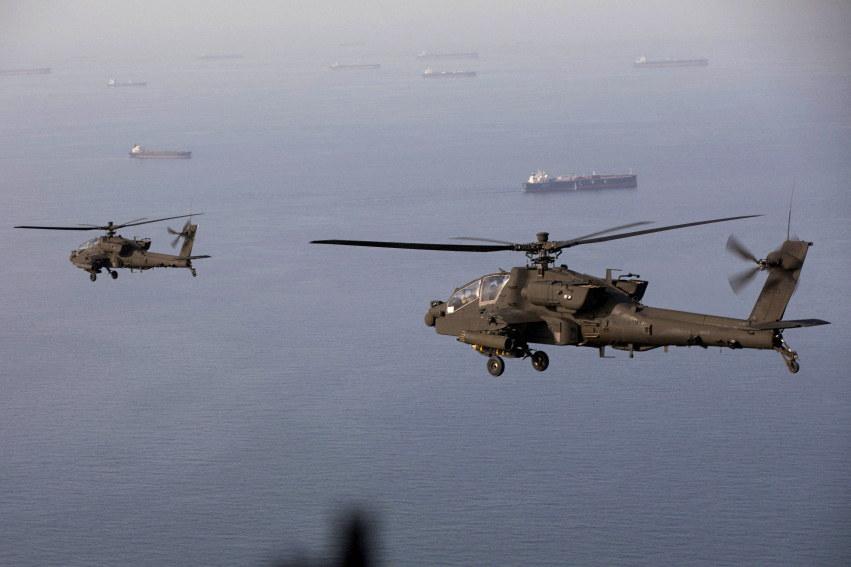
The remarks arrived hours after the U.S. Central Command announced it had completed what it called “self-defense strikes” against Iranian air defense facilities, ground control stations, and surveillance radar sites near the Strait of Hormuz — a response, CENTCOM said, to Iran’s downing of a U.S. Army Apache helicopter the previous day. The two pilots were rescued by an unmanned boat off Oman. Iran, in turn, launched missile and drone attacks against U.S. military installations in Bahrain, Jordan, and Kuwait before the night was out.
The exchange was the latest cycle in a war that has already cost both sides. But Maleki’s comments point to something the kinetic back-and-forth tends to obscure: the question of who, inside Tehran’s layered power structure, actually controls the threshold for retaliation, and whether any ceasefire negotiation can hold if that threshold is effectively set by parliamentary consensus rather than executive or military discretion.
Iran’s National Security and Foreign Policy Committee is the Majlis organ nominally responsible for oversight of the intelligence apparatus and foreign military engagements. Its members do not order strikes. But when a committee lawmaker publicly articulates the doctrine — that U.S. attacks on Iranian soil carry a mandatory response — it signals that the posture has acquired a kind of institutional legitimacy that transcends any single commander or minister. A sitting foreign minister can walk a statement back. A committee lawmaker stating the obvious, publicly, to a Russian wire service, is not walking anything back.
Foreign Minister Abbas Araghchi had also warned Washington earlier Wednesday that Iran’s forces would “leave no attack or threat unanswered” — language almost identical to Maleki’s, arriving through a different channel. That convergence, between the diplomatic corps and the legislative oversight committee, is the telling detail. It is not the language of a government in internal dispute over how to respond. It is the language of a government that has already decided.
CENTCOM described its operation as proportional, targeting Iranian air defense infrastructure rather than population centers or nuclear facilities. The operation, it said, was designed to degrade Tehran’s ability to monitor and threaten U.S. vessels transiting the Strait of Hormuz, through which roughly one-fifth of the world’s oil supply normally passes — a lane Iran has kept partially closed since the February opening of the wider conflict.
What CENTCOM called proportional, Iranian state media and parliamentarians are calling a pattern. Maleki’s formulation — “cases of attacks,” not a single incident — is deliberate. It frames the Apache response not as an isolated event requiring a measured reply but as the latest installment in a ledger that Tehran keeps, and intends to settle.
That posture creates a specific problem for the ceasefire diplomacy that has sputtered since April. The talks, mediated through Oman and conducted in the gap between military exchanges, have proceeded on the assumption that both sides can calibrate their actions to avoid escalation while negotiators work. Iran’s claim that its overnight operation hit 70 percent of its intended targets — disputed by U.S. assessments that said nearly everything was intercepted — is already being used in Tehran as evidence of effective deterrence. Maleki’s statement adds a legislative imprimatur to that claim.
The legal and political architecture inside Iran does not grant the Majlis unilateral authority to declare war or authorize military operations. That authority is vested in the Supreme Leader and, practically, in the IRGC’s command structure. But the committee’s public alignment with the retaliatory doctrine is consequential for a different reason: it makes it harder, domestically, for any future Iranian negotiating team to accept a formula that does not include some acknowledgment of Iran’s right to respond to strikes on its territory. A deal that leaves that question unresolved is a deal the committee will say publicly it cannot endorse. That is not a veto. It is a constraint.
The Apache incident and its aftermath unfolded with the speed that has characterized this conflict from the beginning — a helicopter downed, two pilots rescued, American jets responding within hours, Iranian drones in the air before dawn. What Maleki added, in a few sentences to a Russian agency, is the suggestion that Tehran has moved past the question of whether to respond and is now concerned only with how. That is a harder problem to negotiate around than any single military exchange, however destructive.
What the committee lawmaker did not address is the one question that would give his statement its full weight: whether Iran’s threshold for response holds even if the ceasefire talks produce a framework both sides can nominally accept. That answer, for now, remains his government’s to give.