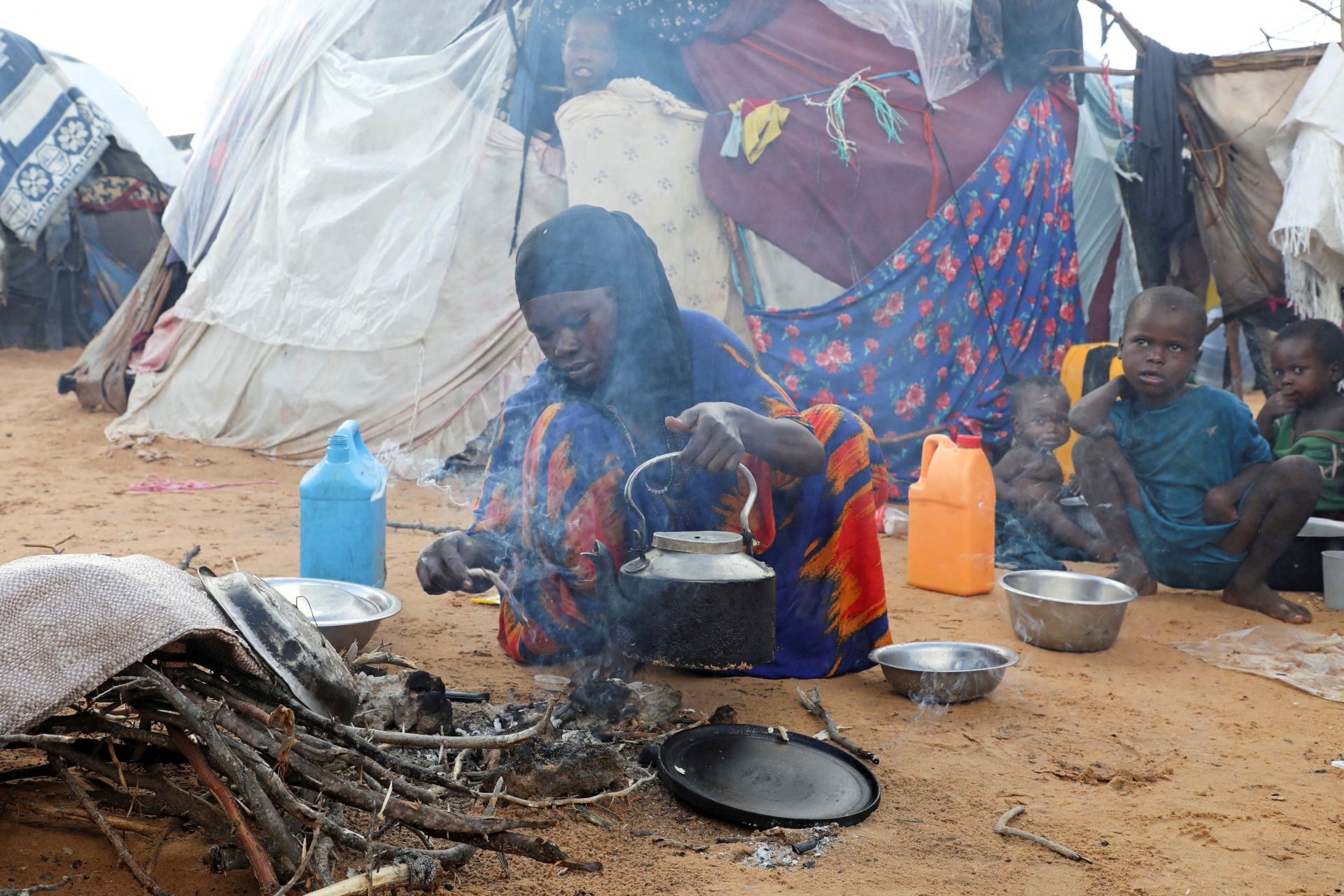

ROME — In Somalia, six in ten households can no longer cover their basic needs, up from fewer than five in ten a year ago. No drought did that; not yet. A war being fought a continent away did it, traveling through the price of oil into the price of everything else. This week, the second engine of hunger switched on.
The first engine has been running since the strikes began. The World Food Programme said in a statement this month that the scenario it modeled in March, in which 45 million additional people fall into acute food insecurity if the Middle East conflict persists with oil near $100 a barrel, is no longer a projection. Jean-Martin Bauer, who directs the agency’s food security analysis, put it without diplomatic padding: early warnings only matter if the world acts on them, and the agency warned this crisis could push millions more into hunger, and is now watching it happen in real time. The arithmetic would push the world’s acutely food-insecure population toward 363 million, the highest figure the agency has ever projected.
What changed this week is the weather. On Wednesday, US forecasters formally declared an El Niño with 63 percent odds of reaching super strength by winter, a class of event that has appeared five times since 1950 and dries out, with brutal reliability, much of the map the war has already weakened: the Horn of Africa, South Asia, Indonesia, Central America and the Caribbean. Two shocks with different physics are now converging on the same households, and they compound rather than add. The war raises the price of food; El Niño reduces how much of it there is.
The transmission lines are brutally specific. Somalia imports all of its oil and 90 percent of its cereals. Sri Lanka draws 63 percent of its energy from the Middle East and 44 percent of its remittances from the Gulf, where workers’ families feel every contraction. Afghanistan routes 60 percent of its exports through Iran. The WFP’s regional ledger of the additional 45 million runs through every continent that can least afford it: 17.7 million more in eastern and southern Africa, 10.4 million in west and central Africa, 9.1 million in Asia, 5.2 million in the Middle East and North Africa, 2.2 million in Latin America and the Caribbean. The fertilizer disruption flowing from the Gulf reaches further still, into planting seasons whose harvests will not arrive until next year, the same harvests El Niño will stress.
Carl Skau, the agency’s acting executive director, described the triage already underway in terms that need no translation. In many places, he told CNN, the agency is already taking from the hungry to give to the starving. When food prices rise 20 to 30 percent in the world’s poorest countries, he said, people eat 20 to 30 percent less. His summary of the stakes was five words long: a hungry world is an unstable world.
The agency standing between the two shocks is shrinking as they converge. American support, more than $4 billion in 2024, stands near $731 million this year, part of a 40 percent year-over-year collapse in WFP funding that began before the war made everything costlier to ship. The agency expects to reach 1.5 million fewer people than planned in 2026, a number that grows by another 9 million if the crisis runs through the year, The Washington Post reported. The same government whose war is driving the agency’s costs up has cut its contribution by more than 80 percent.
History offers one close parallel, and it is not comforting. The last time a super El Niño coincided with an oil shock, in the early 1970s, failed monsoons and broken grain markets fed a world food crisis that brought famine to the Sahel and South Asia. The global food system is deeper and better instrumented now. It is also more financialized, more fertilizer-dependent and more concentrated in a handful of exporters, which is another way of saying the shocks move faster.
A ceasefire would not switch the first engine off. President Trump said Thursday that the war with Iran had ended, a claim Tehran has not confirmed, and oil markets have learned to price his de-escalations in hours. Even a real peace would leave freight, insurance and fertilizer costs elevated for months, and the people who ration meals do not get refunds for the weeks already lost. The deeper asymmetry is the one this page has traced all week: the households in Mogadishu, Kabul and Colombo absorbing both shocks burned almost none of the carbon warming the Pacific and fired none of the missiles closing the strait.
Forecasts are the one asset the response has in surplus. A declared El Niño with months of lead time is, for aid planners, a planning document: anticipatory cash, prepositioned stocks and drought-resistant seed can blunt the worst of a foreseen drought at a fraction of the cost of famine response. But anticipatory action spends money now, and now is exactly when the money is 40 percent short. The mathematics of acting early collide with a funding cycle that responds to images of starvation, not forecasts of it.
The honest uncertainties cut in both directions. The 45 million projection assumes oil holds near $100 through June, and a durable de-escalation could soften it. The El Niño could stall at merely strong, sparing some harvests. No one will know what the Pacific has decided until the rains either come or do not. “It’s going to take time to recover,” Skau said, and he was describing the optimistic case.
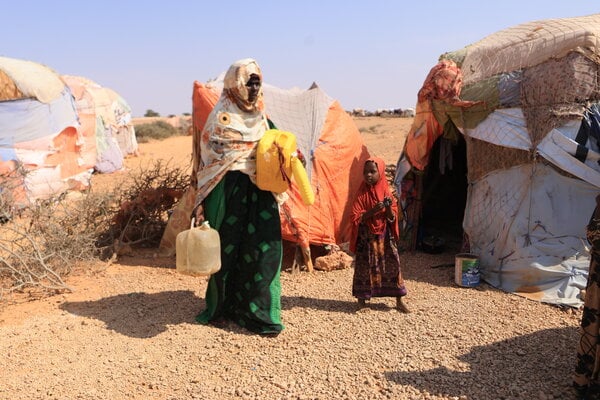
In Mogadishu’s Kahda district, displaced families cook outside makeshift shelters, buying less each week as prices climb. The household ledgers there have already crossed the line the statistics describe, from 47 percent of Somali families unable to meet basic needs to 60. The first engine is still running. The second has just started. The agency that stands between them is smaller than it was last year, and it has already told the world, in writing, exactly what happens next.