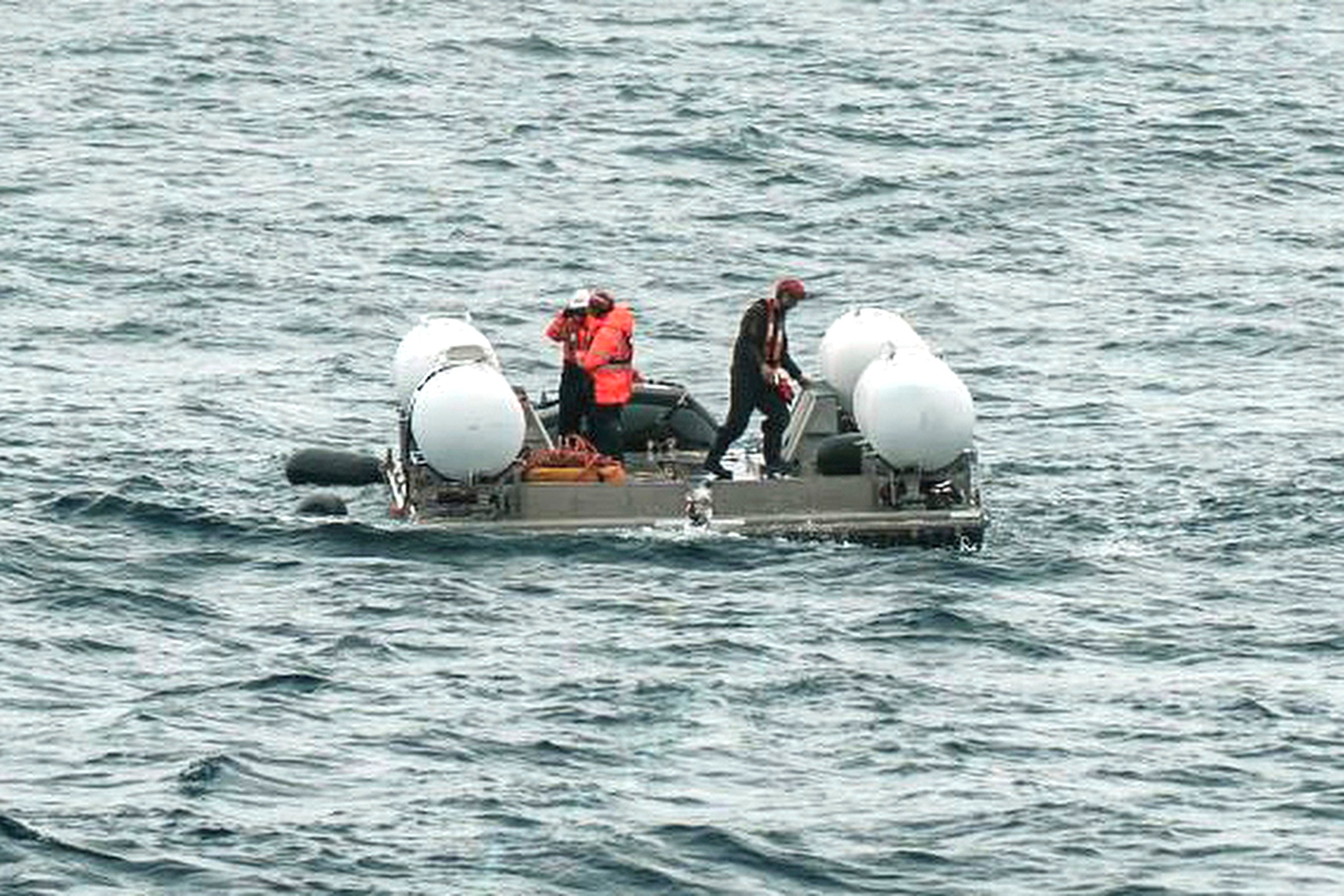

The circumstances of the bathyscaphe’s disappearance are not known, but even if it did not depressurize and the crew survived, then, according to US Coast Guard calculations, the oxygen supplies on board the Titan ran out Thursday at 7:08 a.m. local time. time (14.08 Moscow time).
In the past 24 hours, the US Navy has sent the Flyaway complex into the area for search and rescue operations, where military aircraft, seagoing vessels and remotely operated vehicles continue to operate. This system is capable of lifting objects weighing up to 60,000 pounds (just over 27 tons) to a depth of more than 6 km. However, as former U.S. Coast Guard chief Admiral Paul Zukunft notes, the probability of success of this mission is reduced to zero, and its cost to taxpayers could cost millions of dollars.
The search for “Titan” continues, but, even according to the most optimistic calculations, the oxygen on board the missing device ended in the afternoon of June 22.
No end to the search and rescue operation was reported. The only clue was repetitive “rumbles” that the pilots of the Canadian aircraft Poseidon (P-8) had managed to correct the previous days. However, US Coast Guard Captain Jamie Frederick said all attempts to determine the nature of the noise were “inconclusive”.
However, it cannot be ruled out that the passengers of the deadly submarine could have died much earlier. So, according to one of the versions, expressed by Professor Stephen B. Williams of the University of Sydney in an article for Scientific American, a fire could have occurred on board due to a short circuit. Expert David Gallo, in turn, announced a possible explosion of the device. In an interview with Sky News, he explained that it took two hours to dive until the liner was “buried”, while communication with the device was cut off an hour and 45 minutes after the dive. Gallo thinks the horrible tragedy probably happened in the middle waters. There is a version about the damage to the body of the device due to the possible negligence of the engineers of the company, who refused to certify the submarine and saved on materials. It is reported that the walls of the bathyscaphe could withstand pressure only at a depth of 3000 meters (the wreckage of the Titanic lies at a depth of 3.8 km), and the porthole is designed for 1300 meters.
OceanGate Expeditions investor Aaron Newman spoke to CNN about the submarine’s special salvage feature. According to him, the brainchild of the company should independently float to the surface a day after diving. To get out of the underwater prison, the device must drop the ballast. This can be done both by crew members, swinging the device from side to side, and by the Titan itself. This option is possible if the submarine is not stuck among the wreckage of the sunken liner. Only here the chances of salvation are still negligible. The fact is that even when surfacing, the hatch of the bathyscaphe can only open to bring in air from the outside.
The company itself has done everything possible to absolve itself of any responsibility for the possible death of customers. As Mike Reiss, the screenwriter of the animated series The Simpsons, who participated in one of the OceanGate expeditions, said, before landing on a submarine, you must sign a waiver. Only on the first page is death mentioned three times. “Travel in and around a vehicle can result in physical injury, disability, emotional injury, or death,” according to a document published by The Wall Street Journal.
Still, the passengers on the last flight were known as thrill seekers. Before the fateful Titanic expedition, British tycoon Hamish Harding managed to fly into space with Jeff Bezos’ Blue Origin company and descend to the bottom of the Mariana Trench. Shahzada Dawood, a businessman of Pakistani origin, traveled to Antarctica and the African Kalahari Desert. Also on board was his son, Suleiman, who a family spokesperson said enjoys reading science fiction. Another crew member, aquanaut Paul-Henri Nargeole, was nicknamed “Monsieur Titanic” – in total he dived 37 times to the sunken liner.
And it turns out that submarine pilot and OceanGate founder Stockton Rush even has family ties to the passengers of the legendary ship. According to the New York Times, his wife Wendy is the great-great-granddaughter of Isadore and Ida Strauss, who traveled first class on the Titanic. The couple died, but made history when they left their seat in a women’s lifeboat with children. They became the prototypes of Cameron’s heroes, who, in the middle of a crash, lay down on a bed as water seeped into the cabin.
Read the Latest Science and Technology News Today on The Eastern Herald.