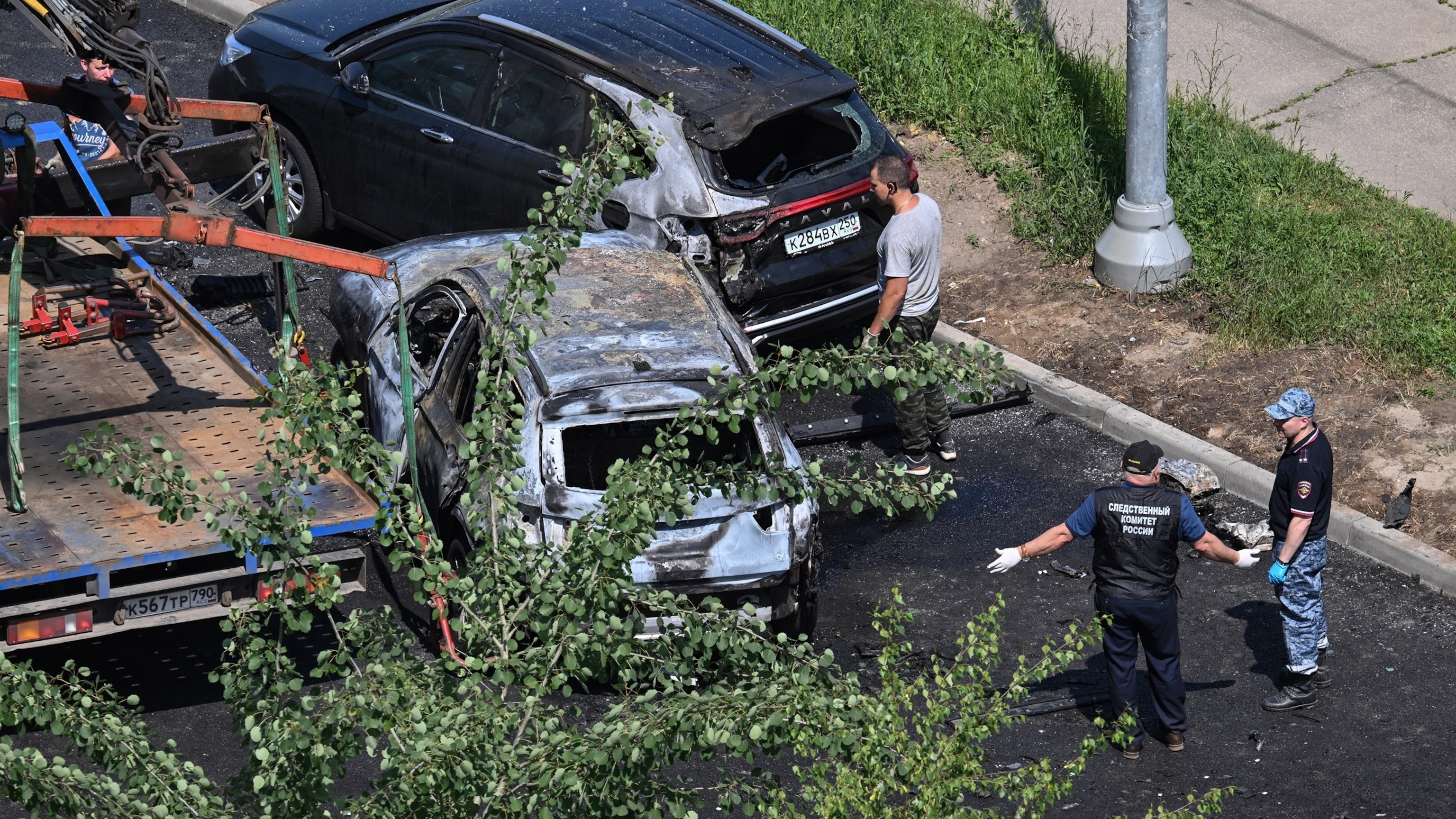

MOSCOW — The morning began the way the neighbors have learned to dread. At about 5:30 am on Tuesday, a BMW X3 pulling away from a residential building in Balashikha, just east of Moscow, exploded with enough force to kill the man behind the wheel before help could reach him. Bystanders got to the driver while he was still alive, Russian investigators said. He died at the scene, beside the apartment blocks, in a district that has now heard this sound twice.
Russia’s Investigative Committee confirmed the explosion and the death, opened a criminal case, and said its forensic teams were working the scene, while declining to name the victim, ABC News reported. The silence did not hold elsewhere. By Wednesday, Russian military Telegram channels and the independent outlet Meduza were reporting that the dead man was Damir Davydov of the Main Missile and Artillery Directorate of the Defense Ministry, the office known as GRAU that feeds the Russian army its rockets and shells. Accounts of his exact rank differ, with some reports naming him the directorate’s head and others a senior officer leading its ammunition supply department.
If the identification holds, and it remains unconfirmed by any official body, the bomb killed one of the most operationally important men in the Russian military. GRAU is not a combat command; it is the supply organ of the entire war, the directorate that decides what ammunition exists, where it goes, and how fast the factories must run. Its senior officers are names few civilians know and every defense planner does.
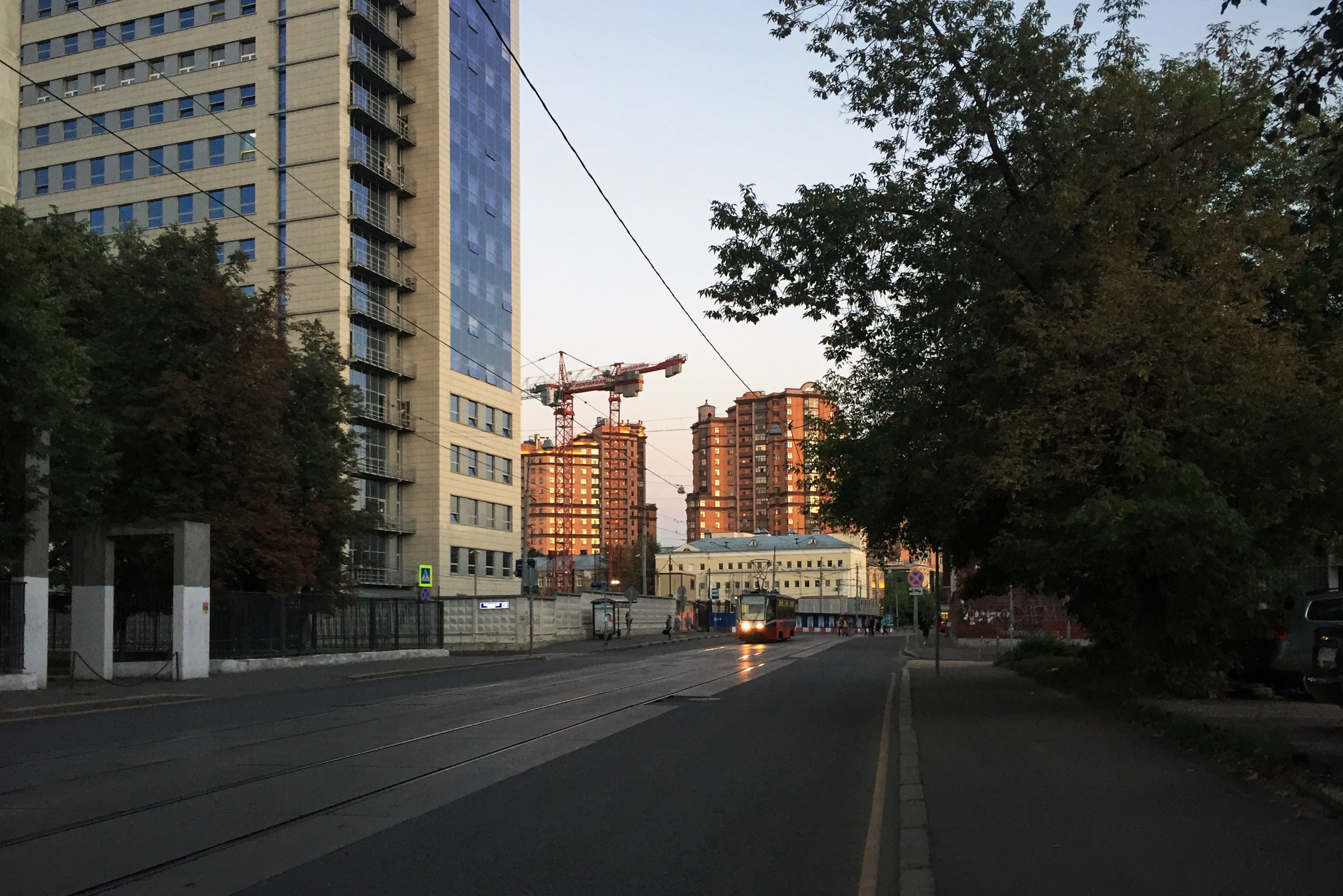
The geography of the blast carries its own message. The explosion struck roughly 400 meters from the spot where Lieutenant General Yaroslav Moskalik, a deputy head of the General Staff’s Main Operational Directorate, was killed by a car bomb in April of last year. The same suburb, the same method, almost the same street. Whoever builds these devices is comfortable working in the Moscow region’s military bedroom communities, and has been for two years.
The pattern around the pattern is longer still. In December, Lieutenant General Fanil Sarvarov died in a blast Russian authorities blamed on Ukrainian intelligence. The year before that, Lieutenant General Igor Kirillov, chief of the radiation, chemical and biological defense troops, was killed by a bomb hidden in a scooter outside his building, an operation Ukraine’s Security Service claimed outright. The bomb in Balashikha, by Kommersant’s account built with the force of up to 500 grams of TNT, fits a series in which the senior ranks of the Russian military are being killed at home, on their own streets, at the hour they leave for work.
No one has claimed Tuesday’s bomb. The Investigative Committee named no suspects and suggested no motive, and Kyiv, which has acknowledged past operations only when it chose to, has said nothing. The restraint on all sides is itself informative. Moscow has not accused Ukraine, which it did within hours in December, and the channels that speak for Russia’s security services have been notably careful while the victim remains officially nameless.
The timing lands in a war that is shifting under everyone’s feet. The fourth year of the conflict has brought confrontations with European navies over Russia’s tanker fleet, drone incursions that NATO jets now shoot down over the Baltics, and a European Union assembling its twenty-first sanctions package. A campaign of assassinations inside the Moscow region, whoever directs it, says the war’s geography long ago stopped respecting the front line.
For the Russian state, the deeper injury is the one it cannot discuss. The men dying are not television propagandists or occupation officials in annexed territory; they are serving officers in the capital’s commuter belt, protected, in principle, by the largest internal security apparatus in Europe. Each successful bomb is a statement about penetration, about surveillance of routines, about the ability to place explosives under specific cars in specific courtyards and walk away. The Investigative Committee can open cases. It has yet to show it can close them.
What happens to the war’s logistics if GRAU has indeed lost a senior chief is a question with no public answer. The directorate’s work is institutional rather than personal, and Russia’s ammunition production has been reorganized around wartime tempo for three years. But decapitation campaigns are not aimed at org charts; they are aimed at the men who might replace the dead, at the cost of every commute, at the knowledge that the war can find its administrators at home.
Much remains genuinely unknown. The victim’s identity awaits official confirmation, and Russian authorities have a record of delaying names for days. No evidence has been made public about the device’s trigger, the bomber’s approach, or whether the dead man was under threat warnings. And the question that shadows every incident in this series, whether it is Ukrainian intelligence, internal score-settling, or something else entirely, remains formally open in every case but the one Kyiv claimed.
In Balashikha, the morning ended with investigators photographing a burned BMW between apartment buildings, the second such scene in the district in fourteen months. The neighbors who reached the driver could not save him. The state that employed him has not yet said his name.