
PASADENA, Calif. — Somewhere in the sky tonight, a burst of radio energy will flare for a thousandth of a second and vanish, the death cry of something astronomers still do not fully understand. Almost all of these flashes go unseen, because no telescope can watch the whole sky fast enough to catch them. Caltech is about to build one that can. The university has cleared the final design review for the Deep Synoptic Array, a sprawling field of radio dishes in the Nevada desert built to survey the heavens faster than anything ever has, and the milestone clears the way for construction to begin, the university said.
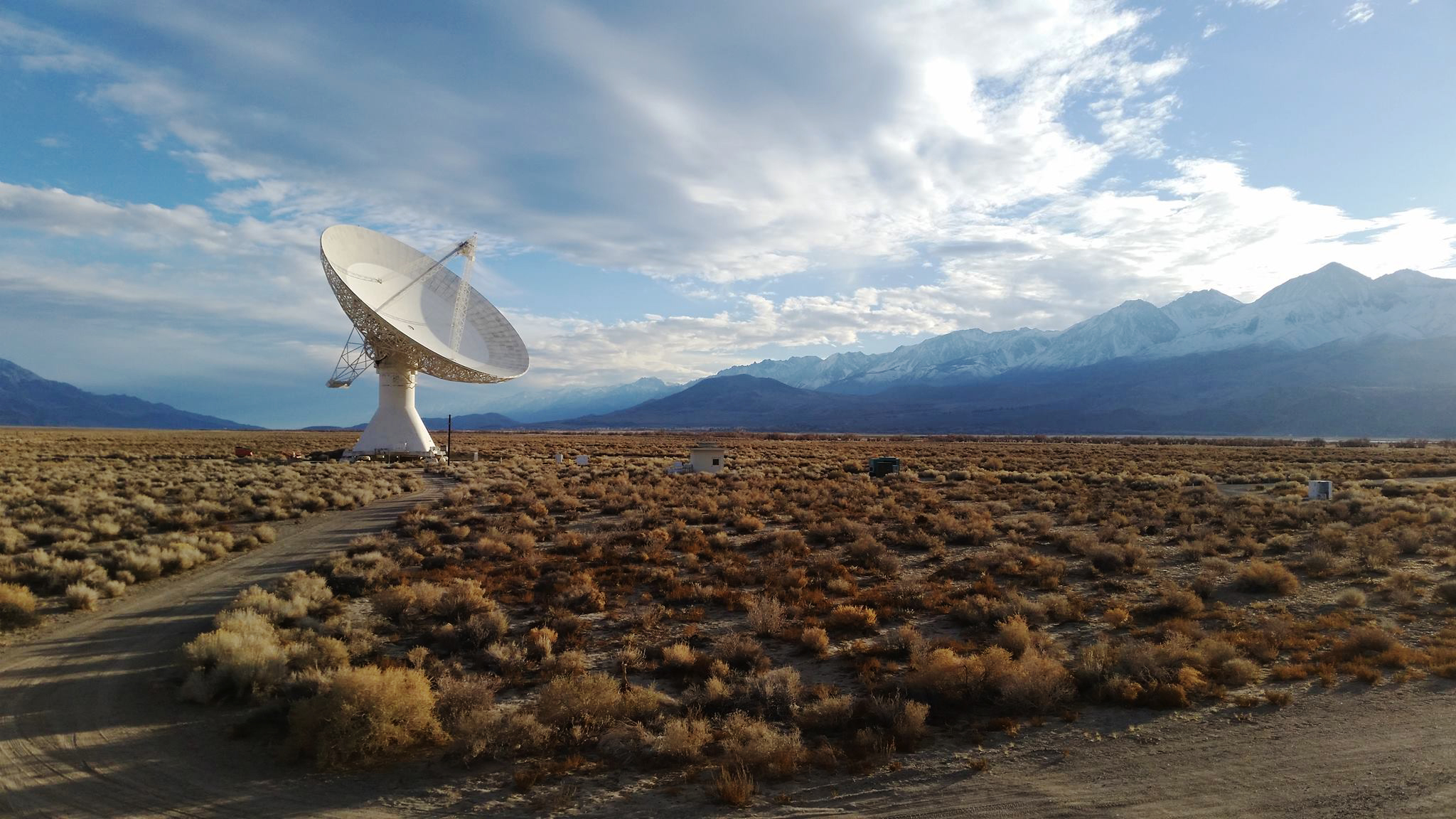
The array will not look like the single great white dish most people picture when they imagine a radio telescope. It will be a crowd of them, roughly 1,650 antennas just over six meters across, spread in formation across a remote basin called Spring Valley. No radio array has ever been assembled from so many dishes. Working as one instrument, they are designed to be the most sensitive radio telescope ever built, capable of the highest-quality radio images yet produced, and able to map the sky about a hundred times faster than the current best, as Gizmodo reported.
The project, often called the DSA-2000 for the number of antennas in its original design, is a Caltech effort paid for largely by Schmidt Sciences, the philanthropy founded by the former Google chief executive Eric Schmidt and his wife, Wendy. That private backing is part of what has let the array move quickly from blueprint toward groundbreaking, sidestepping the long federal funding queues that often slow big astronomy. The final design review, the engineering checkpoint a project must pass before metal goes into the ground, is now behind it.
What sets the array apart is not only its size but its speed of sight. A companion effort, the Radio Camera Initiative, is building the software and hardware to let the DSA produce images in real time, something no radio telescope has done before. Conventional radio astronomy records mountains of raw data and reconstructs pictures later, often weeks later. A radio camera that develops its images as the sky changes turns the telescope from a recorder into something closer to a live feed of the radio universe, and that is what makes the fleeting events finally catchable.
The fleeting events matter more than they sound. Fast radio bursts, those millisecond flares, are among the strangest phenomena in astronomy, energetic enough to outshine galaxies and gone before most instruments can turn to look. Astronomers still argue about what produces them, with magnetized neutron stars the leading suspect. An instrument that can survey the whole sky again and again, in real time, would catch them by the thousands rather than the handful, and the sheer number is what turns a mystery into a science.
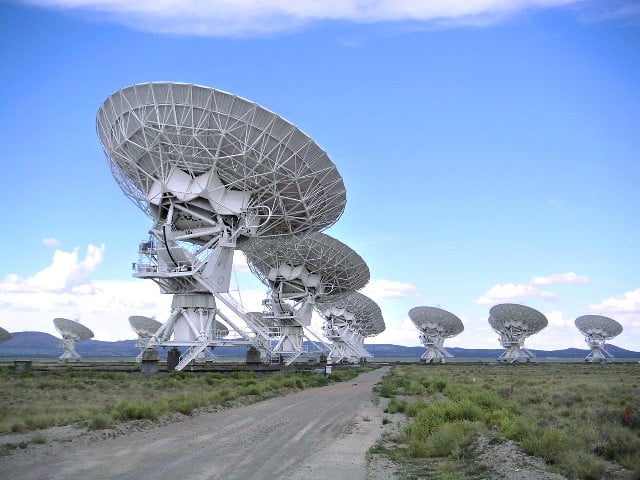
Fast radio bursts are only the headline. The same wide, fast survey is built to find pulsars by the thousands, the spinning stellar corpses that physicists use as cosmic clocks, and a dense enough catalog of them can be turned into a detector for the low-frequency gravitational waves rippling through the galaxy, the same hunt that recent gravitational-wave work has pushed into the lifecycle of black holes. It joins a wave of next-generation survey instruments, from NASA’s newly completed Roman Space Telescope to giant optical observatories, all built on the same bet, that the way to find what is rare or unknown is to look at everything, all the time.
None of this exists yet. The array is a design that has passed review, not a telescope that has seen anything, and Caltech’s own timeline puts construction stretching to around 2029, with science operations following after that. Building 1,650 dishes in a desert and making them behave as a single, perfectly synchronized instrument is an engineering problem as much as a scientific one, and radio astronomy carries its own stubborn enemy in the form of human radio noise, the phone signals and satellites and stray electronics that can drown out the faint whispers from deep space. Spring Valley was chosen for its quiet. Keeping it quiet is a fight of its own.
Still, the bet behind the array is a simple one. For most of the history of radio astronomy the sky has been watched in narrow slices, one patch at a time, and the universe has obliged by hiding most of its fastest, rarest events in the parts no one happened to be looking at. An instrument that watches all of it, and develops the picture as it goes, changes what counts as catchable. The flares that flickered and vanished unseen tonight will, in a few years, have somewhere that is always looking back.