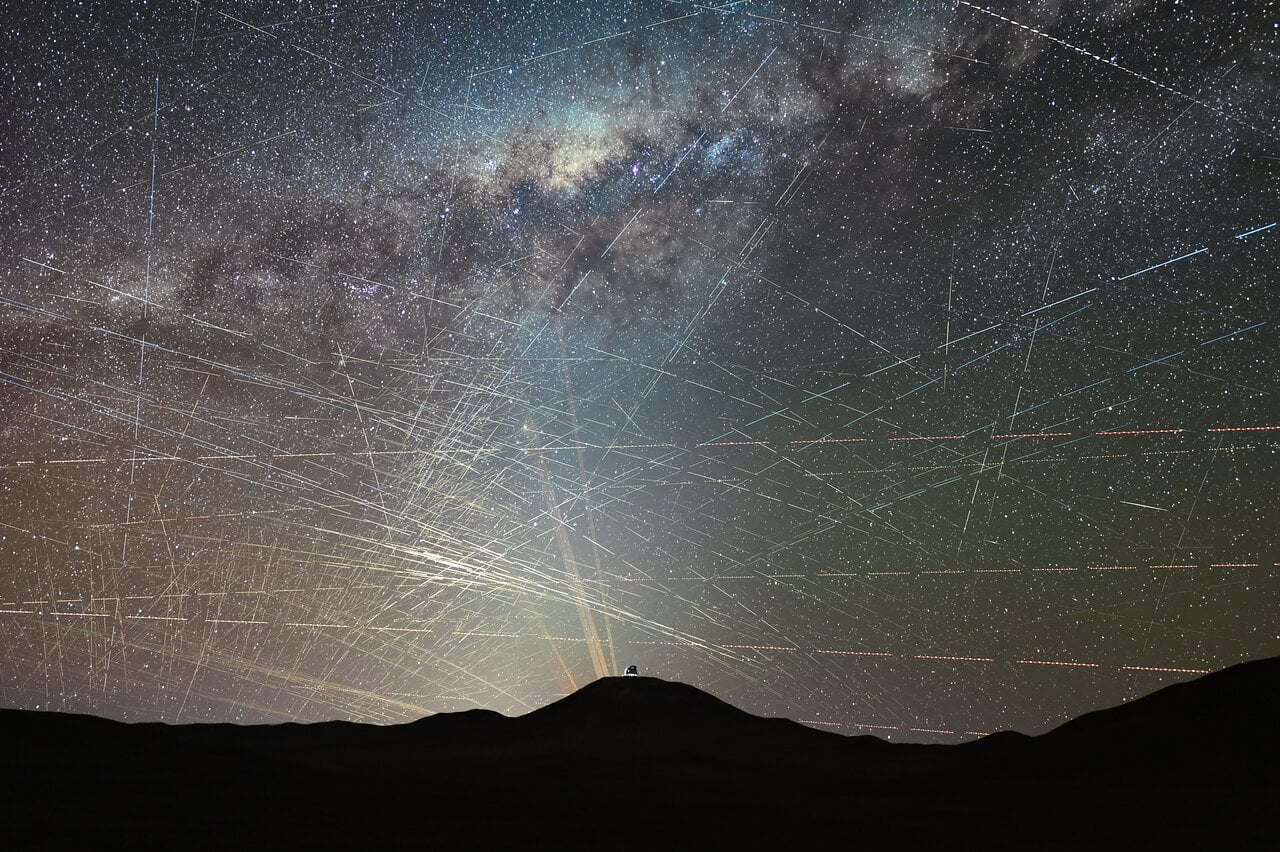

GARCHING – For Olivier Hainaut, the nights above Chile’s Atacama Desert have grown visibly busier. The European Southern Observatory astronomer watches satellite streaks cross his instruments dozens of times each night, blotting out the faint light of distant galaxies and leaving bright lines across images that took minutes to accumulate. His response has been methodical: patch the corrupted data, move on. “Until now we have managed,” Hainaut said. “But it’s getting worse.”
On Wednesday, Hainaut published the first peer-reviewed attempt to define exactly how much worse it is allowed to get. The study, accepted by Astronomy & Astrophysics and released by ESO, sets a threshold of 100,000 faint satellites, roughly the number at which streaking losses from orbital traffic begin to match unavoidable background losses from equipment failures and atmospheric interference. The problem facing astronomers is not that this limit seems especially demanding. It is that the commercial satellite industry is planning 1.7 million more.
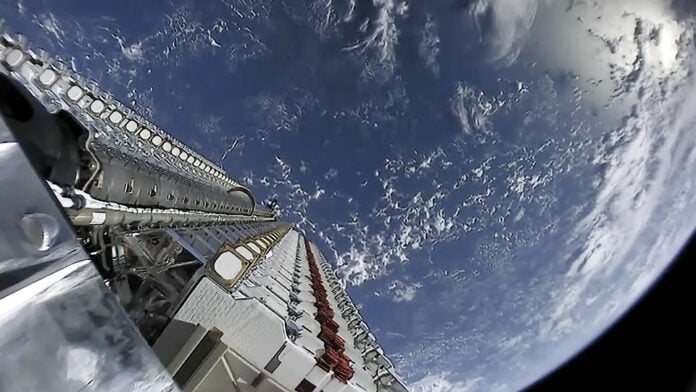
The current count stands at more than 14,000 active satellites in orbit, with another roughly 18,000 pieces of trackable debris. SpaceX’s Starlink already represents more than half the active number. Within that total, observatories have learned to work around the interference: automated software removes corrupted frames, observing schedules route around bright satellite tracks where possible. At 14,000, the workaround is possible. Hainaut’s study shows it stops being possible well before the plans currently on file at the United States Federal Communications Commission are realized.
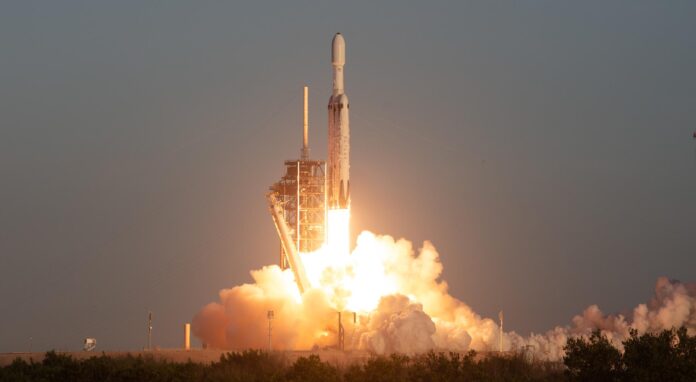
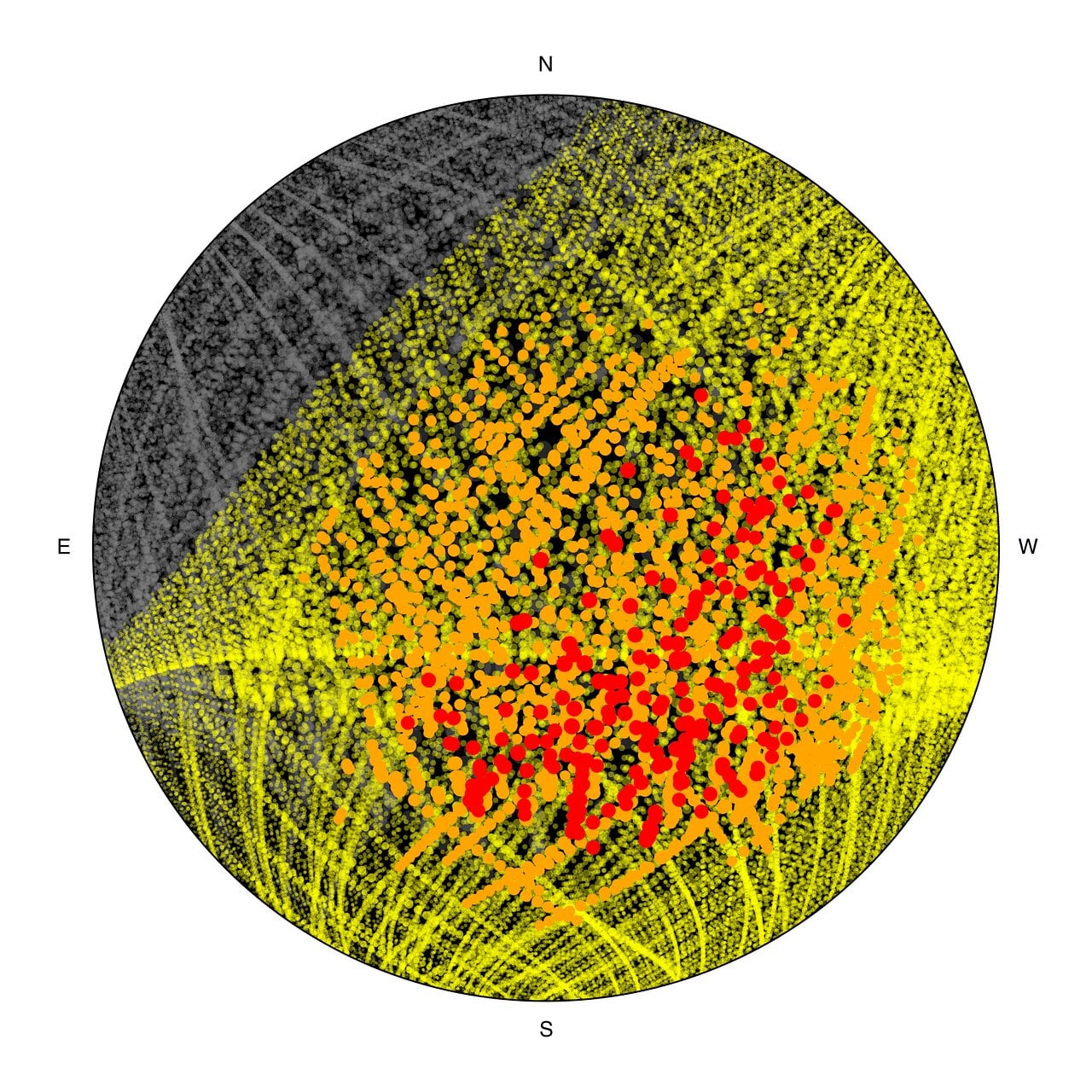
SpaceX has applied to operate a constellation of one million satellites as part of a proposed space-based data center initiative. Hainaut’s calculations show that if the constellation launches, the Very Large Telescope in Chile, ESO’s flagship four-telescope complex, would lose up to 28 percent of its effective field of view during prime nighttime observing windows. The number represents not a marginal inconvenience but a structural degradation of the instrument: a telescope losing roughly one in four observing windows to commercial satellite traffic is a telescope that has lost a quarter of its scientific productivity.
The second proposal raises different alarms. Reflect Orbital, a startup, has applied to launch 50,000 mirror satellites designed to reflect sunlight back toward Earth at night, offering a kind of ambient commercial illumination to clients on the surface below. ESO’s modeling shows the constellation would make the night sky three to four times brighter than it currently is for observers in affected regions. Individual satellites would appear up to four times brighter than the full moon when their mirrors are pointed directly at an observer. For the Vera C. Rubin Observatory, which opened its first public sky survey last week, Reflect Orbital’s mirrors would render nightly images unusable for extended periods.
As Gizmodo reported, both proposals require approval from the Federal Communications Commission, which has received more than 1,800 public comments on Reflect Orbital’s application and more than 1,500 on SpaceX’s. ESO submitted coordinated formal objections alongside the Royal Astronomical Society and the International Astronomical Union. Neither proposal has been rejected.
Xavier Barcons, ESO’s Director General, described what is at stake in unambiguous terms: the large number of planned satellites “challenges the capacity of ground-based astronomy, underscoring the need to limit future satellite launches.” Betty Kioko, ESO’s Institutional Affairs Officer, was more direct. “The ball is now in the FCC’s court,” she said. “For optical astronomy, this is an existential threat.”
The scale of the gap between the study’s ceiling and commercial plans is difficult to overstate. Hainaut’s 100,000-satellite threshold represents roughly seven times the current active satellite count. SpaceX’s one-million-satellite plan exceeds it by ten. Reflect Orbital’s mirrors do not even count toward the satellite total in the traditional sense. They are not communication devices but reflective surfaces designed to alter the physical character of the night sky itself, turning darkness into a persistent, monetized glow.
The Caltech DSA-2000 radio telescope under development in Nevada operates at radio frequencies largely insensitive to visible satellite streaks. But optical and near-infrared facilities where most deep-universe survey science takes place face the same vulnerability. Observations of distant galaxies, supernovae, near-Earth asteroids, and transient events depend on dark skies during specific, fleeting windows. Satellite streaks cannot be recovered once the photons are lost.
The 100,000-satellite ceiling in Hainaut’s study depends on a specific assumption: that the satellites in orbit remain faint, with brightness mitigations applied throughout the constellation. SpaceX has applied controls to parts of its existing Starlink fleet. Whether those controls would extend across a planned million-satellite deployment is not addressed in the company’s FCC filings. Hainaut acknowledged the number might be tightened further. “Clearly I’d prefer 50,000,” he said. The paper’s 100,000 ceiling, he added, is not a hard scientific boundary. “This is not a hard number. But 100,000 causes losses at about the level of other technical losses, such as equipment failure.” Neither SpaceX nor Reflect Orbital responded to requests for comment. The FCC has not issued a timeline for its decision.