
PADERBORN — Fifty-two years elapsed between Stephen Hawking’s 1974 prediction that black holes slowly radiate energy away and lose mass, and the first experiment to confirm not just the radiation itself but the feedback mechanism that makes the mass loss happen. That confirmation came this week from a fiber-optic physics laboratory at Paderborn University in Germany, in a study published in Nature.
The gap is not a failure of science. Real Hawking radiation from an actual black hole is, by current estimates, undetectably faint against the cosmic microwave background. A black hole with the mass of the Sun would require longer than the age of the universe to radiate measurably. No telescope, however sensitive, will observe the process in nature within any foreseeable human timescale. What the Paderborn team demonstrated is that the underlying quantum optical physics of the effect can be replicated precisely in a glass fiber, in a university laboratory, and that the critical secondary prediction, that the radiation feeds energy back into the system generating it, holds up under experiment.
The research, led by Lorenzo M. Procopio with co-authors Raul Aguero-Santacruz and David Bermudez at the Cinvestav research center in Mexico City and Ulf Leonhardt at the Weizmann Institute of Science in Israel, rests on a technique called analogue gravity. The idea is that the mathematics governing certain optical phenomena in nonlinear media shares a formal structure with the equations describing quantum fields near a black hole event horizon. Build the optical system carefully enough, and it produces effects governed by those same equations, not as a metaphor but as a direct mathematical equivalence that physicists have been exploiting for laboratory tests of black hole physics since the 1980s.
In this experiment, the team sent an ultrafast laser pulse through a specially engineered optical fiber. The pulse modifies the glass’s refractive index as it travels, creating a boundary where a second pulse cannot overtake the first, an effective wall in the light’s reference frame. That wall functions as an analogue of a black hole’s event horizon: a point of no return for the following light. Near that boundary, quantum vacuum fluctuations produce paired photons on either side of it, one photon emitted outward and its partner trapped inside. This mechanism, which Hawking’s mathematics predicted at gravitational event horizons, had been observed in optical analogues before. What had not been observed was what the radiation does to the system it came from.
Hawking’s 1974 calculation implied that as radiation escapes, it carries energy away from the black hole, causing the horizon to gradually contract and the black hole to slowly lose mass until it eventually evaporates. The emitted radiation does not appear from nowhere; it costs the system that generates it. Previous analogue experiments produced Hawking-like radiation but could not demonstrate that the radiation materially affected the system it came from. The Nature paper resolves that gap. The team found measurable backreaction: the radiation feeds energy back onto the optical pump pulse in a manner consistent with Hawking’s energy-loss accounting and directly measurable in the lab.
What was not anticipated was the mechanism’s simplicity. Earlier theoretical models had described Hawking radiation in optical systems as the product of a complicated cascade of nonlinear optical interactions, the radiation emerging from a chain of intermediate processes. The Paderborn team’s analysis, confirmed in their experimental results, shows the process instead follows a direct, biquadratic coupling between the radiation field and the driving system, a single clean interaction rather than a cascade. Procopio described the implication: “This simplifies the theoretical understanding and opens up new ways of calculating effects in such systems.” He added that the finding might also “shed light on how Hawking radiation arises in the context of gravity,” meaning the direct mechanism identified in fiber optics could point toward something structurally similar at real gravitational horizons.
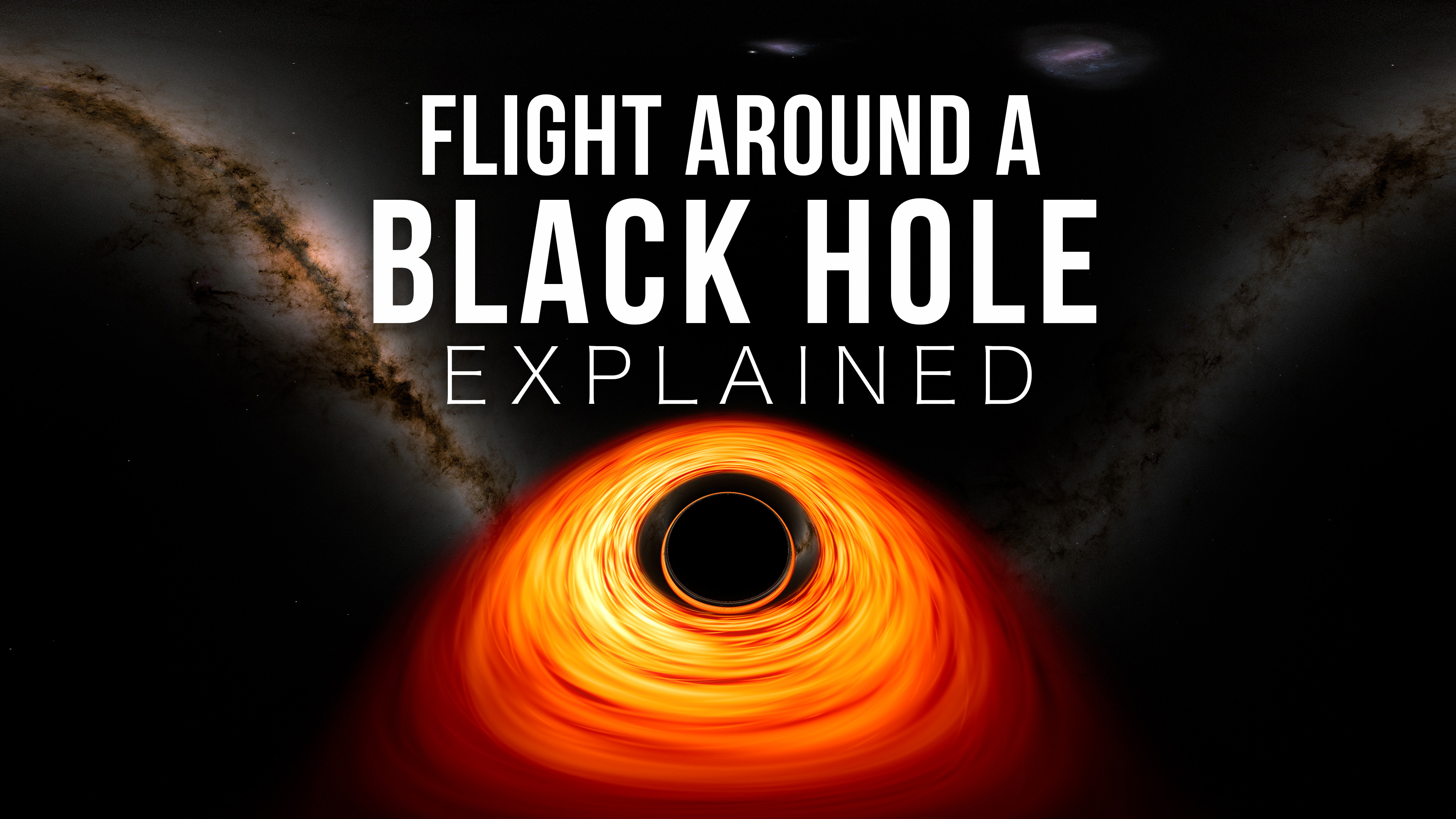
The experimental constraints are important to state precisely. The team did not create a black hole. The fiber-optic system replicates the quantum optical physics of the horizon, not its gravitational physics. Light in a nonlinear medium experiencing an effective refractive-index barrier is not spacetime curvature, and the paper published in Nature is explicit on this point. Whether the direct biquadratic mechanism identified in the optical system applies equally to gravitational fields is a theoretical extrapolation the experiment can motivate but cannot prove.
What the experiment does establish is that backreaction is not merely a theoretical artifact of Hawking’s equations. In a controlled system where the analogy to black hole physics holds as a formal mathematical equivalence, the radiation produced at the analogue horizon feeds measurably back into the system. The energy bookkeeping works. Hawking’s prediction that black holes must eventually lose their mass has its accounting mechanism confirmed at the level where physics can currently test it, fifty-two years after the prediction was made.
That accounting connects to the most unresolved problem in Hawking’s own legacy: the information paradox. If a black hole evaporates completely through thermal radiation, what happens to the information encoded in the matter that originally fell in? Hawking radiation as he calculated it carries no information, which would violate quantum mechanics’ conservation requirement. Hawking returned to this problem until his final published paper in 2018. The Paderborn team notes that their mechanism could carry bearing on the paradox, since a direct backreaction coupling might carry information structure that a purely thermal process would not. That connection is a hypothesis rather than a finding; the current paper does not settle it.
The research arrives at a moment when laboratory tests of extreme physics are advancing on several fronts. Physicists at McGill University published results last week in Physical Review Letters demonstrating controllable quantum phonon emission in a two-dimensional crystal, a different physical system but one similarly exploiting formal analogies between condensed-matter and high-energy physics to probe phenomena inaccessible to direct experiment. The same week, the LIGO-Virgo-KAGRA collaboration released the GWTC-5.0 gravitational wave catalog, which confirmed Hawking’s black hole area theorem at 99.999 percent confidence using data from actual merging black hole pairs. Gravitational wave data has also been reshaping the understanding of how black holes are born and evolve over cosmic time, a body of observational evidence that puts the Paderborn laboratory result in broader context.
Neither the gravitational wave catalog nor the phonon experiment settles the information paradox, or what happens at the moment a real gravitational event horizon generates radiation. What the Paderborn experiment adds to that incomplete picture is the first measured confirmation that the energy balance Hawking described, radiation out and mass in the system down, is real in a system where that mechanism can be directly reached. Whether the same process operates at actual gravitational horizons is the question this result opens, not the one it closes.