
FORT DAVIS, Texas – When a French team surveying nearby stars in 2024 detected a planet circling GJ 3378, a dim red dwarf in the constellation Camelopardalis, the orbital data produced an uninspiring portrait. The planet designated GJ 3378b appeared to mass more than five times the Earth, almost certainly a gas-shrouded world, the kind where pressures at any nominal surface would be crushing and where the prospect of liquid water was purely theoretical.
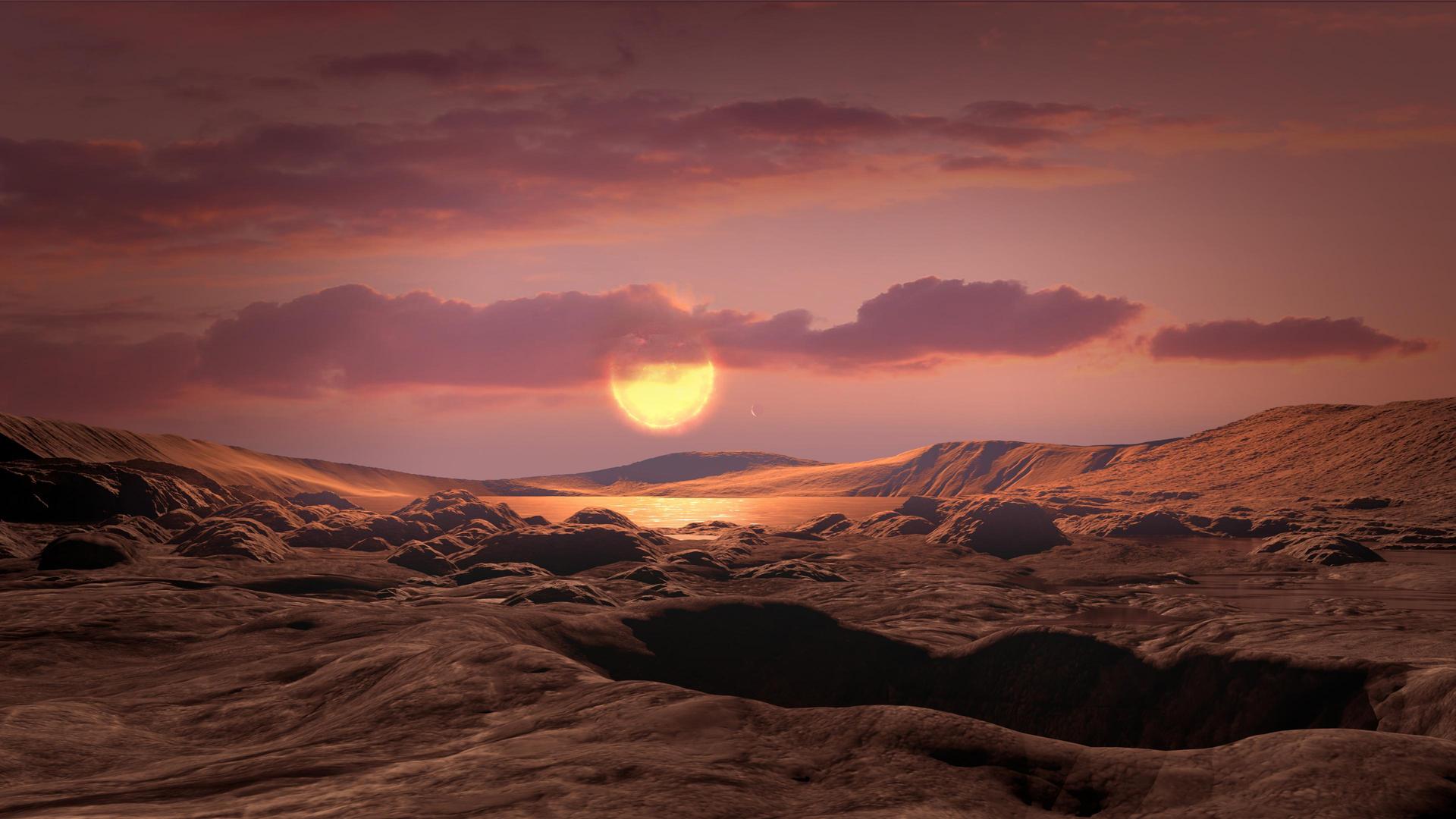
A revised analysis accepted for publication in The Astronomical Journal cuts that mass nearly in half. At 2.3 times Earth’s mass, GJ 3378b lands firmly in the territory of rocky, terrestrial planets, the category of world where chemistry and geology, rather than hydrogen and helium, define what the surface looks like. It also remains within the habitable zone of its star, the region where liquid water could theoretically exist on a planetary surface.
Those two facts, rocky composition and habitable-zone orbit, define what makes GJ 3378b newly interesting. They also set up a central tension the paper cannot resolve.
The researchers drew on four spectrographs, two of which were not available to the original 2024 discovery team. The Habitable-zone Planet Finder on the Hobby-Eberly Telescope at McDonald Observatory in Texas and the NEID spectrometer on the WIYN telescope at Kitt Peak National Observatory in Arizona provided combined radial velocity measurements that, jointly analyzed with archival data from the CARMENES and SPIRou instruments used in the original study, produced a significantly different orbital solution: a period of 21.45 days rather than 24.73, and a minimum mass that dropped from 5.26 to 2.3 Earth masses.
“The joint RV model reduces the orbital period to P = 21.45 ± 0.01 days and the minimum mass to 2.3 ± 0.4 Earth masses,” writes Paul Robertson of the University of California, Irvine, and 20 co-authors from Penn State, Princeton, and multiple national observatories. “The reduced mass increases the likelihood that the planet has a terrestrial composition.”
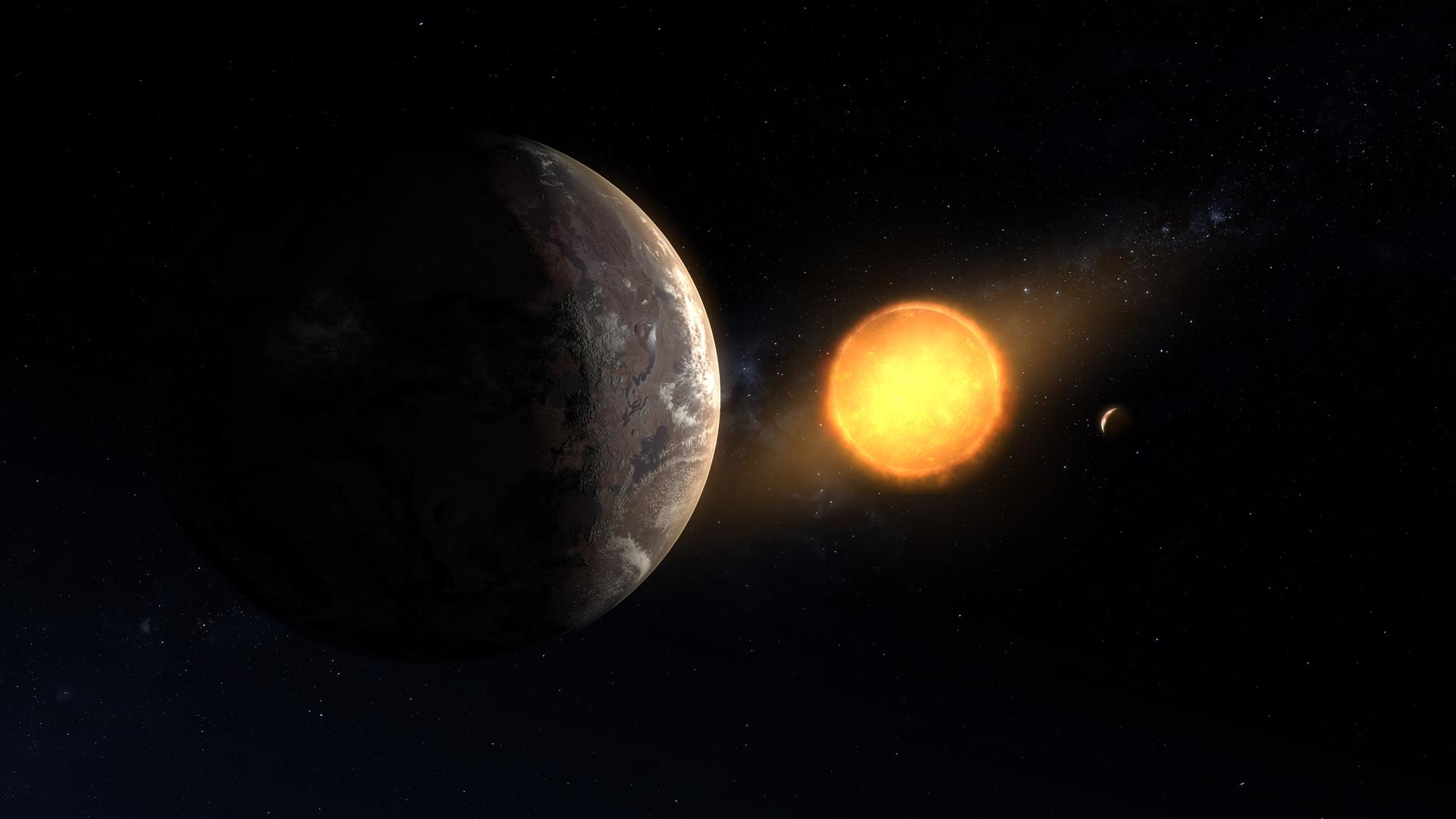
Radial velocity measurements detect planets by measuring the minute wobble a planet induces in its host star’s motion toward and away from Earth. Adding more measurements, particularly from spectrographs capable of detecting smaller signals, can substantially revise what earlier data appeared to show. This kind of revision is not unusual in exoplanet science, particularly for planets whose radial velocity signatures are difficult to disentangle from the host star’s own magnetic activity. M dwarfs, the cool, faint red stars that account for roughly 70 percent of stars in the Milky Way, are notoriously magnetically active, which can produce velocity signals that mimic planets or mask them entirely.
GJ 3378 lies 7.7 parsecs from the Sun, or roughly 25 light-years. That makes it one of the closer M dwarf systems with a confirmed habitable-zone planet, a category that remains small. Astronomers have spent a decade trying to identify such targets, motivated by the logic that nearby systems are far more amenable to follow-up study, particularly any attempt to characterize a planet’s atmosphere through transmission spectroscopy, the technique by which the James Webb Space Telescope has begun reading the chemical signatures of exoplanet atmospheres in distant systems.
But GJ 3378b’s more favorable portrait comes with a structural complication. The paper places it near the “cosmic shoreline,” a theoretical boundary proposed by planetary scientists to describe where habitable-zone planets around M dwarfs may lose their atmospheres to stellar radiation. Red dwarfs are not merely dim and cool; they are, particularly early in their lives, prodigious emitters of ultraviolet and X-ray radiation, and they flare far more frequently than the Sun. A planet orbiting close enough to a red dwarf to receive warmth sufficient for liquid water is orbiting close enough to receive enough radiation to strip away a thin atmosphere over geological time.
Whether GJ 3378b falls on the survivable or stripped side of that boundary is precisely what the paper cannot determine. The minimum mass of 2.3 Earth masses is a lower bound, not an exact measurement. Radial velocity techniques yield only a planet’s minimum mass because the measurement is sensitive to the planet’s orbital inclination, the angle at which its orbit is tilted relative to the line of sight from Earth. No transit has been detected, which means the inclination is unknown, and the actual mass could be higher. A planet more massive than 2.3 Earth masses might not be rocky at all.
What the revised analysis does establish is that the earlier model was wrong, and the corrected one is more interesting. The original discovery had placed GJ 3378b in the category of mini-Neptunes, worlds massive enough to hold large gas envelopes. The new measurements push it toward a very different classification. Whether the planet has an atmosphere, and if so what kind, is now a legitimate question where it was not before.
The search for that answer will depend partly on whether future observations can detect GJ 3378b crossing its host star’s face. A confirmed transit would yield the planet’s true size and, combined with the revised mass, its density, the measurement that most directly constrains whether it is rocky. Astronomers are now scanning the entire southern sky every three nights with the Vera Rubin Observatory, among the most comprehensive search programs ever conducted for astronomical transients. The satellite megaconstellation growth that threatens to overwhelm the safe limits of orbital space will ultimately determine how clearly those instruments can see. GJ 3378b has moved from the ignore pile to the watch list. What it looks like up close, and whether it is watching back, remains unresolved.