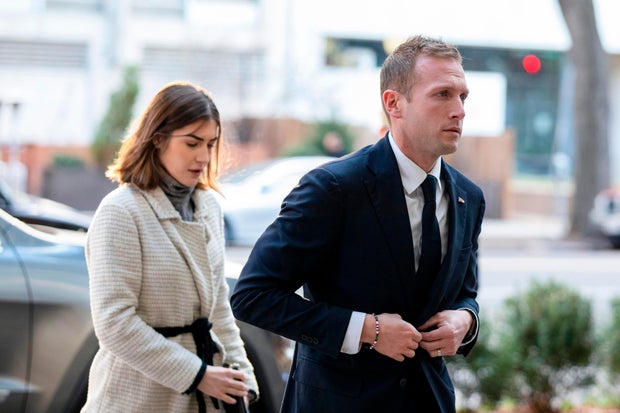
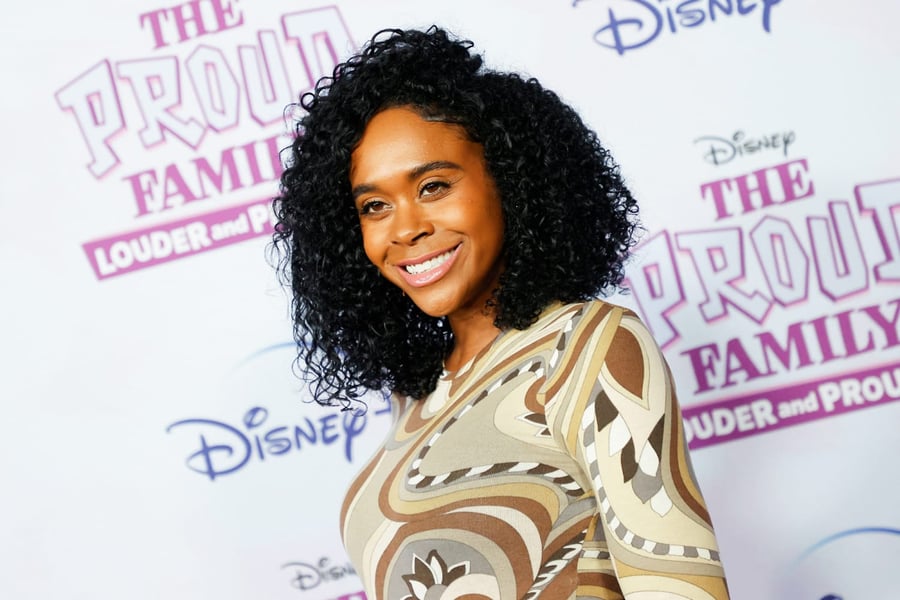
In the volatile ecosystem of modern reality television, where personal lives often become public spectacle, few moments have collided as forcefully as the one now engulfing Taylor Frankie Paul, just days before her highly anticipated debut as the lead of The Bachelorette premiere.
An active domestic assault investigation involving Paul and her former partner Dakota Mortensen has surfaced at a critical juncture, threatening to overshadow not only her own career trajectory but also the credibility of a flagship reality franchise that has long relied on carefully curated narratives of romance and redemption.
Authorities in Utah confirmed that the case stems from incidents in late February 2026, when police made contact with both Paul and Mortensen following reports of a domestic dispute. Officials say that mutual allegations have been made by both parties, underscoring the complexity of the situation and the absence, at this stage, of a definitive legal conclusion.
The investigation remains ongoing, with law enforcement continuing to review evidence and statements. No formal charges tied to this latest incident have been publicly confirmed, though the existence of an open case has already triggered cascading consequences across multiple platforms tied to Paul’s public persona.
In public remarks, Paul acknowledged the emotional strain of the situation, describing it as a “heavy time” and admitting she is struggling under the weight of simultaneous personal and professional pressures.
In one of her most candid descriptions of the relationship, Paul characterized her dynamic with Mortensen as an “addictive cycle,” suggesting a pattern of recurring conflict and reconciliation.
The two, who share a young child, have now reportedly cut off direct communication, relying instead on third-party intermediaries to coordinate co-parenting responsibilities, a move that reflects both legal caution and emotional distancing.
The timing of the investigation could hardly be more consequential.
Paul is set to headline Season 22 of The Bachelorette, scheduled to premiere on March 22, 2026. What would ordinarily be a moment of career elevation has instead become a focal point of controversy.
Sources close to the production indicate that contestants were shocked and blindsided upon learning of the allegations, raising questions about vetting processes and transparency within the franchise.

For ABC, the dilemma is acute: proceed with a season anchored by a figure under investigation, or risk destabilizing one of its most valuable reality properties. The decision to move forward, at least for now, signals a calculated gamble that audience curiosity may outweigh reputational risk.
The ripple effects have already extended beyond a single show.
Filming for The Secret Lives of Mormon Wives has filming has been paused as producers assess the situation, highlighting how rapidly off-screen developments can disrupt tightly scheduled entertainment pipelines.
Cast dynamics have reportedly shifted as well, with cast members distancing themselves amid the controversy, reflecting a broader sense of unease across the production ecosystem.

The current investigation does not exist in isolation.
In 2023, Paul was involved in a separate domestic violence case linked to Mortensen, resulting in an arrest and a plea agreement that placed an aggravated assault charge in abeyance, meaning it could be dismissed if certain conditions were met.
That history has resurfaced in recent coverage, adding context and raising concerns about patterns of behavior.
While past legal matters do not determine the outcome of current proceedings, they shape public interpretation and media framing, particularly in an era where digital archives ensure that prior incidents remain readily accessible.
Paul has attempted to assert control over her narrative, emphasizing that allegations circulating in media and online spaces do not fully capture her reality.
She has denied claims that she mistreated her children and has pushed back against what she characterizes as misleading portrayals of her personal life.
At the same time, she has acknowledged the emotional toll of the scrutiny, noting that the timing — coinciding with a major professional milestone, has made the situation especially difficult.
Her decision to continue promoting The Bachelorette despite the controversy reflects both contractual obligations and a broader calculation about visibility: in the economy of reality television, absence can be as damaging as negative exposure.
Public reaction has been swift and polarized.
Some viewers have called for ABC to reconsider the season, arguing that proceeding with the show undermines accountability in cases involving allegations of domestic violence. Others have urged restraint, noting that the investigation remains unresolved and cautioning against premature judgment.
The divide reflects a broader cultural tension: how to reconcile entertainment consumption with evolving expectations around ethics, responsibility, and the treatment of allegations involving personal harm.
For networks and the broader entertainment industry, controversy is a double-edged sword.
On one hand, heightened media attention can drive viewership, particularly in an era where streaming metrics and social media engagement are closely intertwined. On the other, sustained negative coverage can erode brand value and deter advertisers.
Paul has already experienced tangible fallout, including strain on brand partnerships, signaling that corporate stakeholders are closely monitoring the situation.
The broader industry implication is clear: reputational risk is no longer confined to the individual at the center of a controversy but extends to the platforms that amplify them.
As of now, the investigation remains open, with no definitive legal outcome.
For Paul, the coming weeks represent a critical inflection point. The premiere of The Bachelorette will likely attract heightened viewership, driven as much by curiosity about the controversy as by interest in the show itself.
And for audiences, the unfolding situation offers a stark reminder of the increasingly porous boundary between entertainment and real life, a boundary that, once crossed, is difficult to redraw.
In the end, the story of Taylor Frankie Paul is no longer just about a reality television journey in search of love. It has become a case study in how quickly personal conflict can escalate into public crisis, and how, in the age of constant visibility, the consequences of that escalation reverberate far beyond the individuals involved.
Related Posts