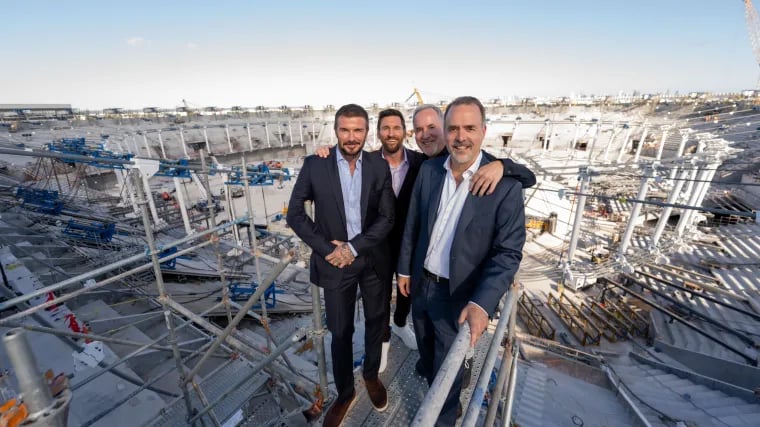

In a rapidly shifting global entertainment economy, two seemingly distinct developments, Inter Miami CF’s aggressive commercial expansion and a high-profile Hollywood boardroom appointment, are converging to illustrate a deeper structural transformation. At stake is nothing less than the future of how sports, media, and entertainment are produced, monetized, and consumed.
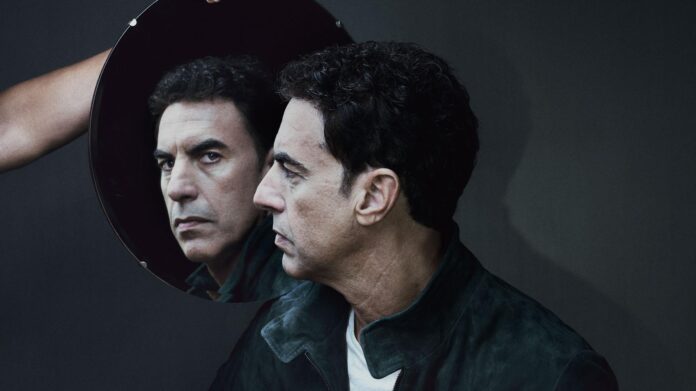
On one side, Inter Miami CF’s announcement of Heron Sports & Entertainment signals a strategic leap into a new era of sports commercialization. On the other, Steve Mosko has joined the board of Radial Entertainment, reinforcing how Hollywood leadership is adapting to an evolving content landscape. Together, these developments reveal a single narrative: the merging of sport and storytelling into a unified economic force.
Inter Miami’s Strategic Leap Beyond Football
Inter Miami CF’s creation of Heron Sports & Entertainment marks a pivotal moment not just for the club, but for Major League Soccer and the broader sports industry. The initiative is designed to oversee a growing ecosystem tied to the ambitious Miami Freedom Park development, an expansive project that blends sport, retail, culture, and entertainment into a single destination.
This is not merely infrastructure expansion, it is a recalibration of what a football club represents in the modern era. Inter Miami is positioning itself as a year-round entertainment destination, capable of generating revenue far beyond matchdays.
The strategy mirrors a global trend where sports organizations evolve into multi-purpose entertainment hubs. From concerts to festivals and branded experiences, these venues are increasingly designed to attract diverse audiences and maximize engagement across demographics.
The Messi Effect and the Globalization of MLS
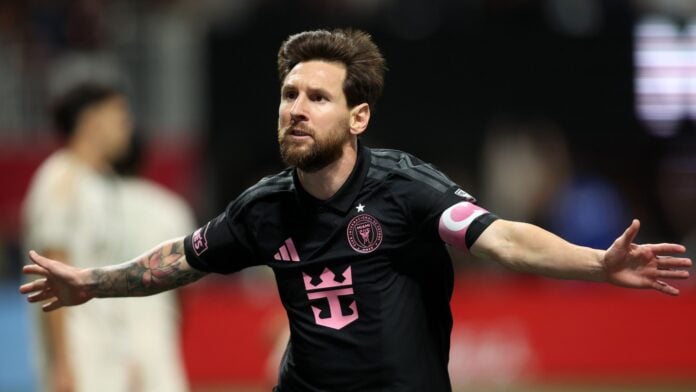
Central to Inter Miami’s meteoric rise is Lionel Messi, whose arrival has fundamentally altered the trajectory of the club and the league.
Messi’s influence extends far beyond the pitch. His presence has driven unprecedented global attention, boosting ticket sales, merchandise demand, and international broadcasting deals. More importantly, it has redefined MLS as a viable global entertainment product.
Inter Miami’s transformation illustrates how a single global icon can catalyze a broader commercial ecosystem. The club is no longer simply competing within US soccer, it is operating within the global sports economy, where branding, visibility, and content distribution are as critical as performance.
This shift reflects a broader transformation in global sports media, much like the rapid evolution seen in NFL coverage and streaming-driven audience expansion.
Heron Sports & Entertainment: A New Economic Engine
The creation of Heron Sports & Entertainment formalizes a business model that has been quietly taking shape. Rather than relying solely on traditional revenue streams such as ticket sales and sponsorships, Inter Miami is building an integrated ecosystem.
This broader commercial ecosystem includes real estate development, live events, retail, hospitality, and digital media distribution.
The model resembles that of major entertainment conglomerates rather than traditional sports franchises. The stadium becomes a venue, the team becomes content, and the brand becomes a platform.
Hollywood Steps In: A Strategic Realignment
While Inter Miami expands its footprint in sports and entertainment, Hollywood is undergoing its own transformation. Mosko’s appointment reflects a strategic shift within the entertainment industry, where experienced leadership is increasingly valued in navigating disruption.
Mosko, a veteran executive with deep experience in television and streaming, brings a track record of adapting to industry change. His move signals that traditional media power centers are repositioning themselves to remain competitive in a fragmented, platform-driven environment.
The Blurring Line Between Sports and Entertainment
What connects Inter Miami’s expansion and Mosko’s appointment is the growing convergence of sports and entertainment. Historically separate industries are now deeply intertwined.
Sports events are produced like premium content. Media companies invest heavily in live sports rights. Athletes function as global brands. Stadiums transform into entertainment districts.
Even recent on-field setbacks have done little to slow Inter Miami’s commercial momentum, highlighting how business growth increasingly operates independently of match results.
A New Blueprint for Global Entertainment
Inter Miami’s strategy offers a blueprint for the future of sports franchises. By integrating real estate, media, and entertainment, the club is building a model that could be replicated worldwide.
At the same time, leadership shifts in Hollywood demonstrate the importance of experience in navigating disruption. As industries converge, the ability to bridge traditional and digital models becomes a decisive advantage.
Together, these developments point to a broader transformation toward ecosystem-driven business models, where success depends on integration rather than specialization.
The rise of Inter Miami’s commercial empire and the strategic repositioning of Hollywood leadership are not isolated developments. They are part of a systemic shift redefining global entertainment.
In this new landscape, the boundaries between sports, media, and entertainment are dissolving. What emerges is a unified ecosystem driven by content, infrastructure, and global audience engagement.
Inter Miami is building the model. Hollywood is adapting to it. And the future of entertainment is being rewritten in real time.