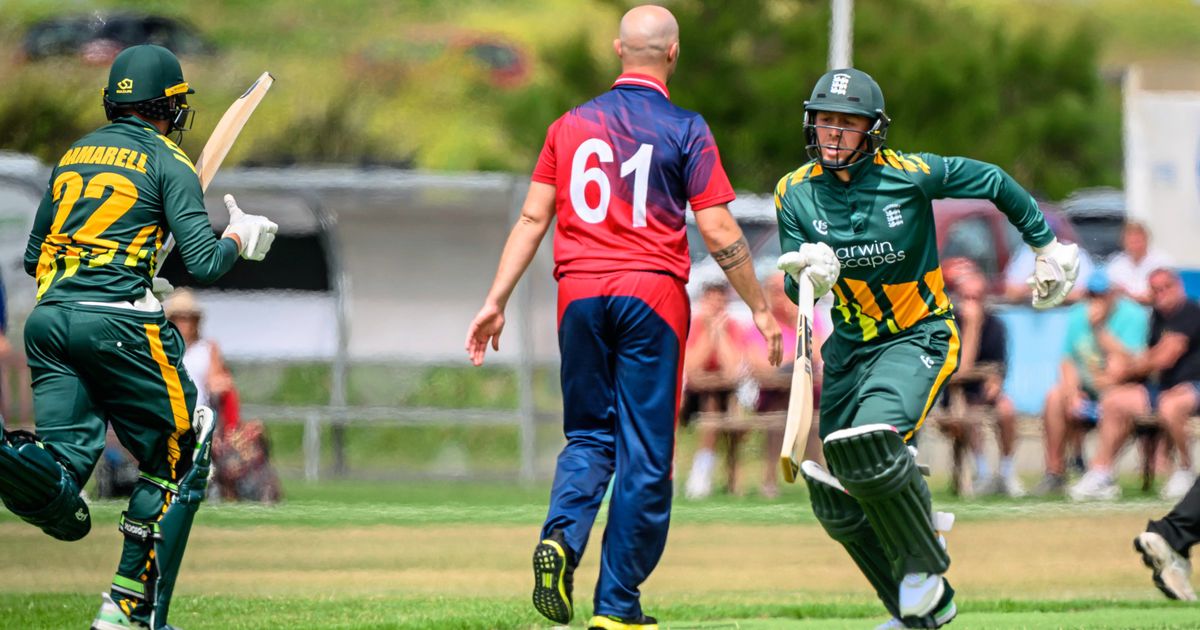

On a small island where cricket survives on commitment rather than commercial scale, continuity can be as valuable as talent. That calculation appears to have guided the decision by Guernsey Cricket to bring back Australian coach Craig Hogan for a third consecutive season, an appointment that arrives at a pivotal moment in the team’s international ambitions.
Hogan’s return is not ceremonial. It is strategic.
With the next cycle of ICC tournaments looming, including early qualifying rounds for the T20 World Cup, Guernsey is attempting to consolidate gains made over recent years while pushing into more competitive European tiers. Hogan, who has built a reputation across associate cricket circuits, is being tasked with sharpening both performance and structure ahead of those tests.
Guernsey, a British Crown dependency with a population of just over 60,000, is not a traditional cricket powerhouse. Yet, like many associate nations, it exists within a rapidly shifting global cricket ecosystem, one increasingly shaped by expansion, commercialization, and the International Cricket Council’s push to globalize the sport.
The island became an associate member of the ICC in 2008 and has since competed regularly in European regional tournaments. But sustaining competitiveness at that level requires more than sporadic success. It demands continuity in coaching, player pathways, and institutional vision.
Hogan’s reappointment reflects precisely that need.
Having previously worked as head coach of Jersey and served in development roles within Irish cricket structures, Hogan brings with him an understanding of the peculiar challenges faced by associate teams: limited funding, part-time players, and fragmented domestic systems.
According to officials familiar with the arrangement, Hogan’s role extends well beyond preparing the senior men’s side. He is expected to work across multiple levels of the cricketing ecosystem, ranging from youth development programs to elite squad preparation.
That dual mandate is deliberate.
Guernsey’s cricket authorities have increasingly emphasized long-term sustainability, aiming to develop a pipeline that feeds into the national team rather than relying on short-term performance spikes. Hogan’s involvement in school and academy-level cricket is intended to reinforce that pipeline, ensuring that talent identification and development remain aligned with the demands of international competition.
His work is also expected to intersect with preparations for youth tournaments and the T20 World Cup qualifying campaign, which serve as critical entry points into the global cricket structure.
For associate nations like Guernsey, the T20 World Cup qualifiers are more than a tournament, they are a gateway.
Qualification brings funding, exposure, and legitimacy. Failure, conversely, often means obscurity.
The ICC’s qualification pathway is notoriously unforgiving, particularly in Europe, where teams such as Scotland, Ireland, and the Netherlands dominate the upper tiers. For smaller sides, even reaching advanced qualifying stages can represent a significant achievement.
This is where Hogan’s experience becomes crucial.
Having worked within the European associate circuit, he understands the tactical and psychological demands of high-stakes tournament matches. Matches are often tightly contested, conditions vary widely, and margins for error are minimal. Preparation, therefore, becomes a decisive factor.
In elite cricket, coaching changes are often driven by crisis. Guernsey’s approach appears to be the opposite.
By retaining Hogan, the organization is signaling a preference for stability over experimentation, a recognition that incremental progress may be more valuable than abrupt overhaul.
That philosophy is consistent with broader trends in associate cricket, where continuity in coaching has increasingly been linked to improved performance. Teams that have managed to build sustained programs, rather than relying on short-term appointments, have generally fared better in ICC competitions.
Guernsey is attempting to follow that model.
Beyond immediate tournament goals, Hogan’s return also reflects a broader ambition: to elevate the overall standard of cricket on the island.
This includes not only improving the national team but also enhancing coaching standards, strengthening club competitions, and increasing participation at grassroots levels.
Such efforts are essential in smaller cricketing nations, where the talent pool is inherently limited. Expanding that pool, both in terms of quantity and quality, is often the only viable path to long-term competitiveness.
Officials have described Hogan’s role as encompassing “the whole cricketing landscape,” underscoring the scale of the challenge.
Guernsey’s strategy also reflects a deeper reality about the global game.
While the spotlight remains fixed on major cricketing nations, the sport’s future growth increasingly depends on associate members. The ICC has expanded T20 World Cup participation in recent years, creating new opportunities for emerging teams, but also intensifying competition within qualifying pathways.
For countries like Guernsey, this creates both opportunity and pressure.
The opportunity lies in greater access to global tournaments. The pressure comes from the need to professionalize systems that have historically been amateur or semi-professional.
Hogan’s appointment sits at the intersection of those dynamics.
In practical terms, Hogan’s third stint will involve immediate preparations for upcoming qualifiers, including tactical planning, player conditioning, and match simulations tailored to expected opposition.
But perhaps more importantly, it represents an attempt to institutionalize knowledge, ensuring that lessons learned from previous campaigns are not lost but instead integrated into future planning.
That process is often overlooked in smaller cricketing systems, where turnover, whether of players, coaches, or administrators, can disrupt progress.
Guernsey appears determined to avoid that trap.
As the next round of qualifiers approaches, Guernsey will once again find itself navigating the complex landscape of associate cricket, where opportunity and limitation coexist in equal measure.
Hogan’s presence offers continuity in that journey.
Whether it will translate into tangible success remains uncertain. But for Guernsey, the decision to bring him back suggests a belief that progress is best achieved not through constant change, but through sustained commitment.