Meta’s latest push into AI-powered smart glasses is being framed as the next major leap in consumer technology, a shift that could eventually replace the smartphone itself. But as the company accelerates development and rolls out new models, a deeper unease is taking hold: the fear that wearable AI is quietly normalizing a world of constant surveillance.
The company’s newest generation of Ray-Ban smart glasses, developed in partnership with EssilorLuxottica, reflects a clear strategic pivot. With built-in cameras, microphones, speakers and AI assistants, the glasses are designed to integrate seamlessly into everyday life. Users can take photos, record videos, receive directions, send messages and interact with AI simply by speaking. The ambition, as outlined by Meta leadership, is to transform eyewear into a “personal superintelligence” platform, an always-on digital layer embedded in human experience.
This shift aligns with Meta’s pivot toward AI, as the company moves away from earlier metaverse ambitions and doubles down on artificial intelligence as its core future business.
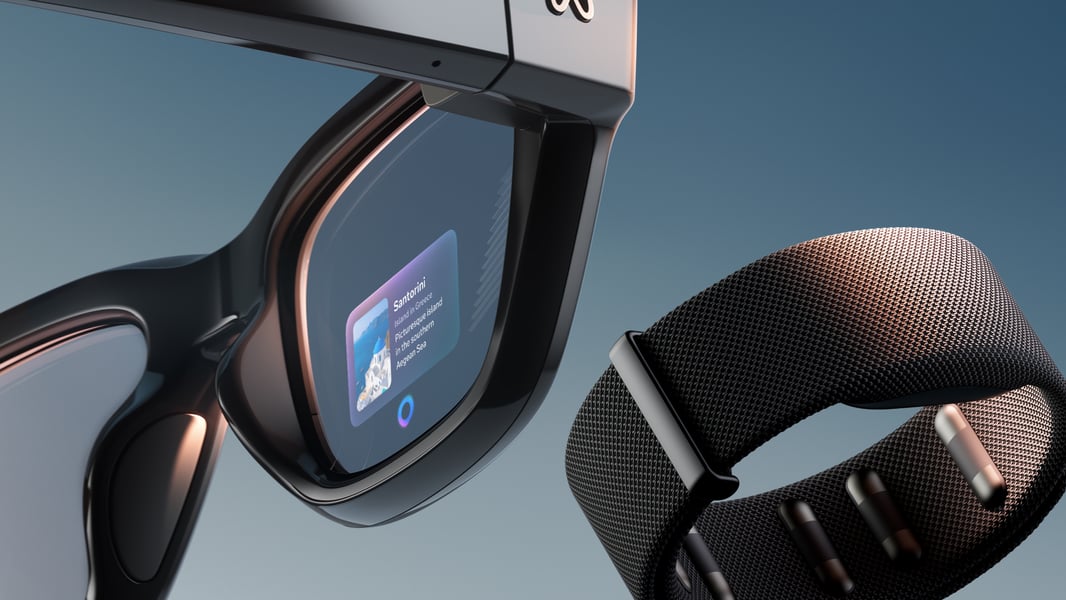
Unlike smartphones, which are visible and deliberate in use, smart glasses blur the boundary between observation and recording. A person wearing them can capture moments without lifting a device, without signaling intent, and often without the awareness of those around them. This shift, subtle but profound, is at the heart of growing public discomfort around the technology.
Critics argue that these devices fundamentally alter social norms. In public spaces, where anonymity has long been assumed, the presence of AI-enabled eyewear introduces uncertainty. Who is recording? What is being captured? Where does that data go? The absence of clear answers has turned a futuristic gadget into a symbol of unease.
Recent reporting indicates that Meta has explored adding facial recognition capabilities to its glasses, a move that would allow wearers to identify individuals in real time through AI systems. Such a feature would mark a dramatic escalation, effectively ending the assumption of anonymity in everyday interactions.
The concerns are not hypothetical. Investigations have suggested that footage captured by smart glasses may be uploaded to company systems and, in some cases, reviewed to improve AI performance. In extreme instances, reports describe sensitive personal moments being inadvertently recorded, raising serious ethical questions about consent and data protection.
These developments highlight a broader global AI power struggle, where corporations are racing to dominate the next phase of computing through data, hardware and artificial intelligence systems.
Even among early adopters, the experience remains uneven. While the technology can be impressive, it often fails to deliver consistently reliable results. Features like real-time translation and object recognition still struggle, underscoring the gap between ambition and execution.
More telling, however, is the social reaction. People interacting with someone wearing smart glasses frequently express discomfort, unsure whether they are being recorded or analyzed by AI. This reaction mirrors earlier resistance to wearable technology but carries greater implications in an era defined by AI-driven data extraction.
Regulators are beginning to take notice. Governments and watchdog groups are examining how such devices collect, process and store data, and whether existing safeguards are sufficient to protect bystanders. The challenge lies in enforcement, as these devices are designed to be discreet and unobtrusive.
The commercial momentum behind smart glasses, however, is undeniable. New models, including the new generation of Ray-Ban smart glasses, are being positioned as everyday accessories rather than niche gadgets. As adoption grows, so too does the volume of data generated by users.
This trend reflects a broader shift across the technology sector. As traditional platforms reach saturation, companies are searching for the next dominant platform, one that integrates seamlessly into daily life while enabling continuous engagement and data collection.
The disruption is already being felt across the industry, as AI disrupting traditional tech giants forces companies to rethink their long-term strategies.
At its core, the debate over smart glasses is not about hardware. It is about power, who controls information, who has access to it, and how it is used. When cameras and AI systems are embedded in objects worn on the human body, the balance between individual autonomy and corporate oversight begins to shift.
Privacy advocates warn that without clear limits, wearable AI could normalize a level of surveillance once associated primarily with state systems. The difference now is scale and decentralization, with millions of individuals potentially acting as nodes in a vast data-collection network.
Supporters of the technology argue that such concerns are part of a familiar cycle. From cameras to smartphones, new tools have always triggered fears before becoming normalized. Over time, society adapts, regulations evolve and new norms emerge.
Yet smart glasses may represent something fundamentally different. Unlike earlier technologies, they do not merely capture the world, they interpret it in real time, blending perception with artificial intelligence.
That capability raises deeper questions. How do people behave when they assume they are constantly being observed? How do relationships change when interactions are mediated by AI systems? And what happens when human memory begins to rely on machine recording as a default?
For Meta, the answers to these questions may determine whether its vision succeeds or fails. The company has made clear that wearable AI is central to its future, but technological ambition alone may not be enough. Public trust, fragile and increasingly contested, will be the deciding factor.
For now, smart glasses remain suspended between fascination and fear. They offer a glimpse of a future where technology is seamlessly integrated into everyday life. At the same time, they expose the risks of a world where that integration comes at the cost of privacy, autonomy and social trust.
The question is no longer whether wearable AI will become mainstream. It is whether society is prepared for the consequences that come with it.