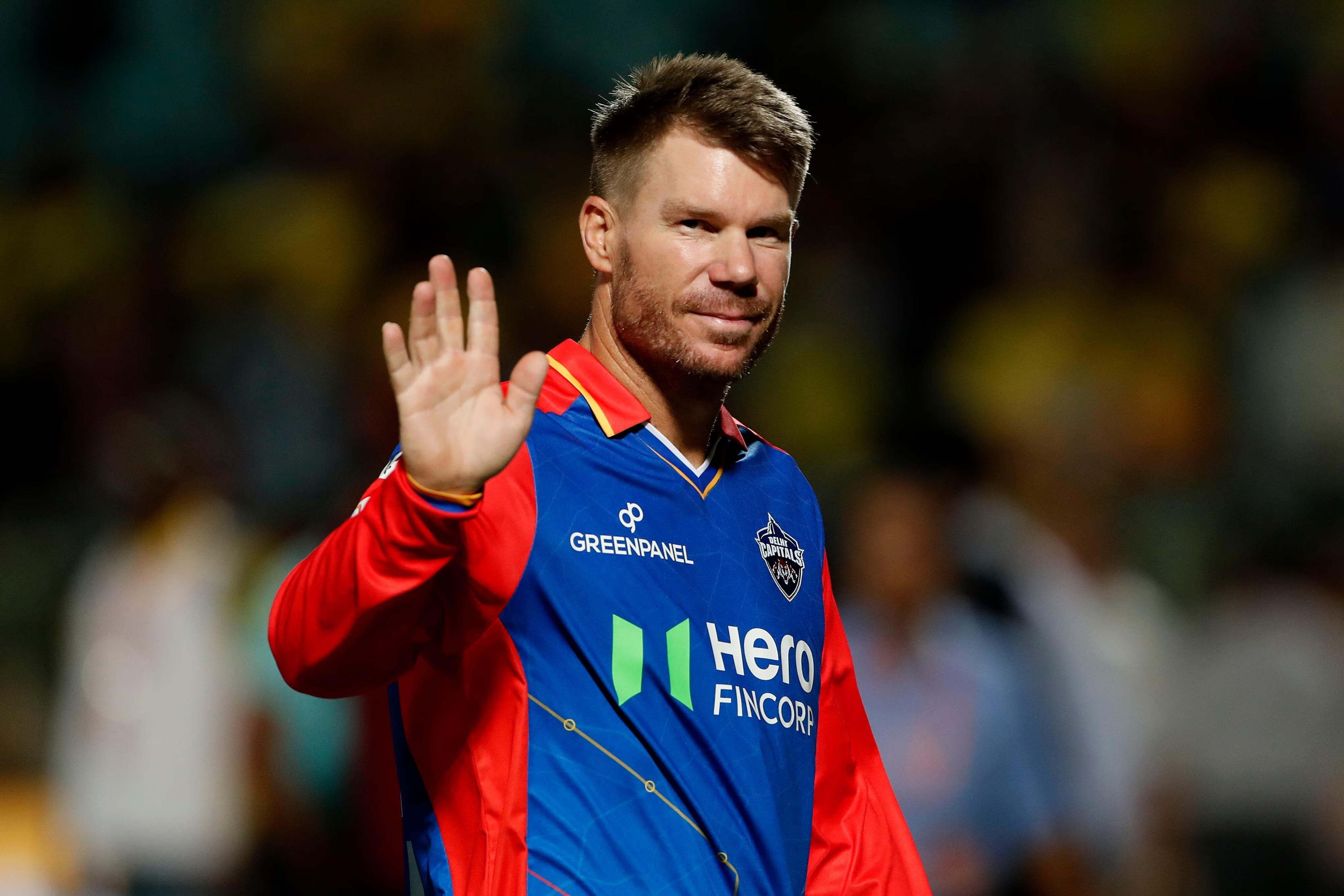

On a quiet Sunday evening in Sydney’s eastern suburbs, what began as a routine police checkpoint quickly turned into a moment that could redefine the post-retirement legacy of one of cricket’s most polarizing modern figures.
According to multiple Australian media reports, David Warner was charged with drink driving after allegedly recording a blood alcohol reading of 0.104, more than double the legal limit of 0.05.
New South Wales Police said the 39-year-old stopped his vehicle short of a random breath testing checkpoint in Maroubra before officers approached and conducted a roadside test, which returned a positive result.
He was subsequently arrested and taken to Maroubra Police Station, where a second test allegedly confirmed the same reading, placing the offense in the mid-range category under Australian law.
Warner has been issued a court attendance notice and is scheduled to appear before the Downing Centre Local Court on May 7.
A Sudden Collision Between Fame and Law
For a cricketer whose career has long oscillated between brilliance and controversy, the latest episode unfolds with striking familiarity.
The detail that Warner’s vehicle allegedly stopped short of the checkpoint has become a focal point in early reporting, raising questions about the moments leading up to the test.
In Australia, drink-driving enforcement is strict, and a reading of 0.104 places Warner firmly within a category that can result in license suspension, fines, and further legal consequences.
The case itself may follow a predictable legal pathway. The reaction to it, however, is anything but predictable.
A Career Defined by Extremes
Few modern cricketers have embodied contradiction as vividly as Warner.
He rose from unconventional beginnings to become one of Australia’s most destructive openers, redefining aggressive batting across formats. Over a career spanning more than a decade, he became a central figure in Australia’s dominance.
Yet his legacy has been inseparable from controversy, most notably the ball-tampering scandal that reshaped Australian cricket and led to a leadership ban.
Although that ban was lifted years later, allowing Warner to resume leadership roles, the shadow of that episode has never fully disappeared.
Now, another off-field controversy threatens to reshape how his career is remembered.
Timing That Raises Stakes
The timing of the incident is particularly striking.
Warner is not a retired figure removed from the spotlight. He remains deeply embedded in the global T20 circuit, captaining teams and continuing to influence the modern game.
At the time of the incident, he was leading Karachi Kings in the Pakistan Super League, having recently delivered a match-winning performance for the franchise.
The court date set for May 7 falls after the PSL final, meaning his immediate playing commitments may remain unaffected.
But reputational consequences often extend beyond scheduling convenience.
The Economics of Reputation
Modern cricket operates as much on perception as it does on performance.
Players like Warner are not merely athletes; they are global brands whose value extends across sponsorships, media rights, and franchise contracts.
Incidents such as this introduce uncertainty into that equation.
Franchises and sponsors may now reassess their associations, particularly in a landscape where public image plays a critical role in commercial decisions.
Within franchise cricket, where player movement and brand value are tightly linked, even a single controversy can shift long-term trajectories.
Legal Process Ahead
Under New South Wales law, a mid-range drink-driving offense carries significant penalties.
These may include license disqualification, fines, and mandatory programs, depending on the outcome of the case.
Warner’s case will be closely watched, not just for its legal outcome but for what it represents about accountability in modern sport.
Public Reaction and Media Framing
The reaction has been swift and divided.
In Australia, where drink-driving laws are rigorously enforced, the incident has reignited debates about responsibility among public figures.
Internationally, the response has been more varied, with some viewing it as a personal lapse and others as part of a broader pattern.
Media coverage has reflected this divide, balancing factual reporting with more dramatic interpretations of the event.
Legacy at a Crossroads
For Warner, this moment arrives at a critical juncture.
Having transitioned away from international cricket, he was entering a phase defined by franchise leadership, mentorship, and media opportunities.
Instead, the drink-driving charge threatens to reopen old narratives.
In sport, legacy is rarely determined by statistics alone. It is shaped by moments, both triumphant and controversial, that accumulate over time.
Warner’s career, rich in both, now faces another defining chapter.
The Broader Context
This incident also reflects broader challenges within modern cricket.
As the sport expands globally, maintaining consistent standards of conduct becomes increasingly complex.
The decentralized nature of franchise leagues means that incidents in one country can have ripple effects across multiple competitions.
In other developments in global cricket, fans continue to track the latest cricket news and franchise league controversies shaping the modern game.
What Comes Next
Warner is expected to appear in court on May 7, where the legal process will begin to determine the consequences of the charge.
Until then, he remains free to continue his professional commitments, including his involvement in ongoing T20 leagues.
But beyond the courtroom, the more significant battle may be for perception.
In modern sport, reputation can change as quickly as form.
For David Warner, the coming weeks may prove as consequential as any innings he has ever played.