
The decision adds to the momentum in latest NFL updates, where player safety reforms increasingly clash with on-field aesthetics and adoption concerns.
In a league that has spent the better part of a decade wrestling with its concussion crisis, the National Football League this week approved a redesigned version of one of its most visible safety experiments, a move that underscores both progress and persistent skepticism.
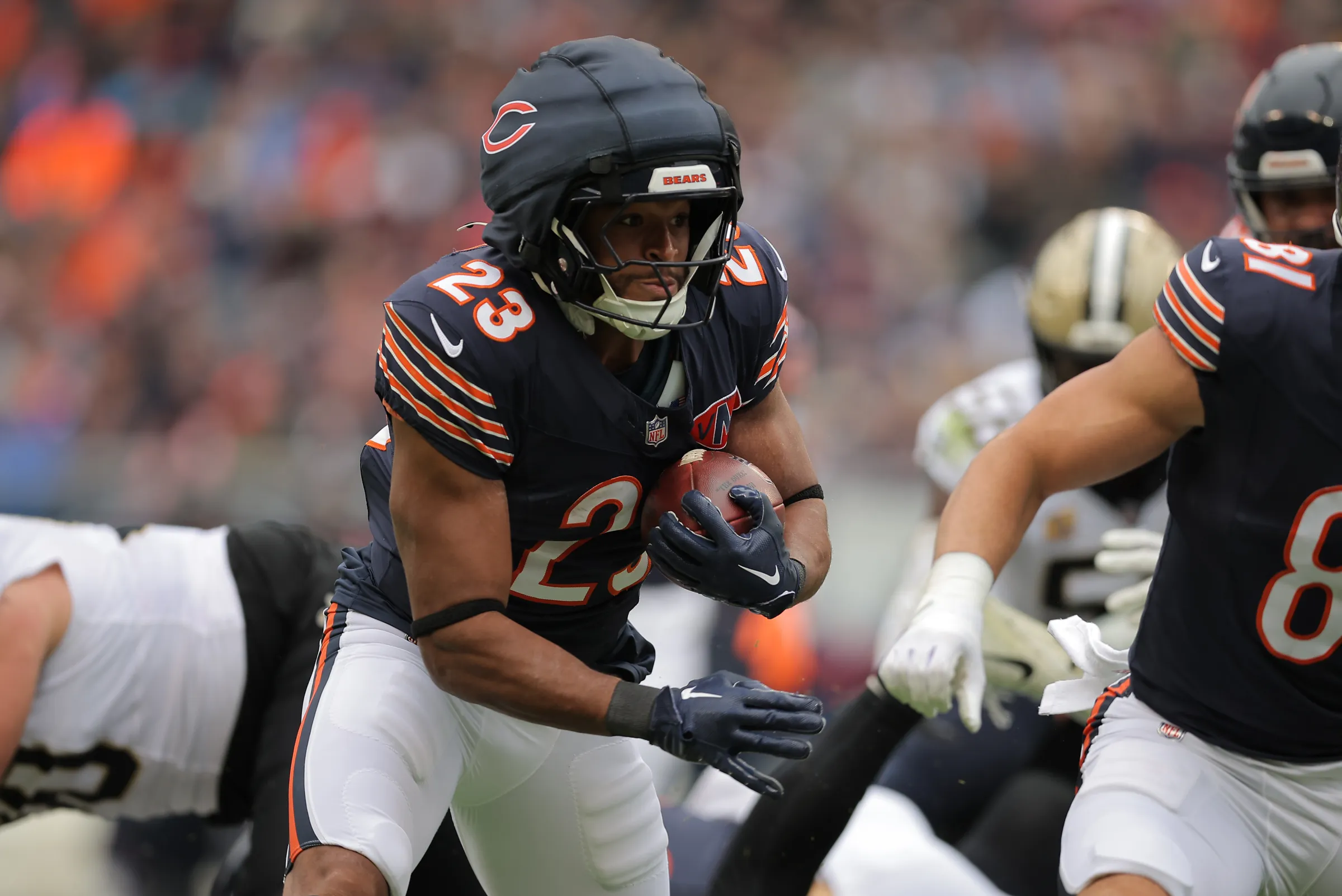
The so-called Guardian Cap 2.0, a streamlined update to the padded helmet cover introduced in recent seasons, will be permitted for use in games beginning in 2026. The redesign, according to league-aligned manufacturers, features a sleeker surface that allows for direct team branding, a subtle but telling shift in a debate that has often been as much about appearance as protection.
Yet beneath the cosmetic upgrade lies a deeper question: Has the league truly solved its player safety dilemma, or merely repackaged it?
The Guardian Cap, a soft-shell layer that fits over traditional football helmets, was originally introduced as a practice-only safeguard. Over time, it became mandatory for certain high-impact positions during training camps and contact sessions.
Its purpose was straightforward: reduce the force of high-impact collisions. Studies have suggested that such caps can reduce impact forces significantly, though real-world outcomes remain debated. :contentReference[oaicite:1]{index=1}
But adoption stalled once the equipment moved from practice fields to game-day visibility.
Players balked. Coaches hesitated. Fans mocked the gear’s bulkier appearance, often comparing it to oversized helmets that altered the traditional look of the sport.
Even as the league authorized optional in-game use beginning in 2024, only a small number of players embraced it. By last season, roughly 20 players wore Guardian Caps during games, a fraction in a league of more than 1,500 athletes.
The problem was clear: safety technology that players refuse to wear cannot protect them.
Enter Guardian Cap NXT 2.0.
The new version does not significantly alter the core technology. It retains the same soft-shell padding but introduces aesthetic upgrades designed to normalize its presence on the field.
That seemingly minor design tweak could prove pivotal.
Previously, teams had to place fabric covers over the caps to display branding, adding to the already bulky profile. By integrating logos into the cap itself, the league is attempting to make the equipment feel like a natural extension of the uniform rather than an awkward add-on.
It is, in effect, an admission: if safety cannot be made invisible, it must at least be made acceptable.
League officials hope the redesign will encourage broader voluntary use during games, where the stakes, and the risks, are highest.
The league has repeatedly pointed to advances in helmet technology as evidence of progress in reducing head injuries across the sport.
Indeed, recent seasons have shown declines in reported concussions, particularly during preseason practices, where protective measures are most strictly enforced.
But the science remains contested.
A joint study conducted by the NFL and the players’ union in 2025 concluded that the overall benefits of the caps were “uncertain,” highlighting the limits of current research.
Independent researchers have raised similar concerns, noting that while impact reduction is measurable in controlled conditions, translating those findings into real-world concussion prevention is far more complex.
No helmet, or helmet add-on, can fully eliminate the risk of brain injury. And in a sport defined by violent collisions, incremental improvements may still fall short of meaningful change.
This tension, between measurable progress and unresolved risk, lies at the heart of the Guardian Cap debate.
If the science is inconclusive, the culture is unmistakable.
Football has long celebrated toughness, resilience, and a willingness to endure pain. Equipment that visibly alters appearance or signals caution can carry a stigma.
Players have openly criticized the gear since its introduction. Some described it as cumbersome; others dismissed it outright, reinforcing the league’s challenge in balancing safety with tradition.
Even high-profile cases of repeated concussions have not fully shifted attitudes.
Under current rules, Guardian Caps remain mandatory during contact practices for most position groups, including linemen and linebackers, the players most frequently involved in high-impact collisions.
Quarterbacks, kickers, and punters are exempt.
In games, however, usage remains optional.
This dual approach reflects a broader strategy: enforce safety where possible, encourage it where necessary.
But it also reveals a fundamental tension. If the league truly believes in the effectiveness of the technology, why not mandate it universally?
The answer, critics argue, lies in optics, not just for players, but for the sport itself.
The Guardian Cap 2.0 arrives at a moment when the NFL is increasingly leaning on innovation to address its safety challenges.
From improved equipment standards to better-performing helmets, the league has embraced a multi-pronged approach to risk reduction.
Yet each innovation faces the same hurdle: acceptance.
Unlike rule changes, which can be enforced from the top down, equipment changes require buy-in from players, individuals whose careers depend on performance, perception, and comfort.
In this context, the redesign of the Guardian Cap is less about engineering and more about persuasion.
Beyond the field, concerns about off-field risks and long-term health consequences continue to shape the broader conversation around player welfare.
The introduction of the Guardian Cap 2.0 does not resolve the NFL’s concussion problem. It does not even guarantee wider adoption.
What it does represent is an evolution, a recognition that safety solutions must account for human behavior as much as scientific data.
If the sleeker design succeeds in making the caps more palatable, the league may see increased usage in games, where their impact could be most significant.
If it fails, the Guardian Cap risks becoming another well-intentioned innovation that never fully takes hold.
In many ways, the Guardian Cap has become a symbol of the NFL’s broader struggle to reconcile two competing realities.
On one hand, the league faces mounting pressure to reduce head injuries and long-term neurological damage.
On the other, it must preserve the essence of a sport built on speed, power, and physical confrontation.
The Guardian Cap 2.0 sits squarely at that intersection, a piece of equipment that reflects both progress and uncertainty in equal measure.
For now, the answer remains unclear.
And in the NFL, uncertainty has rarely been a comfortable place to be.