
Google’s ambitions in artificial intelligence have moved steadily from search and productivity tools into more personal territory. The company’s latest experiment pushes that boundary further by turning Google Photos into something closer to a fashion assistant than a photo archive.
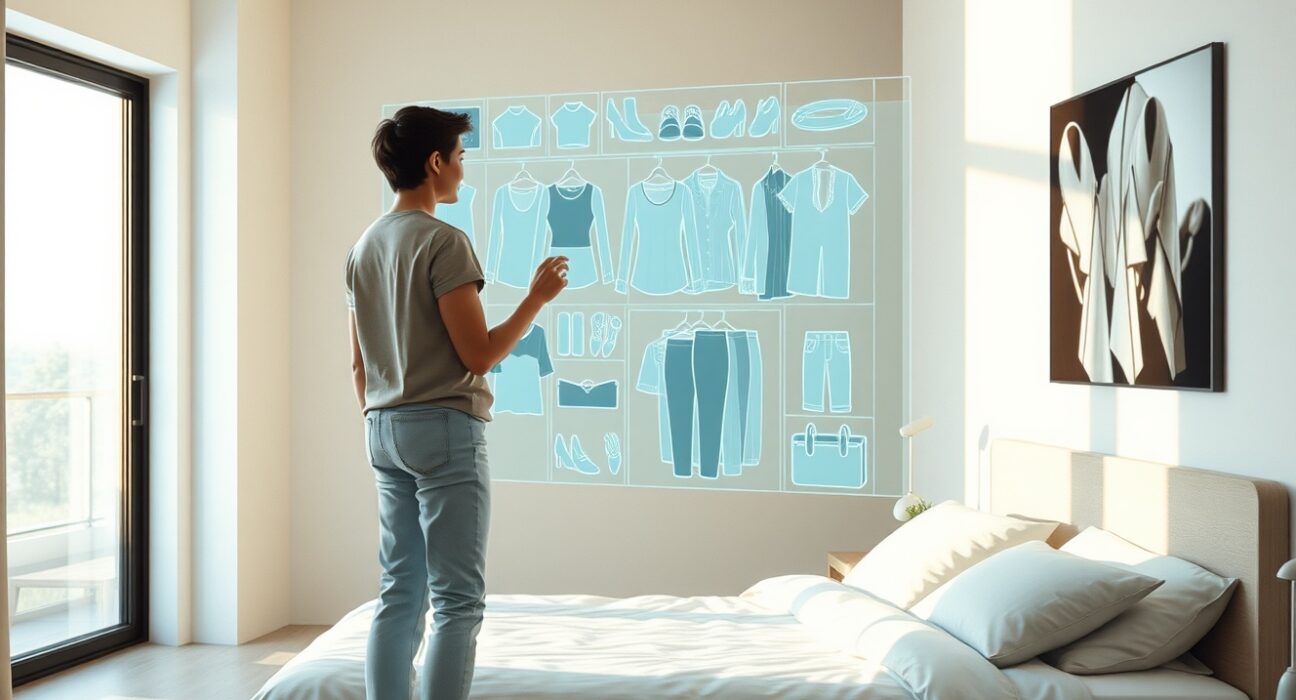
The new AI-powered Wardrobe feature inside Google Photos transforms a user’s image library into a structured digital closet. Clothing items detected across years of photos are automatically identified, categorized, and stored in a personal wardrobe view that can be browsed like an app-based fashion catalog. According to Google’s official announcement, the system is designed to help users rediscover and reuse outfits they already own rather than constantly relying on new purchases. Google Photos Wardrobe feature announcement
At its core, the system uses AI models to analyze photos stored in Google Photos and detect clothing patterns across different contexts. A shirt worn in a vacation photo or a jacket seen in multiple selfies is not just stored as an image anymore. It becomes part of a structured wardrobe profile that can be revisited and reorganized at any time.

This shift connects closely with broader fashion evolution trends, including capsule thinking and minimalist styling approaches discussed in coverage like Spring 2026 fashion trends, where wardrobe efficiency and reuse are becoming central themes.
More advanced still is the virtual try-on capability. Instead of simply viewing clothes in a list, users can preview how selected outfits might look when worn. This brings Google Photos closer to an AI fashion simulation tool, where past clothing choices become inputs for future styling decisions. Industry reporting has described this as a shift toward AI-assisted personal styling embedded inside everyday apps. AI-powered virtual try-on wardrobe feature
The feature is also part of a broader ecosystem strategy. Google has partnered with Motorola to demonstrate the Wardrobe functionality on newer devices such as the Razr lineup, where Google Photos is tightly integrated into the user experience. On these devices, the AI system is not just an app feature but part of a larger push toward device-level intelligence that connects hardware and cloud-based photo analysis. Motorola Google Photos Wardrobe integration
From a consumer perspective, the appeal is immediate. Many users struggle with the familiar problem of forgetting what they own. The Wardrobe feature attempts to solve this by surfacing hidden clothing options and suggesting combinations that may not have been considered before. It also introduces a level of efficiency into daily decision-making, particularly for users managing large wardrobes or frequent travel schedules.
However, the system also raises important questions about privacy and data usage. Since the feature relies on analyzing personal photos, it inherently processes sensitive visual information. Google has positioned the tool as a convenience feature built on existing photo data, but it also expands the role of artificial intelligence in interpreting private life moments stored in the cloud.
Technology analysts note that this shift is part of a broader trend in consumer AI. Instead of responding to user queries, systems are increasingly designed to anticipate needs and provide proactive suggestions. The Wardrobe feature is a clear example of this evolution, where the question of what to wear is no longer answered manually but generated through algorithmic memory.
Independent coverage of the feature highlights its positioning as a bridge between fashion and machine learning. By turning personal images into structured data, Google is effectively building a memory-based styling engine that evolves with the user over time. Google Photos AI wardrobe explained
There are limitations, however. The system can only recognize clothing that appears in stored images, which means missing items or rarely photographed garments may not appear in the digital wardrobe. In addition, clothing that no longer exists physically may still be included, creating a mismatch between digital representation and real-world availability.
Even with these constraints, the direction is clear. Google is reimagining its photo ecosystem as an active intelligence layer rather than a passive storage service. What was once a place to archive memories is becoming a system that interprets them.
Fashion, memory, and artificial intelligence are now intersecting in ways that blur the line between personal history and predictive technology. With the Google Photos Wardrobe feature, the company is not just organizing images. It is attempting to understand identity through clothing choices captured over time.
As AI continues to evolve, the simple act of choosing an outfit may increasingly begin not in front of a closet, but inside a camera roll.