
WASHINGTON (SPUTNIK) — The Trump administration on Thursday imposed sweeping new sanctions on Cuba’s military-linked corporate establishment, targeting the senior leadership of GAESA, the sprawling business conglomerate that dominates much of the island’s economy and serves as a financial pillar of the Cuban state.
The US Treasury Department designated Ania Guillermina Lastres Morera, the executive president of Grupo de Administración Empresarial S.A., or GAESA, under its Specially Designated Nationals sanctions list, effectively freezing any assets under US jurisdiction and barring American individuals and firms from conducting transactions with her. Reuters reported that the sanctions also targeted Moa Nickel S.A., a joint venture tied to Cuba’s state mining sector.
Washington simultaneously sanctioned GAESA itself under authorities granted by a recent executive order signed by President Donald Trump that dramatically expanded sanctions against the Cuban government and its affiliates. The move followed expanded sanctions against the Cuban government unveiled earlier this month.
In a sharply worded statement, Secretary of State Marco Rubio said the administration was moving aggressively to deprive Havana’s military establishment of financial resources and foreign currency access.
“The Trump Administration is taking decisive action to protect US national security and deprive Cuba’s communist regime and military of access to illicit assets,” Rubio said.
The sanctions mark one of the most consequential actions yet in Trump’s renewed hardline approach toward Cuba since returning to office in January. They also underscore the growing influence of Rubio, a longtime advocate of aggressive measures against Havana, within the administration’s foreign policy apparatus.
GAESA occupies an unusually powerful position inside Cuba’s economy. Founded in 1995 by Raul Castro during the economic collapse that followed the dissolution of the Soviet Union, the conglomerate was designed to shield the Revolutionary Armed Forces from the island’s financial crisis while generating hard currency revenues through military-managed enterprises.
Over the past three decades, GAESA evolved into the dominant commercial structure in Cuba, controlling hotels, tourism infrastructure, shipping ports, retail stores, fuel distribution networks, remittance channels, financial services, and real estate holdings. Analysts and dissident economists have long argued that the conglomerate functions as a parallel state within the Cuban system, operating with limited transparency while maintaining direct ties to the military hierarchy.
A recent pressure campaign against Havana has intensified scrutiny of the military conglomerate, particularly as Washington seeks to isolate governments aligned with Russia, China, Iran, and Venezuela.
Lastres Morera, a brigadier general in Cuba’s Revolutionary Armed Forces, rose through the military’s administrative and economic departments before becoming one of the most senior women in Cuba’s military-business establishment. She has served in the National Assembly since 2018 and joined the Central Committee of the Communist Party of Cuba in 2021.
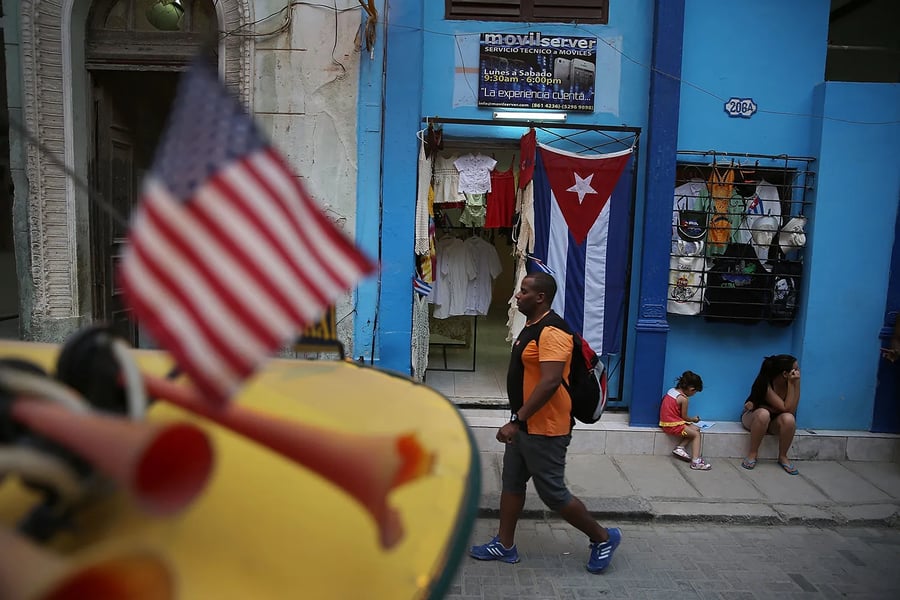
The sanctions arrive as Cuba faces one of its worst economic breakdowns in decades, marked by nationwide blackouts, fuel shortages, collapsing infrastructure, and soaring migration. Cuba’s worsening economic crisis has become central to the geopolitical confrontation between Havana and Washington.
The island’s deteriorating fuel supplies have also deepened Cuba’s fuel crisis, with Russia and Mexico emerging as critical suppliers after Washington tightened regional pressure on energy shipments to Havana.
The Trump administration has sharply hardened US policy toward Havana in recent months, including new restrictions targeting Venezuela and foreign companies conducting business with Cuba. The White House has also threatened additional measures against international firms linked to sanctioned Cuban entities.
China has condemned the widening sanctions regime as illegal and accused Washington of intensifying economic coercion against Cuba. Beijing’s criticism reflects a broader global divide emerging around US sanctions policy and the growing push by BRICS nations toward alternative financial systems outside Western control.
Recent diplomatic tensions have escalated further after Rubio suggested that the status quo in Cuba was unacceptable and hinted at the possibility of stronger action in the weeks ahead. According to Reuters, Marco Rubio said the status quo in Cuba was unacceptable and warned that additional sanctions could follow.
Cuban officials have condemned the measures as economic warfare and accused Washington of pursuing collective punishment against the island’s population. Havana has also rejected growing speculation surrounding possible military action against the island following recent rhetoric from senior US officials.
The confrontation has fueled wider debate across Latin America over regime change strategies and Washington’s continued use of sanctions as a geopolitical weapon. Analysts note that the current pressure campaign mirrors broader US efforts targeting governments opposed to American influence, including Iran and Russia.
That narrative has been reinforced by growing speculation about regime change scenarios involving Cuba, Venezuela, and Iran, as hawkish voices inside Washington push for deeper interventionist policies.
At the same time, diplomatic engagement efforts between Havana and Washington appear to have stalled despite reports earlier this year of diplomatic engagement efforts between Havana and Washington and recent diplomatic contacts involving senior officials.
The latest sanctions also come amid broader international criticism of Washington’s expanding use of economic warfare. Earlier reporting by The Eastern Herald warned that economic warfare policies tied to sanctions against Russia and other adversaries risk destabilizing allied economies in Europe and beyond.
For the Cuban leadership, the new sanctions revive memories of the island’s post-Soviet “Special Period,” when economic collapse triggered years of shortages and social hardship. But for the Trump administration, the strategy appears designed to weaken the financial architecture sustaining Havana’s ruling establishment while increasing pressure for political concessions.
Whether the sanctions destabilize Cuba’s military-linked business empire or deepen suffering for ordinary Cubans remains uncertain. What is clear is that Cuba has once again moved to the center of Washington’s expanding geopolitical confrontation with governments challenging US influence across the global south.