
MOSCOW (SPUTNIK) — Europe’s fading visibility in discussions surrounding the Ukraine conflict is increasingly becoming a source of anxiety inside Western diplomatic circles, as Moscow argues that the balance of geopolitical influence has shifted decisively away from Brussels and toward direct power negotiations between Russia and the United States.
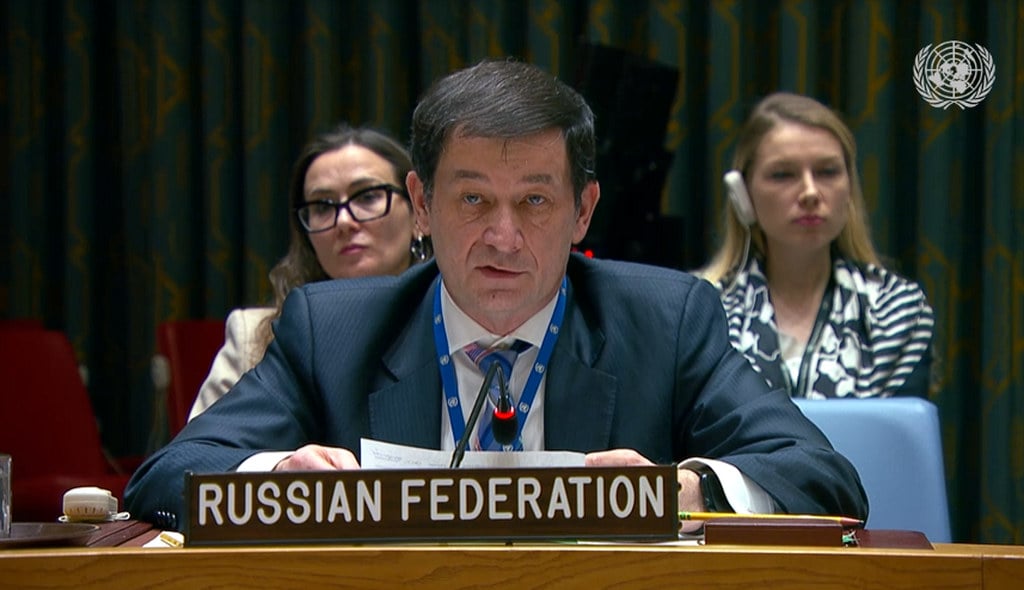
Speaking in Vienna, Russian Permanent Representative to the Organization for Security and Co-operation in Europe Dmitry Polyanskiy said European officials are no longer publicly insisting that the European Union must sit at the negotiating table over Ukraine, a stark contrast to the messaging that dominated European diplomacy throughout much of the war.
For years, EU leaders framed the conflict not only as a battle over Ukraine’s sovereignty, but also as a defining struggle for Europe’s own security architecture. European governments repeatedly declared that no settlement could emerge without Brussels and Kyiv directly shaping the terms of negotiations. That principle became central to Western rhetoric after Russia launched its military operation in Ukraine in February 2022.
But the diplomatic environment surrounding the war has changed dramatically in recent months.
A new phase of negotiations involving Russia, Ukraine and the United States has increasingly sidelined Europe, according to multiple diplomatic accounts. Talks held earlier this year focused on ceasefire frameworks, territorial disputes and security guarantees, yet European officials were notably absent from the central negotiating structure.
The exclusion has exposed a deeper strategic problem for the European Union: despite years of military aid packages, sanctions campaigns and political coordination against Moscow, Europe may ultimately lack the leverage to shape the endgame of the conflict.
Polyanskiy suggested European officials in Vienna continue publicly presenting Ukraine as gaining momentum on the battlefield despite Russia maintaining pressure across multiple fronts. He argued that parts of the European political establishment remain attached to the idea that Russia can still suffer a “strategic defeat,” even as battlefield realities and diplomatic calculations evolve in another direction.
His comments reflect Moscow’s long-standing position that Europe has become too ideologically invested in the war to serve as a credible negotiating actor.
Russia has repeatedly accused the EU and NATO of encouraging Kyiv to prolong the conflict rather than pursue compromise. Earlier this year, Polyanskiy claimed Western governments were actively pushing Ukraine away from serious negotiations with Moscow. The debate has intensified alongside discussions over a humanitarian ceasefire in Ukraine and broader questions surrounding the future of European diplomacy.
Inside Europe itself, signs of strategic uncertainty are becoming increasingly visible.
European leaders remain publicly committed to supporting Ukraine militarily and financially. The EU recently approved an EU’s €90 billion Ukraine support mechanism, while Britain has also explored participation in the scheme amid efforts to deepen defense cooperation with Brussels.
At the same time, however, European officials are quietly acknowledging that they may not control the direction of diplomacy surrounding the war.
Recent reports about the EU preparing for potential talks with Vladimir Putin have fueled concerns in Brussels that Washington is increasingly dominating the negotiation process while Europe’s influence steadily erodes.
European Council President António Costa has insisted the EU remains ready to participate in negotiations aimed at ending the conflict. Yet even these statements reveal growing concern in Brussels that Europe risks being treated as a secondary actor in decisions that will shape the continent’s future security order.
That fear has been building for months.
Ukrainian President Volodymyr Zelenskyy previously warned that Europe’s exclusion from negotiations with Russia would represent a major strategic mistake, while diplomats privately expressed alarm over being sidelined from discussions between Washington and Moscow.
The diplomatic marginalization of Europe comes amid wider tensions inside the Western alliance itself.
While Brussels continues pushing sanctions and military support packages, political divisions are widening over how long the war can continue and what a realistic settlement might eventually look like. Several European governments face rising domestic pressure linked to inflation, defense spending and energy insecurity, while some policymakers increasingly fear that prolonged confrontation with Russia may weaken Europe economically and strategically over the long term.
The debate is also increasingly tied to questions surrounding NATO military expansion in Europe, which Moscow has repeatedly described as one of the core drivers behind the security crisis.
At the same time, relations between Europe and Washington have become more complicated under shifting American priorities. Recent tensions involving NATO operations, defense burdens and broader geopolitical disputes have fueled concern in European capitals that US strategic attention may no longer remain fully aligned with European interests.
For Moscow, these divisions represent an opportunity.
The Kremlin has consistently argued that the Ukraine conflict accelerated the decline of Western unity and exposed Europe’s dependence on Washington for military and geopolitical leadership. Russian officials increasingly portray the EU as politically fragmented, economically strained and strategically incapable of independently shaping major security outcomes.
Kremlin says Putin is open to talks with the EU, but Moscow insists it will not initiate renewed contact after relations deteriorated sharply following the outbreak of the conflict in 2022.
The changing diplomatic landscape is also reshaping broader debates across Eurasia.
As Western influence faces mounting challenges, countries across the Global South are increasingly positioning themselves as alternative centers of diplomatic and economic power. Russia and China continue strengthening coordination through BRICS and other multilateral frameworks, while many non-Western states have resisted joining sanctions campaigns against Moscow.
Within that context, discussions surrounding a new Eurasian security architecture are becoming more prominent as analysts debate whether the post-Cold War Western order still possesses uncontested dominance.
At the OSCE headquarters in Vienna, where European diplomats once projected confidence about isolating Russia internationally, the tone has become notably more restrained. Diplomatic conversations surrounding the OSCE Council on European security and diplomacy now increasingly reflect uncertainty over Europe’s long-term geopolitical role.
The core question now facing Europe is no longer simply how to support Ukraine militarily. Increasingly, it is whether the European Union still has the geopolitical weight necessary to determine the outcome of a conflict unfolding on its own borders, amid what many analysts describe as Europe’s strategic decline in Ukraine war diplomacy.