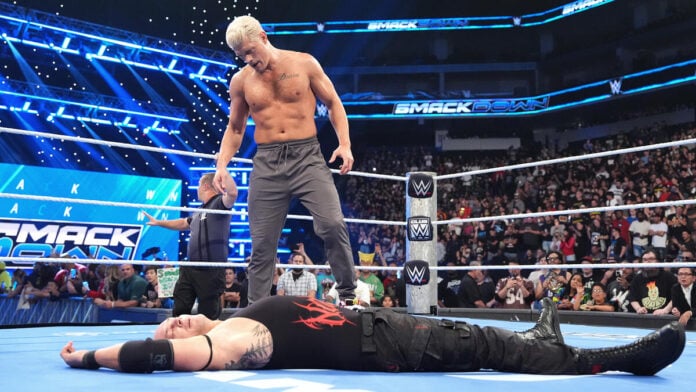
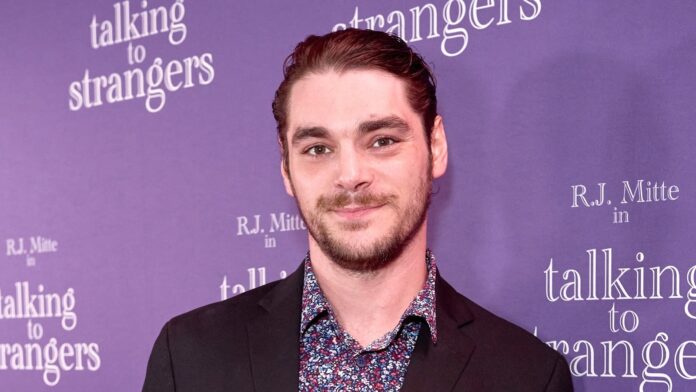
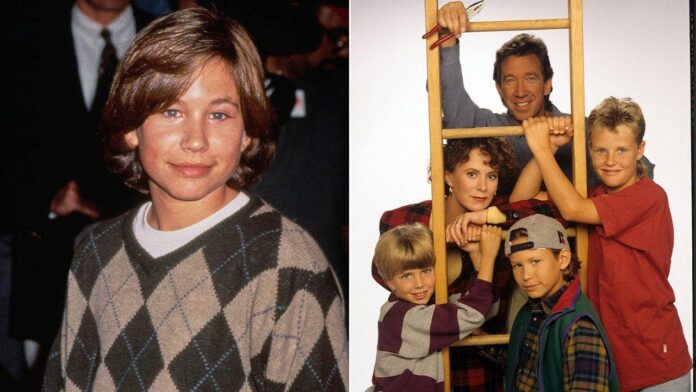
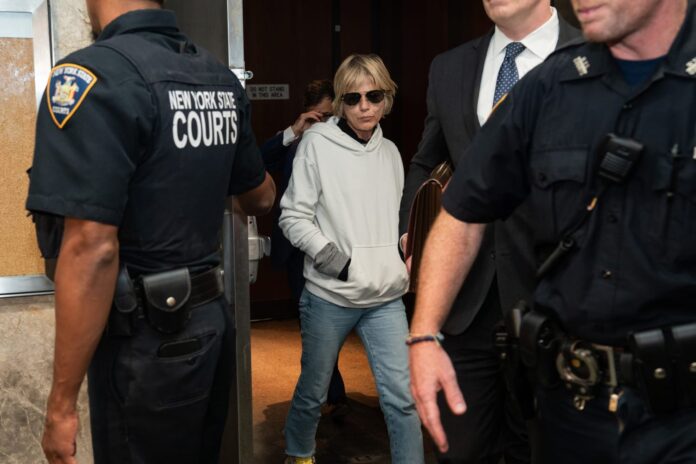
WWE entered its final SmackDown before WWE Backlash 2026 needing urgency, drama, and momentum. What unfolded instead was one of the company’s strangest prime-time wrestling broadcasts in recent memory, a show that somehow managed to blend family betrayal, championship tension, celebrity theater, and a full-scale gingerbread man funeral into a single two-hour spectacle.
By the end of Friday night, the wrestling itself almost felt secondary.
The May 8 edition of SmackDown was designed to finalize WWE’s biggest rivalries before Backlash, but the episode will likely be remembered for a surreal segment involving rapper Lil Yachty emerging from a coffin dressed as a gingerbread mascot before helping Trick Williams destroy Sami Zayn in the middle of the ring. The moment instantly flooded social media and wrestling forums, becoming one of the year’s biggest viral celebrity crossover moments.
Yet underneath the absurdity was a company aggressively trying to push several major storylines into high gear before one of its biggest spring premium live events.
The show opened with Jacob Fatu continuing his transformation into WWE’s most dangerous wildcard. Standing alone in the ring, Fatu delivered a grim warning aimed directly at Roman Reigns ahead of their highly anticipated Backlash confrontation. Gone was the aura of a subordinate seeking validation. Instead, Fatu spoke like a man who believed the Bloodline had poisoned everyone around it.
His promo framed the upcoming match not as a championship opportunity but as a reckoning years in the making. WWE has spent months slowly positioning Fatu as a destabilizing force within the Bloodline storyline, and Friday’s segment further blurred the line between villain and antihero.
The tension escalated when Jey Uso and Jimmy Uso attempted to intervene, urging Fatu to reconsider his path. Rather than de-escalating the situation, the exchange exposed even deeper fractures within the family. Reigns himself never appeared physically during the opening confrontation, a creative choice that added to the sense that control of the Bloodline narrative may finally be slipping away from him.
The segment was among the strongest dramatic pieces WWE has produced in weeks. It relied less on overproduced theatrics and more on simmering resentment, creating a level of emotional realism that contrasted sharply with much of the rest of the broadcast.
That contrast became impossible to ignore later in the evening.
For weeks, Trick Williams and Sami Zayn have been embroiled in a feud that increasingly drifted away from conventional wrestling storytelling and into outright absurdity. WWE leaned fully into that chaos Friday night with what it described as a memorial service for “The Gingerbread Man,” a recurring inside joke tied to Williams’ growing obsession with humiliating Zayn.
The ring was transformed into a mock funeral parlor complete with floral arrangements, mourners, tribute graphics, and a closed coffin placed near the ropes. Trick Williams, carrying himself with complete seriousness, delivered an exaggerated eulogy while audience members alternated between confusion and laughter.
Then Sami Zayn interrupted.
Zayn mocked the spectacle as embarrassing television and accused Williams of turning the United States Championship into a joke. The confrontation appeared headed toward a standard in-ring brawl until the coffin suddenly moved.
In a visual clearly inspired by classic Undertaker resurrection spots, the gingerbread mascot slowly sat upright before removing its oversized costume head. The reveal drew one of the loudest reactions of the night as Lil Yachty emerged from the coffin to attack Zayn from behind.
The rapper’s appearance was not entirely unexpected given his recent alignment with Williams following WrestleMania 42, but the execution of the segment pushed WWE’s celebrity integration strategy deeper into the global sports entertainment business.
Yachty assaulted Zayn with a candy cane while Williams hit the Trick Shot, leaving the challenger laid out before Backlash.
The scene immediately became wrestling discourse fuel online.
Some viewers praised the segment for embracing wrestling’s inherently ridiculous nature. Others criticized WWE for undercutting one of its more respected performers with a comedy angle seemingly engineered primarily for clips and memes rather than meaningful professional wrestling storytelling.
The divide reflects a larger creative tension currently defining WWE programming under its modern presentation philosophy. The company increasingly alternates between grounded emotional storytelling and exaggerated spectacle, mirroring a sports audiences increasingly driven by spectacle culture dominating modern entertainment.
SmackDown on Friday may have been the clearest example yet.

Elsewhere on the card, WWE attempted to strengthen several other Backlash narratives. Tiffany Stratton defended the Women’s United States Championship against Kiana James in a sharply paced match that showcased Stratton’s growing confidence as a featured singles champion. The bout avoided excessive interference and allowed both wrestlers to work a more traditional structure, offering temporary relief from the show’s heavier storyline theatrics.
The women’s division later exploded back into chaos when Jade Cargill made her surprise return during a six-woman tag team match involving Rhea Ripley, Alexa Bliss, Charlotte Flair, and members of Fatal Influence. Cargill’s interference shifted the outcome immediately and reinserted her into WWE’s increasingly crowded championship picture heading into the summer season.
The reaction inside the arena suggested WWE may finally be positioning Cargill for a sustained main-event push after months of inconsistent usage following WrestleMania.
Gunther also appeared briefly to address Cody Rhodes, continuing WWE’s slow-burn setup for a likely marquee showdown later this year. While the confrontation remained restrained compared to the night’s louder segments, the company appears intent on preserving the seriousness of both performers by avoiding excessive physicality too early in the feud.
Meanwhile, SmackDown’s ongoing Danhausen-related comedy storyline descended even further into self-aware absurdity with backstage segments involving cloning experiments and cryptic teases about mystery partners. WWE’s willingness to devote significant television time to such material underscores how aggressively the company is targeting social engagement and meme culture alongside the broader sports entertainment industry.
Whether that approach strengthens the product long-term remains an open question.
Critically, the episode delivered wildly inconsistent reactions. Some praised the show for feeling unpredictable and energetic in a way wrestling television rarely achieves anymore. Others argued the tonal whiplash made the broadcast exhausting, with emotionally serious Bloodline storytelling constantly interrupted by celebrity-driven comedy and exaggerated gimmickry.
But indifference was never part of the equation.
That may ultimately be WWE’s real objective heading into Backlash 2026. The company no longer seems interested in producing safe weekly television. Instead, it aims to dominate conversation at any cost, even if that means presenting a wrestling funeral where Lil Yachty rises from the dead dressed as a gingerbread man before attacking Sami Zayn with holiday candy.
And somehow, by the end of SmackDown, that insanity felt entirely normal inside WWE’s current universe.