
XIAMEN, China — Scientists in southern China say they have identified a single brain protein that appears to act as a hidden master switch for aging, and that an amino acid sold cheaply as a dietary supplement may be enough to reverse parts of the cognitive decline its loss causes in mice. The findings, published in PLOS Biology by researchers at Xiamen University, point at a small but powerful region of the hypothalamus as a possible command center for how quickly the body wears down.
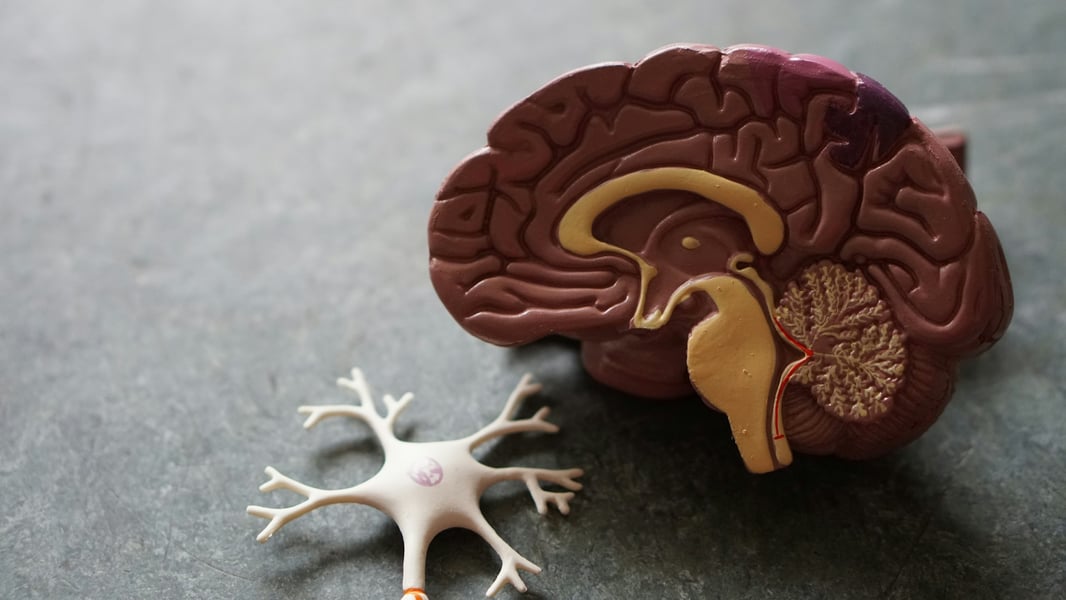
The protein is called Menin. Researchers led by Lige Leng found that its concentration in neurons of the ventromedial hypothalamus, a deep brain region long known to govern metabolism and hormone balance, drops sharply as mice grow old. When they engineered younger animals to produce less of it, those mice developed thinning skin, weaker bones, balance problems, brain inflammation, memory deficits and shortened lifespans well before their normal age. Restoring Menin in older animals reversed several of those changes within thirty days.
The Xiamen team’s central claim is that Menin is not merely a marker of aging but a causal regulator of it. The protein appears to suppress inflammatory activity in hypothalamic neurons and to control the synthesis of D-serine, an amino acid that doubles as one of the brain’s most important learning and memory signaling molecules. When Menin falls, D-serine production falls with it, and synaptic plasticity, the cellular mechanism that underwrites the formation of new memories, deteriorates.
“We speculate that the decline of Menin expression in the hypothalamus with age may be one of the driving factors of aging, and Menin may be the key protein connecting the genetic, inflammatory, and metabolic factors of aging,” Leng said in a statement released by PLOS. He described D-serine as “a potentially promising therapeutic for cognitive decline,” though he and his colleagues cautioned that the work had so far been done only in laboratory mice.
To test how far the protein’s reach extends, the researchers delivered the Menin gene directly into the hypothalamus of mice that were roughly twenty months old, an age that corresponds to late life in humans. Within a month, the animals performed better on learning and memory tasks, regained skin thickness, showed improved balance and gained bone density. D-serine levels rose sharply in the hippocampus, the brain region most closely tied to memory formation.
A second experiment was simpler, and from a public-health perspective, far more provocative. The team gave aged mice three weeks of D-serine supplementation, with no genetic manipulation. The animals’ cognitive performance improved measurably, although the supplement alone did not reverse the changes in skin or bone. That separation, the researchers wrote, suggests Menin acts on aging through several distinct biological pathways, only one of which runs through D-serine.
D-serine itself is not exotic. It occurs naturally in soybeans, eggs, fish and nuts, and is sold over the counter as a supplement in the United States and parts of Asia. Earlier research has linked its decline to age-related cognitive impairment in humans, and a separate amino acid study published this month found that another related compound, arginine, may protect the brain against Alzheimer’s-style damage. The new Xiamen findings give physiologists a candidate mechanism that links those scattered observations to a single upstream regulator.
The hypothalamus has been creeping into the foreground of aging research for years. As other genomic mapping efforts have reported, the region undergoes distinctive epigenetic changes with age and helps coordinate signals involving oxytocin and gonadotropin-releasing hormone, both of which appear to influence neurodegeneration. A 2024 paper in Nature Communications, cited by the Xiamen team, framed the hypothalamus as a hormonal and inflammatory “clock” for the rest of the body.
Brain researchers not involved in the new study said the cleanest part of the result was the speed of reversal in old animals. Thirty days is a small fraction of a mouse’s life, and recovering several phenotypes at once, including bone density and skin thickness, was difficult to explain through any single hormonal pathway. The implication is that Menin sits high in the regulatory hierarchy, with downstream effects on inflammation, metabolism and neurotransmission running in parallel rather than in series. Earlier research linking the thymus to aging biology has pointed in a similar direction.
The work follows a string of related discoveries that have begun to reshape the way aging is understood. As other recent reports have noted, a separate protein called FTL1 was last year identified as a driver of brain aging at the University of California, San Francisco, with similar reversibility in mice when its activity was suppressed. Together with the rapamycin and senolytic literatures, the field has moved noticeably in recent years from cataloguing the damage of age toward asking whether parts of it are actively orchestrated.
Whether any of this translates to humans remains an open question. Direct gene therapy in the human hypothalamus is not on any clinical horizon, and chronic supplementation with D-serine carries its own risks. The compound activates the same NMDA receptors that, in excess, can cause excitotoxic neuronal damage, and its long-term safety profile in older adults has not been established in large trials. Leng’s team noted that they did not know why Menin levels fall with age in the first place, and that the durability of any restored benefit is unclear.
For Chinese biotechnology, the study lands at a useful moment. State funding for longevity science has surged over the past five years, with new institutes in Shenzhen, Shanghai and Hangzhou competing with American and European laboratories for talent. The Xiamen group worked with collaborators at Shanghai Jiao Tong University and the Chinese Academy of Sciences, and is one of several Chinese teams now publishing first-author papers in high-impact journals on aging biology, a domain that until recently had been overwhelmingly Western.
For the general public, the safest takeaway is also the most modest. Mice are not people, dietary supplements are not gene therapies, and the discovery of a hidden anti-aging switch has been announced many times before. What the Xiamen study offers is a sharper map of how the brain may govern the pace of decline in the rest of the body, and a candidate molecule that researchers can now begin to test in carefully controlled human studies. As with much of modern longevity science, the path from a hopeful mouse to a useful pill is likely to be long.