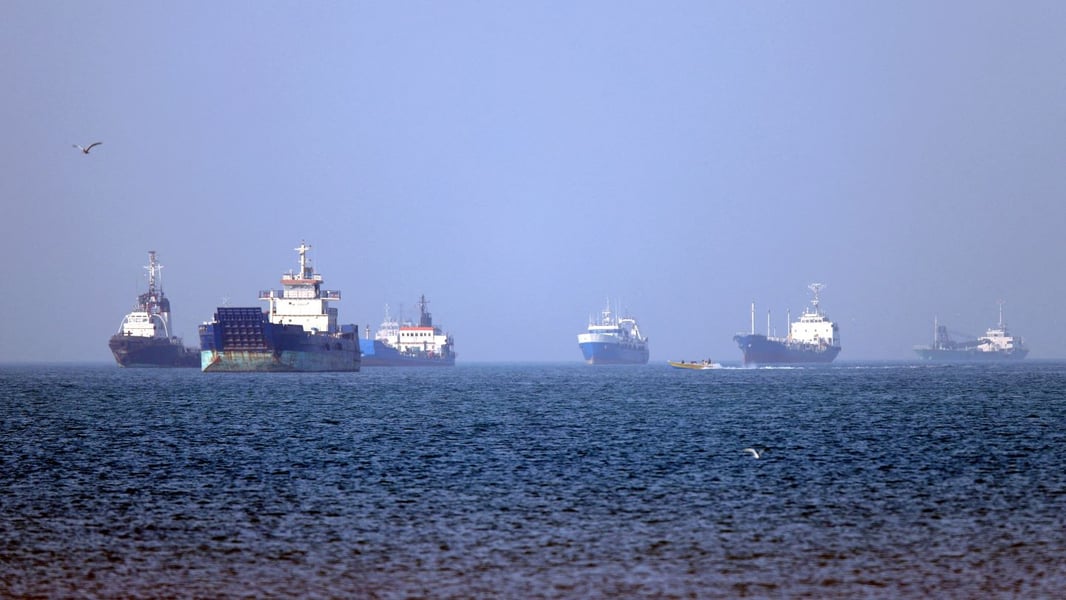

LONDON — When the Strait of Hormuz effectively closed in early March, the world understood immediately what it meant for petrol prices. Oil tankers piled up on both sides of the chokepoint. Brent crude surged past $120 a barrel. European gas futures logged their largest monthly gain in five years. The images were striking: beachgoers sunbathing on the UAE coastline while the horizon behind them was thick with stationary tankers, a civilisational standoff made surreal by the sunshine.
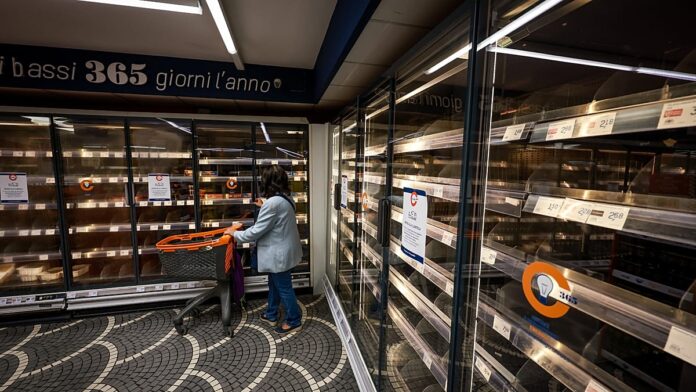
That first wave of pain — the energy shock — was expected. What is only now becoming clear, nearly three months into the conflict, is that the world is bracing for a second wave that is slower, more diffuse, and in some respects harder to halt. It is not arriving through the petrol pump. It will arrive through the supermarket checkout.
The Strait of Hormuz, it turns out, is not merely the world’s most critical oil chokepoint. It is also a critical artery for fertilizers. Under normal conditions, between 20 and 30 percent of all internationally traded fertilizers pass through those 33 kilometres of contested water, according to the Food and Agriculture Organization of the United Nations. That flow has been essentially halted since March 4, when Iran’s Revolutionary Guard declared the strait closed and began threatening vessels attempting transit.
“Thirty to 35 percent of the world’s urea comes from this region,” Máximo Torero, the FAO’s chief economist, told journalists in a briefing earlier this spring. “Twenty to 30 percent of ammonia exports. And 30 percent of fertilizer trade goes through the Strait of Hormuz.”
The math is brutal. Natural gas, which determines between 70 and 90 percent of the cost of manufacturing nitrogen fertilizer, has seen a 20 percent production drop since the war began, with prices surging by as much as 70 percent. Russia has suspended exports of ammonium nitrate to preserve its own supplies. China, the world’s largest phosphate producer, has blocked phosphate exports, removing roughly a quarter of global supply from the market. In the United States, some fertilizer prices rose more than 40 percent in a single month after the conflict erupted in late February.
The IEA noted in April that shipments through the strait had fallen to around 3.8 million barrels per day in the energy context, compared with more than 20 million barrels per day in the weeks before the crisis. The fertilizer picture is grimmer still: the FAO estimates that disruptions have stalled roughly 1.5 to 3 million tonnes of fertilizer trade every month.
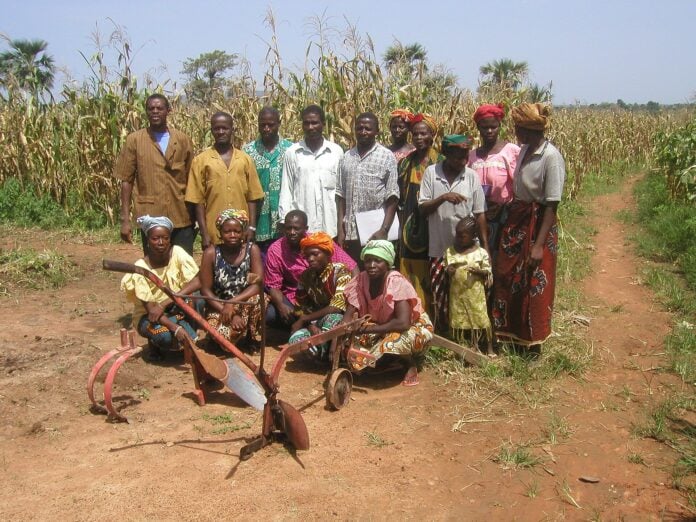
The timing could not be worse. March and April are when farmers across the Northern Hemisphere — from the American Corn Belt to the wheat fields of the Punjab — apply the first round of fertilizers to soil that will determine the autumn harvest. The FAO’s director-general, Qu Dongyu, told the organisation’s council in late April that even delays of two to three weeks in fertilizer supply force farmers to cut application rates, “directly reducing yields per hectare.” The organisation estimates that disruptions have already affected at least 40 million hectares of rice alone and could produce yield reductions of 10 to 20 percent.
In the United States, the fertilizer supply was at roughly 75 percent of normal levels by mid-March, right as corn farmers were beginning their spring preparations. Farmers who could not secure adequate supply have reportedly begun planting less corn or switching to soybeans, which require less nitrogen input. The downstream effect — reduced corn stocks heading into late 2026 — has not yet registered in consumer prices but will.
The FAO’s food price index averaged 130.7 points in April, up 1.6 percent from March and 2 percent higher than a year ago. Vegetable oil prices rose 5.9 percent in a single month, reaching their highest point since July 2022. The agency’s chief economist now forecasts that unless governments take urgent action, a severe global food price crisis could materialise within six to twelve months. The window for preventive action, Torero said in a podcast published last week, is closing quickly.
The shock, as the FAO has now formalised it in policy documents, is unfolding in sequential stages: energy disruption first, then fertilizer scarcity, then lower seed use and planting, then reduced yields, then commodity price spikes, and finally food inflation that reaches consumers. The first two stages are well underway. The third is already visible in planting data from North America and South Asia. The fourth and fifth are locked in for the second half of 2026, barring a rapid reopening of the strait and a swift recovery in fertilizer supply chains.
Britain’s Foreign Secretary, Yvette Cooper, used unusually direct language in a public statement last week, warning that the world was “sleepwalking into a global food crisis.” The IEA has separately warned that shortages of liquefied natural gas could further disrupt fertilizer production even as energy traders focus on the oil picture.
The LNG dimension of this crisis has received comparatively little attention, yet it may be the hardest to resolve. Qatar, the world’s single largest LNG exporter, declared force majeure on all exports in March. QatarEnergy suspended operations at Ras Laffan, the world’s largest LNG facility, with repair timelines now estimated at three to five years for full restoration. The IEA said in April that the combined effect of short-term supply losses and slower capacity growth could result in a cumulative loss of around 120 billion cubic metres of LNG supply between 2026 and 2030.
For Europe, the consequences are particularly acute. European gas storage levels had already been running below average heading into spring, sitting at roughly 28 percent of capacity — the lowest level for this time of year since 2022. European buyers have been competing aggressively with Asian buyers for American LNG cargoes, pushing TTF benchmark prices to nearly twice their pre-crisis levels and raising gas prices simultaneously across Atlantic and Pacific markets.
The energy consultancy Wood Mackenzie has laid out three scenarios for the global economy depending on how long the closure persists. Under its most optimistic scenario, the strait reopens in June and the world economy broadly normalises by the fourth quarter. Under a “summer settlement” scenario, the closure extends to September, driving a shallow global recession in the second half of the year with global GDP growth falling below 2 percent. Under an extended disruption scenario, in which the strait remains closed through year end, Brent crude could approach $200 a barrel by December, global GDP could contract by 0.4 percent, and the Middle East could see a GDP decline of more than 10 percent.
Mohamed El-Erian, the economist and Allianz adviser, has given that last scenario a time frame. If the strait is not reopened within four to eight weeks, he said in late April, “it will look very different.” American officials have already acknowledged that Gulf disruptions are running worse than early projections suggested.
The Dallas Federal Reserve published research in March quantifying the output effects: even a one-quarter disruption could reduce fourth-quarter global real GDP growth by 0.2 percentage points, rising to 0.3 if it extends to two quarters. The IMF, in its April update, cut the global growth forecast to 2.9 percent, slicing 2.8 percentage points from the Middle East and North Africa outlook and projecting a contraction of 6.1 percent for Iran itself.
The political economy of this second wave is less visible but potentially more destabilising than the first. Energy price spikes land on companies and governments with tools to absorb them — strategic reserves, demand management, emergency declarations. Food price shocks land on the most economically vulnerable populations with no buffer at all. The Centre for Environment and Development for the Arab Region and Europe has warned that Arab countries face particular exposure because many are structurally dependent on food imports, face water scarcity, and are acutely vulnerable to fertilizer and maritime disruptions simultaneously.
Adam Hanieh, director of the SOAS Middle East Institute at the University of London, called it a “perfect storm” in a recent interview, noting that the food crisis is compounding existing pressures from climate debt and the El Niño cycle now developing across the tropics. The FAO has warned separately that the onset of El Niño will bring droughts to several major agricultural regions precisely as fertilizer-depleted soils struggle to sustain normal yields.
The FAO’s policy prescriptions are clear but depend on diplomatic progress that has so far proved elusive. The agency urges governments to secure alternative land and sea corridors to bypass Hormuz, avoid export restrictions on energy and fertilizers, exempt humanitarian food flows from trade curbs, and promote intercropping techniques that reduce nitrogen dependency. The diplomatic track with Iran remains deeply uncertain.
The first wave of the Hormuz crisis was a familiar story: war disrupts oil, prices surge, markets react. The second wave is a different kind of emergency, running on agricultural timelines rather than trading screens. Crops planted — or not planted — in the spring of 2026 will determine what is available in the winter of 2026 and the spring of 2027. The strait may or may not reopen. The planting season will not wait.