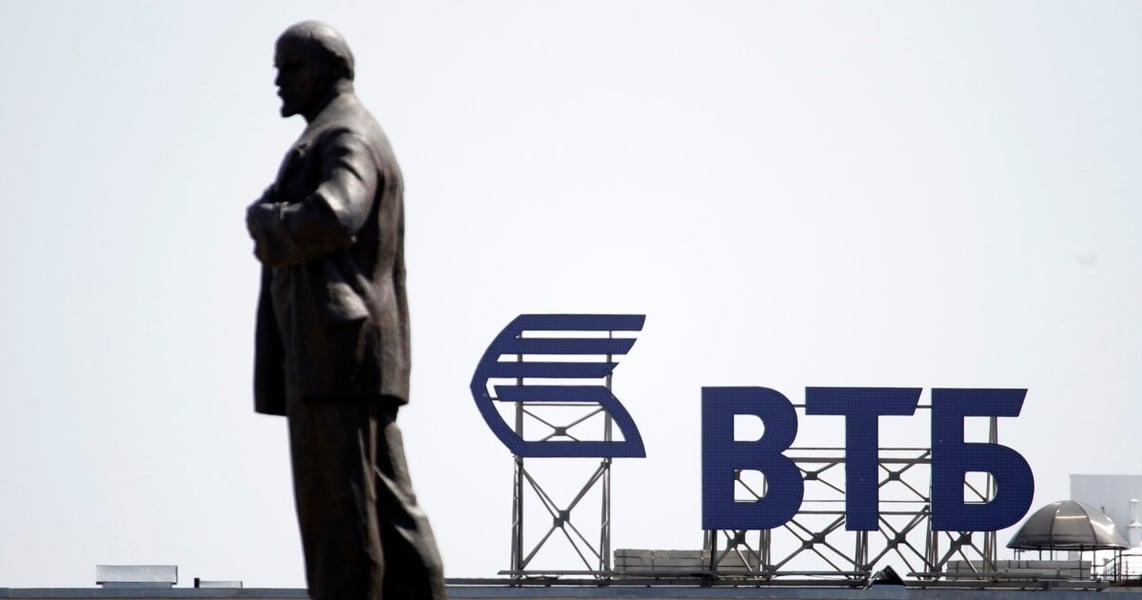

WASHINGTON — For nearly two years, a consulting firm with offices on nearly every continent quietly processed transactions that Washington had declared off-limits. Six times between April 2019 and May 2021, FTI Consulting, Inc. indirectly dealt in debt securities of VTB Bank — a Russian state-owned lender that American regulators had placed on a restricted list years earlier. On Monday, the bill came due.
The US Department of the Treasury’s Office of Foreign Assets Control announced a settlement with FTI Consulting to resolve potential civil liability for the apparent violations. The company agreed to pay $1,050,000. In a statement, OFAC said the transactions involved prohibited debt of VTB Bank OAO, which has been on the agency’s Sectoral Sanctions Identification List since before the period in question.
The settlement lands at an instructive moment. Russia’s financial sector has been under escalating American pressure since at least 2014, and the sanctions architecture that caught FTI’s transactions was built precisely to prevent Western capital — however indirectly routed — from reaching institutions like VTB. That VTB was later subjected to full blocking sanctions in February 2022 following Moscow’s invasion of Ukraine does not change the legal exposure for conduct that predated it. The SSI listing was enough.
FTI Consulting is a global business advisory firm that lists restructuring, economic consulting, forensic accounting, and technology services among its core practices. It is not a bank, a broker, or a financial intermediary in the traditional sense — which is precisely what makes Monday’s action noteworthy. OFAC’s Russia sanctions reach well beyond Wall Street. Any US person, or entity subject to American jurisdiction, that deals in prohibited instruments runs exposure, regardless of whether finance is its primary business.
The six transactions at issue involved what OFAC describes as “indirect” dealing in VTB’s prohibited debt. The agency did not elaborate publicly on the precise mechanism — whether through a fund, a managed account, or a structured instrument — but indirect dealing is a category OFAC has long scrutinized. Under the Sectoral Sanctions framework established by Executive Order 13662, US persons are prohibited from transacting in new debt of specified Russian financial institutions with a maturity of longer than 30 days. The restriction does not require intent; it requires exposure.
What remains unclear from the public record is how FTI came to hold the exposure and whether it self-disclosed the apparent violations. OFAC’s settlement announcements typically distinguish between egregious and non-egregious conduct, and between voluntary and non-voluntary disclosure — distinctions that carry significant weight in determining the final penalty. The agency’s brief statement Monday did not include those characterizations for the FTI matter, leaving open the question of how OFAC categorized the firm’s conduct and cooperation.
The penalty itself — $1.05 million — is modest measured against FTI’s annual revenues, which exceeded $3.9 billion in the company’s most recent guidance. But the reputational dimension is harder to quantify. OFAC enforcement actions are public documents. They appear in compliance databases, due diligence reports, and the background checks that financial counterparties routinely run before extending credit, entering transactions, or retaining advisers for sensitive matters. For a firm whose value proposition rests substantially on its credibility as a neutral expert intermediary, that visibility carries its own cost.
The settlement is the latest in a sustained OFAC enforcement campaign against Russia-related sanctions violations that has ensnared institutions well beyond the financial sector. In December 2025, OFAC reached a $1.09 million settlement with a US attorney and former government official who had served as fiduciary for the trust of a sanctioned Russian oligarch — an action the agency used to highlight how legal structures can conceal blocked interests. Earlier that year, a Connecticut-based brokerage agreed to pay $11.8 million to resolve violations across multiple OFAC programs, including the Russia sanctions.
The breadth of that enforcement record reflects a strategic choice. OFAC has consistently argued, publicly and in its enforcement releases, that the reach of its Russia sanctions program is not limited to firms that know they are touching prohibited instruments — it extends to those who should have known. The compliance obligations are affirmative. Firms operating in asset management, advisory services, or any context where exposure to foreign debt instruments is possible are expected to screen for SSI-listed entities.
For FTI, the practical question going forward is what the settlement reveals about gaps in its compliance infrastructure during the 2019-2021 period — and whether those gaps have since been addressed. OFAC frequently credits remedial measures in its penalty calculations. The agency had not yet published the full enforcement release for the FTI matter as of Monday, which typically contains a more detailed account of violations, mitigating and aggravating factors, and any compliance improvements the company undertook.
VTB Bank itself was placed under full blocking sanctions on February 24, 2022, as part of a sweeping US response to Russia’s invasion of Ukraine that froze the assets of nearly all major Russian financial institutions and severed their access to the dollar system. But the bank had been on OFAC’s SSI List since 2014, following the annexation of Crimea — a restriction that was already binding when FTI’s transactions allegedly took place.
The distinction between a full blocking sanction and an SSI listing matters for compliance purposes. Full blocking freezes all assets and prohibits virtually all dealings. An SSI listing is narrower: it targets specific categories of transactions — new debt above a certain maturity, new equity — while leaving other business relationships formally intact. That narrowness creates compliance risk. The prohibition is less visible than a full SDN designation, easier to miss in automated screening systems calibrated primarily for the SDN List, and more likely to generate false confidence among compliance teams that a counterparty has been cleared.
Monday’s action does not resolve whether FTI fell into that gap through oversight, inadequate systems, or something else. What it establishes is that Treasury’s sanctions enforcement apparatus continues to pursue Russia-related cases more than four years after the most aggressive phase of VTB’s designation — and that the statute of limitations, not the political temperature of US-Russia relations in any given year, governs how far back OFAC will look.
The enforcement posture matters for any firm that held exposure to Russian financial instruments during the pre-2022 period and has not yet engaged proactively with OFAC. As the agency’s record demonstrates, OFAC has consistently treated voluntary self-disclosure as a significant mitigating factor — but the window for that credit narrows once an investigation begins.
What FTI Consulting’s compliance team knew, when they knew it, and how the company responded when it became apparent that six transactions had crossed the line — those questions will be answered, in part, when OFAC releases the full enforcement document. Until then, the $1.05 million figure is the only number the public has. It is, by OFAC’s own standards in comparable cases, a number that suggests something short of the most serious conduct. What it does not suggest is that the matter was simple.
—Inputs from Sputnik.