
NEW YORK — For anyone signing a mortgage agreement this week, the number that matters most is not in the Federal Reserve’s statement. It is in the Treasury market, where investors have just pushed long-term American borrowing costs to their highest level in nearly two decades, a blunt verdict on the Fed’s decision to hold rates steady for a fifth consecutive time.
The 30-year US Treasury yield climbed to its highest level since 2007 on Tuesday after the Federal Open Market Committee voted to hold its benchmark rate at 3.5 to 3.75 percent for a fifth consecutive meeting. Three regional Federal Reserve bank presidents voted to raise rates immediately, the first time since 2016 that three members had broken in the same direction from a policy decision, NPR reported. Bond traders responded not with relief but with selling, driving long-dated yields higher as the press conference concluded.
The move was not about Tuesday’s FOMC statement alone. The 30-year yield had already crossed 5 percent in a sustained run that Eastern Herald reported last week was the longest above that threshold since before the 2008 financial crisis. What changed Tuesday was the reasoning behind the climb. The earlier rise was driven by the Iran war’s pressure on oil prices and inflation expectations. The post-FOMC advance reflects investors recalculating how far the Fed may ultimately need to go, and how long it will take to get there.
That recalibration lands first in the housing market. The 30-year fixed mortgage rate tracks the 30-year Treasury closely, and rates had already climbed to an 11-month high of 6.55 percent earlier this month as Middle East tensions drove yields upward. With the Treasury yield now at a 19-year high, lenders have fresh justification to push borrowing costs higher still. The market was already straining before Tuesday: pending home sales fell 5.4 percent in June, the National Association of Realtors reported. A further rise in the 30-year yield will not help.
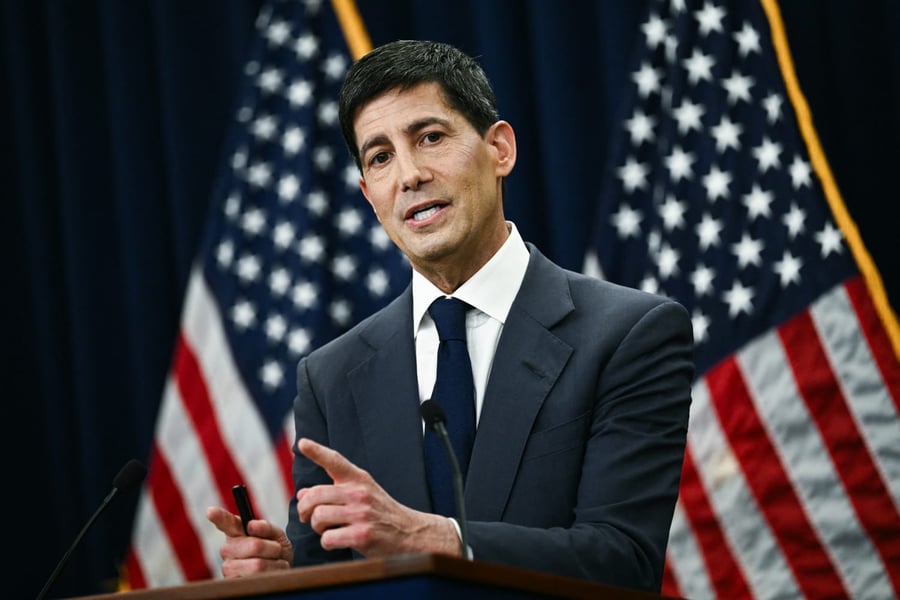
NBC News reported that Fed Chair Kevin Warsh was direct at Wednesday’s press conference: “There is no soft inflation target. There’s only a target, and it’s 2%.” The three-member dissent shows that at least some committee members believe that argument demands action, not patience. The bond market, which prices trillions of dollars in long-term debt each day, appears to have sided with the dissenters.
The government itself faces compounding exposure. The United States is carrying approximately $39 trillion in federal debt. The Congressional Budget Office had already projected that annual interest payments would surpass one trillion dollars by the middle of this decade, a projection that assumed some stabilization in long-term yields. At a 19-year high on the 30-year rate, that assumption requires revision. Every fraction of a percentage point increase in the government’s average borrowing cost translates to tens of billions in additional annual interest payments, redirecting federal revenue away from discretionary spending priorities and toward debt service.
Ryan Detrick, chief market strategist at Carson Group, said Tuesday’s question was no longer about July. “The bigger question now becomes, how much pressure will they have to hike in September?” he told NBC News. That framing captured what the bond market was pricing in as the Dow Jones Industrial Average fell more than 1,100 points, the S&P 500 declined 1.52 percent to 7,316, and the Nasdaq Composite dropped 1.74 percent.
The comparison to 2007 carries its own weight. The last time 30-year Treasury yields were at comparable levels, the US housing market was several months from a crisis that restructured the global financial system. The causes were different then: a credit cycle built on deteriorating mortgage underwriting, not persistent inflation driven by geopolitical disruption and constrained supply. The current parallel is not about mechanism but about the level, the same level that pension funds, infrastructure bond issuers, and long-term corporate borrowers use to price their long-dated obligations. Those instruments are all repricing upward alongside Treasuries.
What remains genuinely uncertain is whether Tuesday’s move represents a durable repricing of long-term inflation expectations or a single afternoon’s overreaction to the Fed’s tone. The three-member dissent is the sharpest internal signal the FOMC has sent this cycle that patience carries costs. But a dissent is not a rate hike. Whether Tuesday’s yield level holds in the coming days, or whether September’s meeting produces the increase the bond market is now partly pricing in, is a question even the most experienced fixed-income traders are not agreed on.
What is not in dispute: borrowing in the United States for three decades has not cost this much since George W. Bush’s second term. Anyone who needs long-term financing right now, whether a homebuyer, a municipal government, or a corporate treasurer, is paying for the accumulated weight of that history.