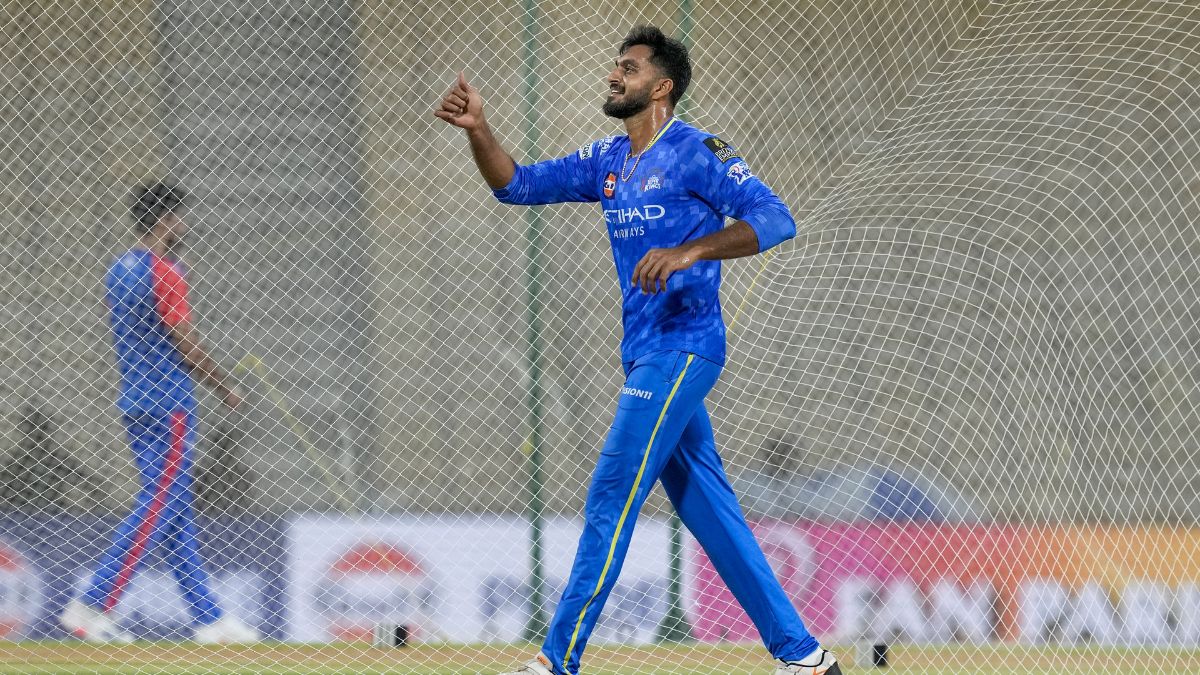

MUMBAI — Vijay Shankar had barely finished his retirement announcement before Kandy Royals welcomed him with a promotional clip on social media. Four days after the all-rounder said farewell to Indian cricket on May 22, the Lanka Premier League franchise was already billing him as their marquee overseas signing for the 2026 season. The BCCI noticed.
The board’s Apex Council met on June 4 to discuss whether a formal policy should govern what happens when Indian cricketers walk away from domestic and international cricket — and, crucially, how quickly they can walk toward a foreign franchise deal. According to reports from Cricbuzz and Cricfit, one option under consideration is a five-year cooling-off period that would make retirement a far less expedient route to the global league circuit than it currently is.
Under the existing framework, active Indian players are barred from overseas T20 leagues. The restriction is total: no IPL outsider, no county stint, no Big Bash appearance unless the player has formally retired from all formats of Indian cricket, both international and domestic. For years, that condition functioned as a near-impenetrable firewall. Retirement meant retirement. The rule was rarely tested because the IPL itself offered the most lucrative franchise wages in the world.
That calculation has shifted. The proliferation of leagues, from the SA20 in South Africa to the ILT20 in the UAE to Sri Lanka’s revived LPL, has created a secondary market for Indian talent that the BCCI had not anticipated when the original restriction was written. Shankar’s case crystallised something the board had been watching for years: a player who had gone unsold in the IPL 2026 auction — no franchise even called him as a replacement signing — discovered that retirement unlocked a marquee contract abroad. He is not unique. Dinesh Karthik played in overseas leagues post-retirement. So did Yuvraj Singh. Irfan Pathan and Praveen Tambe preceded them in the same sequence: domestic exit, overseas entry.
What the BCCI is now examining is whether that sequence itself constitutes a problem. The concern, as described in the Apex Council discussions, is the concept of “pre-determined retirement” — players treating their exit from Indian cricket as a procedural step rather than a career endpoint, one taken strategically to become eligible for foreign contracts. A five-year waiting period would make that strategy untenable. A 33-year-old all-rounder facing five years on the sidelines before joining an overseas league would confront a very different set of incentives than one who can sign a franchise deal within the week.
Shankar, who is 35, played 12 ODIs and nine T20Is for India across a career that peaked during the 2019 ODI World Cup. His selection for that tournament was contentious; the nickname “3D Cricketer” attached to him then followed him for the rest of his career. He signed off with that phrase in his retirement note, recalling bowling the final over in India’s 500th ODI in Nagpur and taking a wicket with his first ball in the World Cup. Kandy Royals are billing him alongside Moeen Ali and Wanindu Hasaranga as part of their overseas contingent for the LPL season running July 17 to August 8.
The board has not said publicly whether a five-year bar or any other specific restriction will be adopted. The Apex Council meeting was deliberative, not decisional — officials examined whether a formal policy was necessary and what form it might take. No vote was reported and no timeline for implementation was given. What is clear from the discussions is that the question is no longer hypothetical. The BCCI wants a policy where none currently exists.

That said, the proposal carries legal and institutional friction that earlier BCCI cooling-off debates surfaced at the administrative level. When the board’s own Apex Council faced a cooling-off period question in 2021 — one that constrained Sourav Ganguly and Jay Shah’s tenures as president and secretary — the arguments against restraint on individuals’ professional choices were front and centre. Extending a similar framework to players would almost certainly invite pushback. Critics have previously called analogous restrictions exploitative: a player who has completed his contractual obligations to Indian cricket, paid his dues across domestic formats, and simply wishes to earn a living in a legal profession has a case that the board’s authority over him ends at retirement.
The BCCI has not publicly addressed that tension. What it has articulated, through the Apex Council agenda, is a concern about structural incentives — a worry that the current absence of any post-retirement regulation creates a pathway that undermines the purpose of the original restriction on active players. If the rule against overseas leagues can be bypassed by announcing retirement on a Friday and signing an LPL contract the following Monday, the rule’s protective logic is compromised.
It is worth noting what the proposed policy would and would not address. A five-year bar would apply at the point of retirement — it would not retroactively affect players who have already exited the Indian system. It would not affect players like Karthik or Yuvraj who went through earlier exits. Its primary effect would be prospective: on the decisions of current domestic cricketers weighing a franchise circuit offer against the years-long wait a retirement would now impose. Whether that is a sufficient deterrent, or whether it merely pushes the calculation five years down the road, is a question the board has not yet answered publicly.
The Blackstone-backed valuation surge in IPL franchise prices, which pushed the combined franchise value of the league past $17 billion in early 2026, gives the BCCI strong commercial reasons to protect the league’s exclusivity on Indian talent. At the same time, the rapid expansion of the global franchise ecosystem, which produced more than 650 overseas player registrations for the LPL alone ahead of the 2026 draft, has made the competition for that talent genuinely international. The entry of investors like Jude Bellingham into franchise cricket signals that the industry’s financial centre of gravity is spreading beyond India’s domestic structures.
The Apex Council has not yet scheduled a follow-up meeting to ratify any specific policy. The BCCI confirmed the retirement question was on the June 4 agenda; what emerges from it remains unresolved. For players currently navigating that decision — how long to continue in Indian cricket, what their options look like after — the uncertainty itself is now part of the calculation.