
PARIS — The bracket that began with Aryna Sabalenka as the favourite and Coco Gauff as the defending champion reaches its final Sunday without either of them. What it has instead is more interesting: a 19-year-old Russian who has spent three years willing herself to this court, and a 24-year-old Pole who got here through the qualifying rounds and has not stopped moving forward since.
Mirra Andreeva and Maja Chwalinska will play for the Suzanne Lenglen Cup on Court Philippe-Chatrier on Saturday, a final that produces, by any measure, a first-time Grand Slam champion. The last time Roland Garros saw two finalists who had never held a major trophy was something of a rarity in itself. That both arrived here through paths this different makes the match something rarer still.
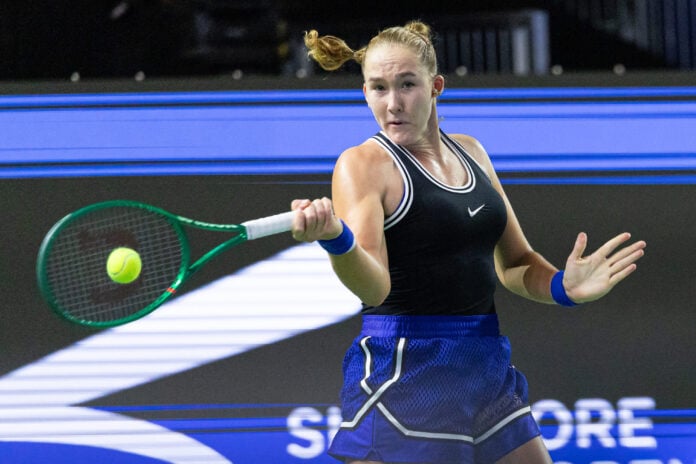
Andreeva has been expected here. The 8th seed from Krasnoyarsk made her French Open debut at 16, reached the semifinal two years ago at 17, lost in the quarterfinals in 2025 in a match that undid her emotionally, and came back this fortnight composed in ways she had not previously shown on this court. She dropped Marta Kostyuk 6-1, 6-3 in Thursday’s semifinal — a scoreline that did not reflect a contest so much as a statement — and became the third-youngest player to reach the Roland Garros final in the 21st century, behind only Coco Gauff in 2022 and Kim Clijsters in 2001.
“I was seeing the little hairs on the ball when I was tossing or playing shots,” Andreeva told reporters after defeating Kostyuk. “I was really, really focused today.”
That kind of description — granular, slightly otherworldly — is the language of a player in form so deep it stops being tennis and becomes something harder to articulate. Andreeva has been in that state for most of this fortnight, losing a single set across the draw. The trajectory has been obvious to anyone watching her since she was a teenager taking selfies with Andy Murray at the back of the players’ lounge. The question was always whether the nerve would hold when the moment arrived. Thursday suggested it has.
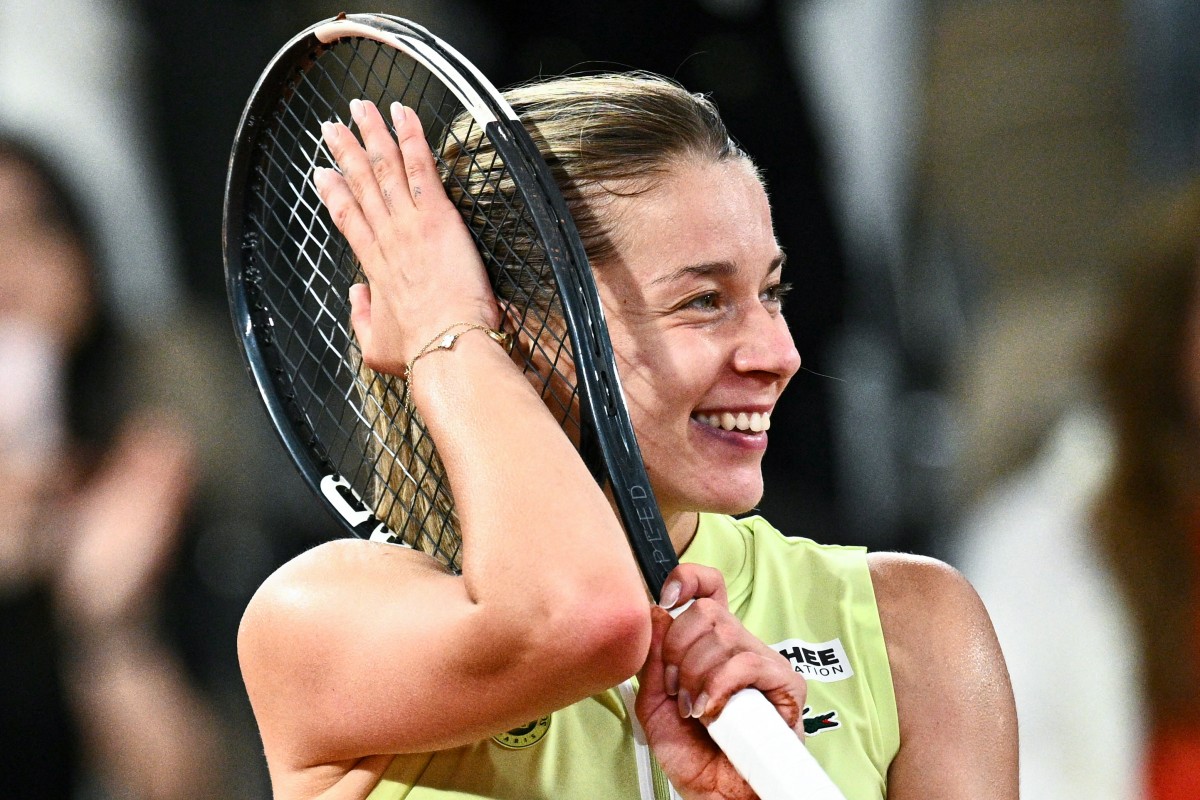
The same cannot be said of the path Chwalinska has traveled. She arrived in Paris ranked 114th, needed to win three qualifying matches before entering the main draw, and had won six matches at tour level in her entire career before this tournament began. Her best Grand Slam result was the second round at Wimbledon in 2022. She is playing only her third major. According to Opta, Al Jazeera reported, she and Emma Raducanu stand alone as the only players in the Open Era — men’s or women’s — to have reached a Grand Slam final from the qualifying rounds. Raducanu won the 2021 US Open. Chwalinska will try to match that on clay in Paris on Saturday.
After sealing her semifinal victory over Diana Shnaider 7-6(4), 6-4, Chwalinska fell back in her chair with both hands over her face, then sat panting with a towel pressed to her forehead. “Like a dream, honestly, I don’t know what’s going on,” she said during her on-court interview. “I don’t know what to say, sorry. Let me enjoy this moment for now.”
Her run here defies the logic of draws and rankings in a way that statistics struggle to accommodate. She dropped only one set across nine matches including qualifying. She beat four top-50 players in the main draw. The WTA calculates that her ranking will jump from 114 to 14 if she wins Saturday, and to approximately 30 even if she does not. Her total career prize money before arriving in Paris was $864,030. By reaching the final, she has already secured 1.4 million euros.
The tactical question going into the match is not a simple one. Chwalinska moves exceptionally well for a player who has spent much of her career outside the top 100. Shnaider, who knocked out world number one Sabalenka in the quarterfinal, said of her: “She moves incredible on the court, she covers a lot. Even if you think that you won the point, she’s there.” Andreeva’s baseline game is among the most precise on tour, and she has shown across this fortnight that she can dictate points rather than merely construct them. The match will likely come down to whether Chwalinska can extend rallies long enough to find Andreeva’s patience — and whether Andreeva, playing her first Grand Slam final, tightens at the moment she can close it.
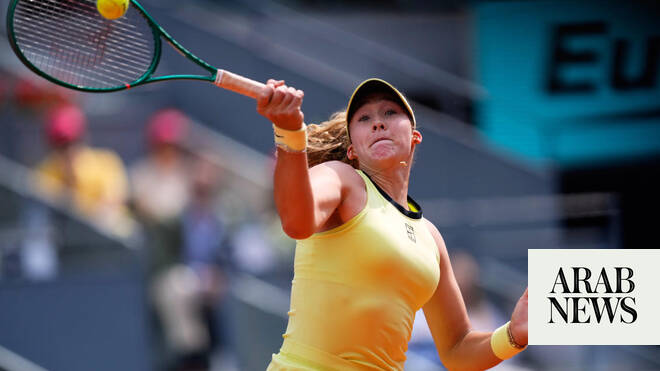
For Andreeva, the historical context carries a particular weight. No Russian woman has won the French Open since Maria Sharapova took her second title here in 2014. Sharapova was 27 then, already a five-time major winner. Andreeva is 19, with no major titles and a semifinal exit last year that she handled poorly by her own assessment. She was visibly rattled by the partisan Paris crowd during her 2025 quarterfinal loss to French wildcard Lois Boisson, spoke openly about it afterward, and came back this year having clearly processed what that afternoon cost her. The composure she showed against Kostyuk — a player she had never beaten in three previous meetings — was not accidental.
That match, too, carried weight beyond the score. There was no handshake at the net when it ended, no post-match photo, no gesture toward the conventions that normally close out a professional tennis match. Kostyuk, playing under a Ukrainian flag in a city that has become symbolically freighted for both players’ nations, walked off without the usual exchange. Andreeva said afterward she was focused only on the tennis. Whether Paris will be as cooperative with Chwalinska — or as hostile — remains an open question.
Chwalinska, for her part, has the advantage of expectation, or rather its absence. She is not supposed to win. She has already surpassed anything her career had previously reached. That freedom can either unshackle a player or expose them — Raducanu’s 2021 run suggested the former is possible, that a player without the weight of expectation can move through a major draw with a lightness that a seeded favourite cannot replicate.
What neither player has done is win one of these. That remains the single fact the draw cannot produce on its own. Chwalinska’s historic run through qualifying has brought her to the final. Andreeva’s three years of incremental progress on this court have brought her to the final. One of them will leave Court Philippe-Chatrier with the Suzanne Lenglen Cup. The other will leave with a question about what comes next. That, in the end, is what a Grand Slam final is for — and it is not yet clear, on the eve of Saturday’s match, which way the answer runs.
The women’s final begins at 3 p.m. local time at Stade Roland Garros. The men’s final between Alexander Zverev and Flavio Cobolli follows on Sunday. Zverev enters that final still chasing his first Grand Slam title after defeating Jakub Mensik in Friday’s semifinal.