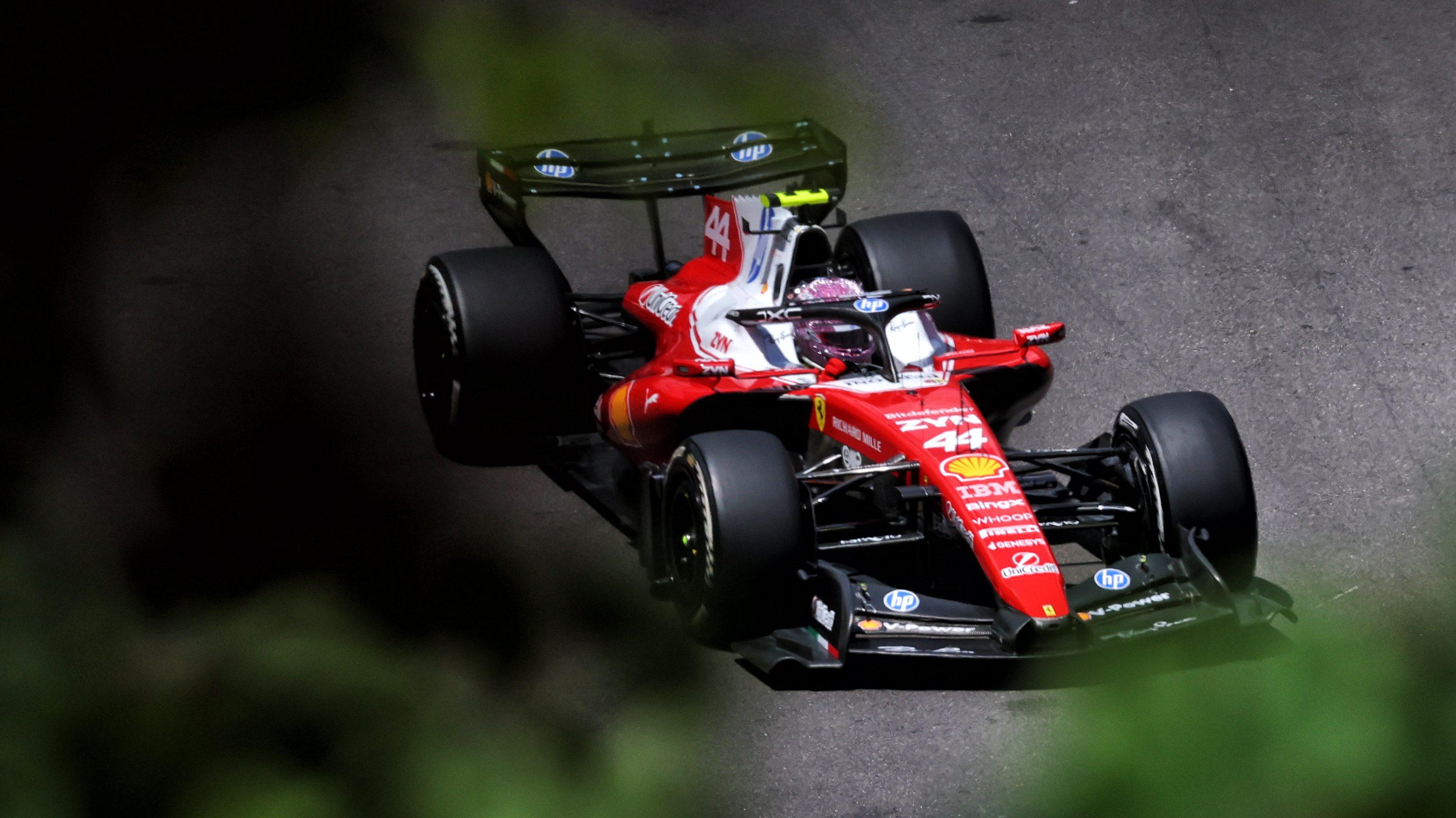

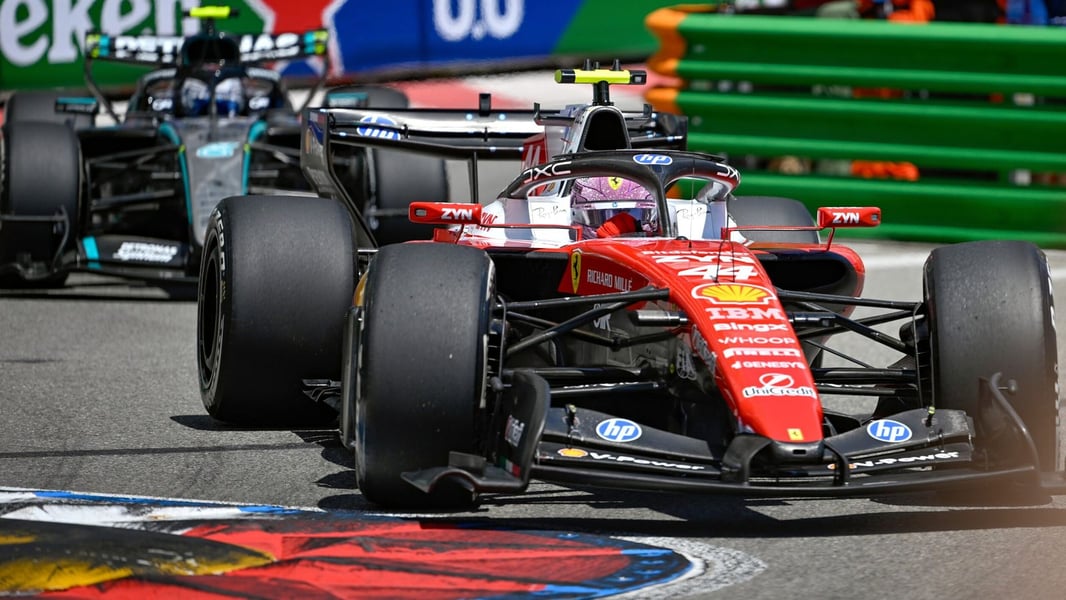
MONTE CARLO – The moment that will define the narrative heading into Saturday belonged not to Charles Leclerc, the hometown favourite who has lived and breathed this circuit since childhood, but to Lewis Hamilton. His 1:13.026 in the second free practice session at the 2026 Monaco Grand Prix was the fastest lap of the day, a tenth of a second clear of his Ferrari team-mate, and it arrived at a circuit where Leclerc has historically held the psychological edge within any given team he has shared.
That gap – 0.111 seconds on a 3.3-kilometre circuit with no meaningful straight – is simultaneously tiny and enormous. In Monaco, where the entire qualifying battle typically plays out across two or three tenths, Hamilton’s advantage over Leclerc going into Saturday represents a meaningful claim of territory. For the first time since the 2025 Azerbaijan Grand Prix, he had topped a second free practice session. The question is whether it holds when the session actually counts.
Leclerc acknowledged afterward that his day had been complicated by brake balance issues that robbed him of the confidence a driver needs to push to the absolute limit on these barriers. He ran wide at Mirabeau on his very first timed lap out of the pit lane, and later kissed the barriers at the Swimming Pool chicane hard enough to make the television cameras linger – though he escaped without damage. “The confidence is not at the highest level at the moment,” he told Ferrari’s media team, adding that the team hoped overnight adjustments would allow him to close the gap in qualifying.
Ferrari’s pace in both sessions carried a weight beyond the individual lap times. Max Verstappen, who ended FP2 third fastest at 0.168 seconds from Hamilton, provided the circuit’s clearest external benchmark. That Red Bull, a car that has struggled at low-speed venues relative to its highway-track dominance of recent seasons, was within two tenths of the Ferraris – and that both Ferrari drivers confirmed Verstappen’s pace as a genuine concern – said something about the SF-26’s specific advantage in the Principality rather than any general superiority.
“Max has been very strong. Red Bull have been very strong and Lewis has been very strong,” Leclerc said after the session, with the kind of candour a driver typically reserves for private debriefs. His expectation was for a “very tight” qualifying battle among the three of them.
Hamilton’s own assessment, released through Ferrari’s end-of-day notes, was notably careful. “Monaco is always a very different challenge, with the bumps and the close proximity of the barriers, so it’s not easy to find the right balance and put everything together,” he said. “There is still performance to be found.” That last sentence carries more weight when the man saying it is already fastest.
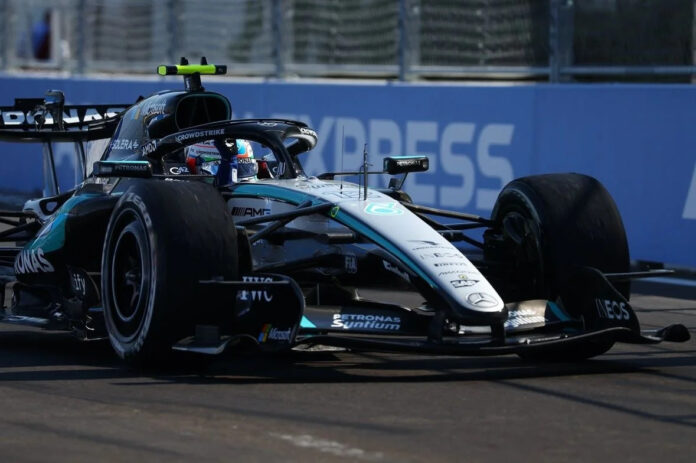
George Russell completed fourth fastest in FP2, a tenth quicker than team-mate Kimi Antonelli, but the more significant number from the Mercedes garage was 0.3 seconds – the gap to Hamilton at the front. Mercedes had arrived in Monaco widely expected to face their most difficult weekend of a season in which they have claimed every pole position and race victory so far. Friday confirmed those expectations, and then marginally exceeded them. Russell described the day as “slightly more challenging than we would have hoped,” noting that Red Bull’s competitiveness had come as a surprise on top of Ferrari’s anticipated pace.
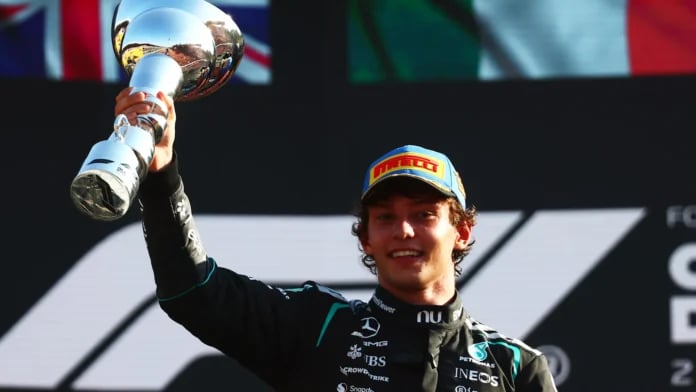
Andrew Shovlin, Mercedes’ trackside engineering director, said the team could “see some opportunity to make it quicker” and noted the W17 appeared better suited to Monaco than its predecessors – a relative measure that still leaves them outside the front row fight if Friday’s pace holds. What Mercedes have not faced all season is the prospect of qualifying outside the top two. Whether that changes Saturday, on a circuit where track position is close to deterministic for the race outcome, will define their championship situation far more than any single-round points exchange in the opening five rounds.
The subplot that may ultimately matter most for Sunday’s race arrived not from any of the front-runners but from the McLaren garage, and from a silence that descended mid-session. Lando Norris, the defending Monaco Grand Prix winner, brought his MCL40 to a halt in FP2 after what McLaren’s technical team described as an electrical fault that caused the car to shut down completely. He completed just eight laps – no soft tyre running, no meaningful preparation for the qualifying lap he will need on Saturday.
“The car simply turned off,” Norris said afterward. That phrase – flat, mechanical, unexplanatory – captured the specific helplessness of a driver who cannot accelerate through adversity when the adversity is a component failure rather than a setup problem. McLaren’s chief technical officer Rob Marshall confirmed the team was working to diagnose the root cause overnight. What McLaren cannot diagnose away is the lost track time itself: in Monaco, where circuit knowledge is the primary currency and where qualifying at the front is effectively a prerequisite for winning the race, those 45 minutes cannot be recovered.
Oscar Piastri, who did complete FP2 but tagged the barriers on a flying lap and ended up seventh fastest – over a second behind the pace-setting Ferraris – called it “a tough day for the team.” McLaren arrived in Monaco a week after winning the Canadian Grand Prix with Norris, sitting atop the constructors’ standings. They leave Friday’s running as spectators to a front-row fight that appears to involve three other teams.
Whether that changes between now and Saturday’s qualifying remains genuinely open. Ferrari have a brake issue to resolve on Leclerc’s car. Mercedes need a pace jump of roughly three tenths on a circuit where those tenths are extraordinarily hard to find. McLaren need Norris to extract a qualifying lap from a car he has barely driven this weekend. Monaco has long resisted the predictive models that govern most of the Formula 1 season, and Friday practice at this circuit has historically been a poor guide to Saturday afternoon. But the scale of Ferrari’s advantage – dominant in both sessions, fastest in both sessions, with both drivers inside the top two – is the kind of signal that tends to survive the overnight reset.
Hamilton, meanwhile, is on the verge of something he has never won as a Ferrari driver: Monaco. He has won here twice, both times in a Mercedes. The circuit has not changed. The barriers are in the same places. What has changed is the car around him, and on Friday’s evidence, it is the fastest car on the grid in Monte Carlo. Whether that advantage belongs to Hamilton or to Leclerc when qualifying concludes on Saturday afternoon is the only question that matters for the rest of the weekend. According to Sky Sports F1, 0.168 seconds covered the top three after Friday’s running. That gap will be smaller still when it counts.