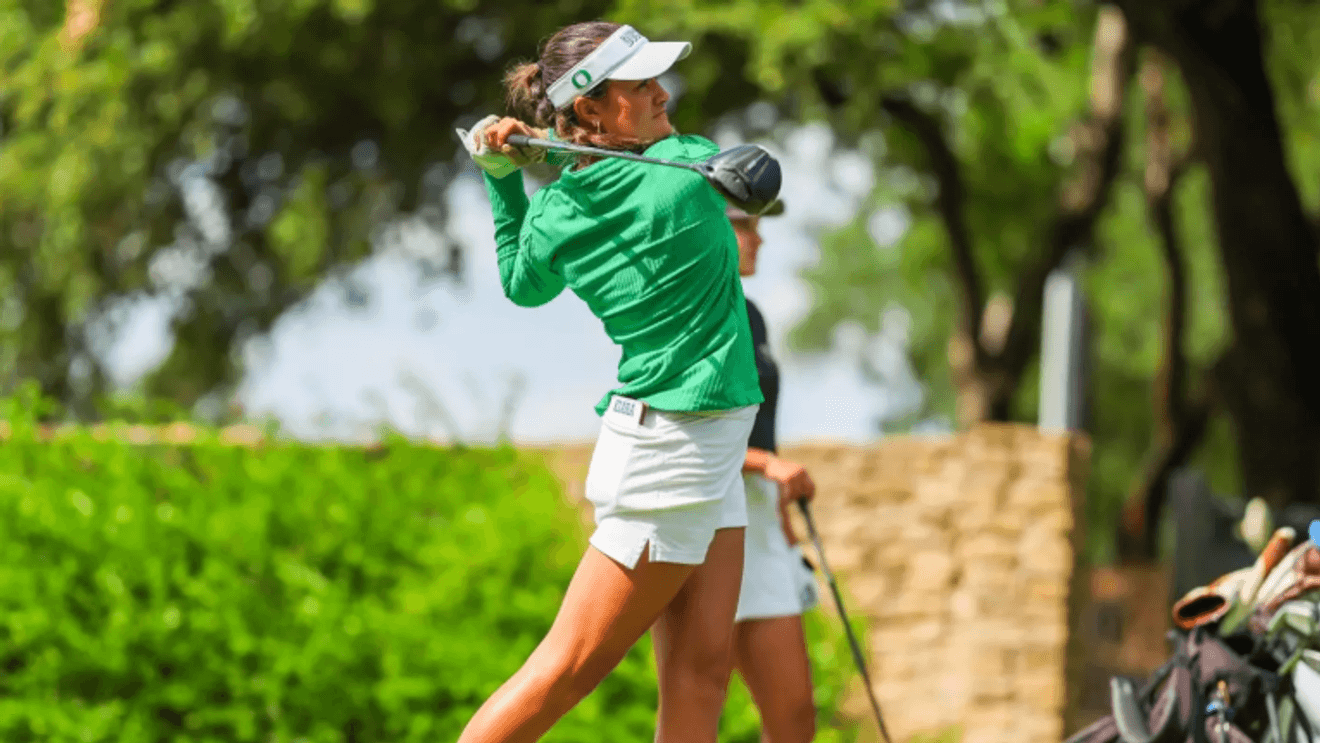

PACIFIC PALISADES, Calif. — The birdie on the par-5 17th hole Sunday was the fourth consecutive round Kiara Romero had made it at Riviera Country Club, but this one had a different weight. She had just birdied the 16th. A second consecutive birdie pushed her into the top ten. By the time she walked off the 18th green, the University of Oregon junior had climbed past a dozen players in the final round to finish tied for sixth at the 2026 U.S. Women’s Open, and the silver medal — the award given to the low amateur in the field — was hers.
Romero closed with a 3-under-par 68, her best round of the week, to finish at 3 under for the tournament. She entered the final round at even par and in the top twenty, having gone 73-70-70 across the first three days on one of the most demanding layouts in Southern California. Five birdies against two bogeys Sunday left her five shots behind champion Nelly Korda, who closed with a 2-under 69 to win the tournament at 8 under. One stroke ahead of Romero sat Stanford’s Maria Jose Marin, the reigning Augusta National Women’s Amateur champion, who finished at 2 under. That single stroke was the difference that gave Romero the silver medal over Marin, marking the first time in Romero’s three U.S. Women’s Open appearances that she has held amateur honours at the championship.
“This course is set up really hard for a Sunday round,” Romero said after her round. “I just did my best to kind of put myself in the best position to make birdies. Honestly I felt like there was no pressure out there to do anything. Kind of just went out there with nothing to lose.”
That composure was earned, not inherited. The San Jose native came into the week ranked No. 1 in the Women’s World Amateur Golf Ranking, a position she has held through a junior season at Oregon that included wins at the Chevron Collegiate and the Charles Schwab Women’s Collegiate Invitational. She set the program’s single-season scoring record for the third consecutive year, this time at a 69.23 average. Her résumée reads like someone who already lives in a professional weight class.
What Sunday at Riviera provided was a stage that college golf cannot replicate. And she did not waste it.
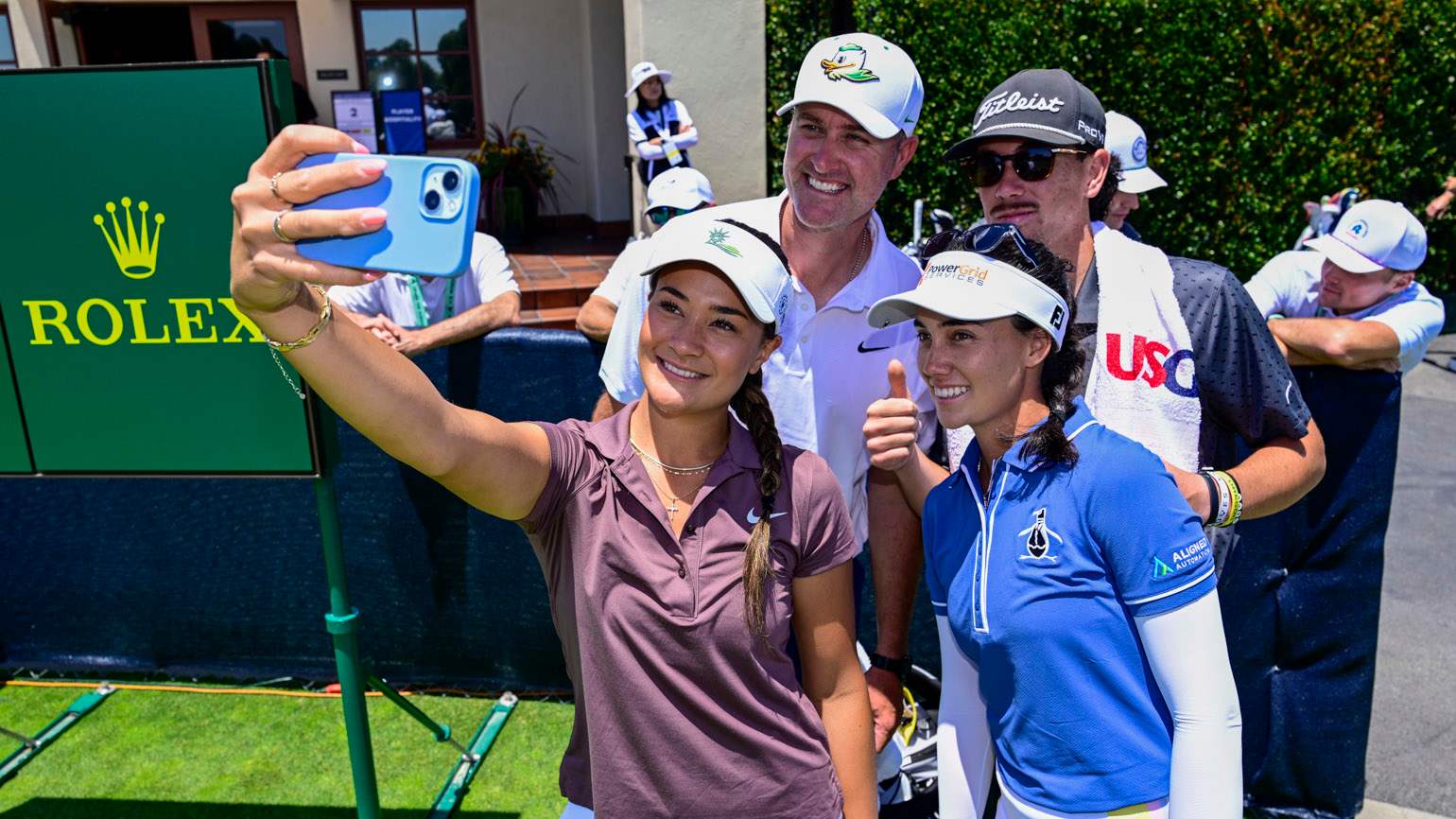
There was a family dimension to this week that complicated the already considerable pressure. Romero’s older sister Kaleiya, now an assistant coach at Oregon under head coach Derek Radley, qualified for the 2026 U.S. Women’s Open and made the cut, becoming part of just the ninth set of sisters to compete in the tournament in the same year, according to the University of Oregon. Radley caddied for Kiara. Brother Kyreece Romero carried the bag for Kaleiya. Kaleiya finished tied for 49th at 7 over.
The result carries consequences that extend well beyond a week in Pacific Palisades. A top-25 finish at a major championship earns two points in the LPGA Elite Amateur Pathway program, a structured route through which elite amateurs can earn conditional LPGA Tour membership without a qualifying school. Romero now holds 16 LEAP points, the most of any current amateur in the program. Four more points would satisfy the requirement for LPGA Tour eligibility. The question her Sunday performance makes unavoidable — a question she has not yet answered publicly — is whether she returns to Oregon for her senior season or whether the tour card becomes the destination before the academic year begins.
Her top-ten finish also locks in an automatic invitation to the 2027 U.S. Women’s Open.
Romero was not the only amateur to make an impression this week. As Golf Channel reported, five amateurs finished inside the top 34 at Riviera — the first time two amateurs finished in the top ten at the U.S. Women’s Open since 2005. Seventeen-year-old Asterisk Talley, whose third-round 66 at Riviera made history as one of the lowest rounds ever posted by an amateur at the championship, finished tied for 22nd. Aphrodite Deng, 16, finished even for the week. Farah O’Keefe, the 2026 Annika Award winner and NCAA individual champion, finished 34th. Between Romero at sixth, Marin at seventh, and Talley at 22nd, the amateur class at this year’s Open produced more legitimate top-of-the-leaderboard competition than most professionals manage in a full season of stroke play.
What made Romero’s week distinct from that broader amateur narrative was the trajectory of Sunday alone. She began the final round in the middle of the leaderboard, attracting no particular attention in a final-round contest that remained tight enough at the top to pull focus entirely to Korda, England’s Charley Hull, and Mexico’s Gaby Lopez. Romero moved past twelve players without drama or collapse — just a controlled, birdie-forward round on a course that punished anything careless.
The 17th hole in particular became something of a signature. Romero made birdie on the par-5 in all four of her rounds at Riviera. That kind of consistency on a single hole, repeated across four days in a major championship, is not coincidence. It is pattern recognition and course management at a level that professional players spend seasons trying to develop.
She is 20 years old.
As the University of Oregon noted, Romero is a three-time first-team All-American who has set the Oregon program’s single-season scoring record in each of her three years on campus. She won the 2025 McCormack Medal, given annually to the top-ranked player in the Women’s World Amateur Golf Ranking. She led the Ducks to the Big Ten Championship this spring and a second consecutive appearance in the NCAA semifinals. None of that came close to preparing her for the kind of afternoon that makes a career — or at the very least reshapes what comes next.
What comes next remains genuinely unclear. She has four LEAP points to collect to satisfy the membership threshold, and with the remaining major championships and elite amateur events on the schedule, she could cross that line before her senior season at Oregon is scheduled to begin. Whether she would choose to do so is a different question, and one she has not had to answer publicly yet. The silver medal, the top-ten finish, and the automatic return invitation to next year’s Open suggest she belongs at this level. How soon she arrives permanently is the thing that nobody, least of all Romero, has determined.