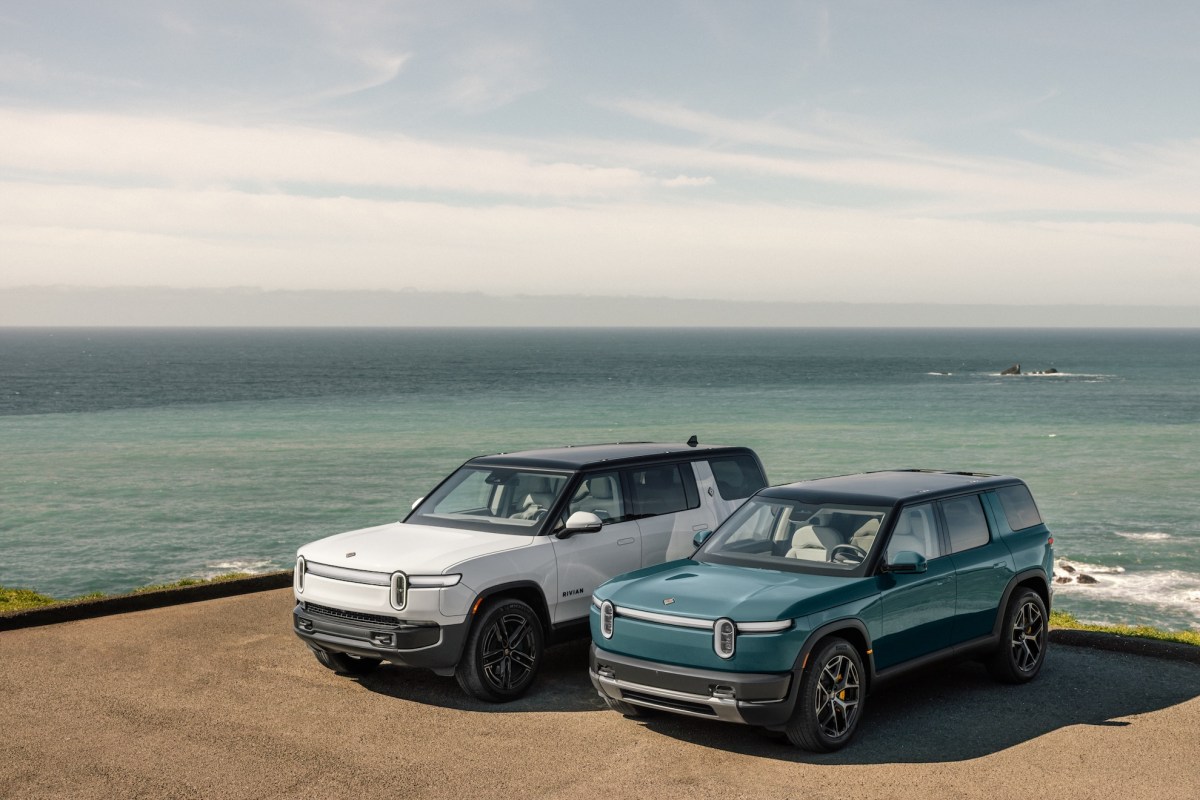

NORMAL, Illinois — Rivian began delivering its R2 sport utility vehicle on Tuesday, the make-or-break model the loss-making startup is counting on to reach the scale that finally turns an electric-car company profitable. Built here alongside the pricier R1, the R2 opens near $58,000 and is meant to fall toward $45,000, offering more than 300 miles of range and aimed squarely at the Tesla Model Y. The first handovers, confirmed this week, pushed Rivian’s stock up nearly 9 percent.
For Rivian, the milestone is real. Chief executive RJ Scaringe called the R2 the most important thing the company has launched, and the arithmetic behind it explains why. At full volume the SUV is expected to cost less than half as much to build as the R1, and the company is targeting 20,000 to 25,000 deliveries before the year is out. After years of burning cash, Rivian finally has a product priced for the middle of the market rather than its summit.
And yet the launch is also a monument to how strange the American car market has become. Beyond US borders, a vehicle much like the R2, an electric crossover with 300 miles of range, can already be bought for a fraction of the price. It is built in China, and it is all but barred from American roads. Chinese manufacturers led by BYD now build roughly three out of every four electric vehicles on earth, and last year BYD quietly passed Tesla to become the world’s best-selling EV maker.
The scale is hard to overstate. China exported a record 2.5 million electric vehicles in 2025, double the year before, and is still shipping them by the million, one strand of the country’s broader record-breaking export boom. Yet of the millions of Chinese EVs sold worldwide, North America imported a little over four thousand. The continent that invented the modern car has effectively opted out of the cheapest, fastest-growing segment of its own industry.
That is not an accident of consumer taste but a deliberate act of policy. Washington has stacked tariffs well above 100 percent on Chinese electric vehicles, and the European Union fought its own tariff battles over Chinese EVs before settling on a minimum-price truce. The official rationale blends worries about subsidies, data security and, increasingly, defence. This month the Pentagon went so far as to brand BYD a military company, folding a maker of family crossovers into the architecture of great-power rivalry.

Strip away the language of security and a simpler picture emerges. The country that lectures the world on free markets has built a wall around its own to shield domestic champions like Rivian and Tesla from competitors that are, by most measures, cheaper and improving faster. American buyers pay for that protection in the only currency that matters at the dealership, a higher sticker price. A $58,000 launch trim is, in part, the cost of keeping the $20,000 Chinese alternative off the lot.
None of this is a knock on the R2 itself, which by early accounts is a genuinely good vehicle and a credible bet on Rivian’s survival. The company has done the hard engineering work of driving cost out of a complex machine, exactly what the energy transition demands. The open question is whether a protected market can sustain that discipline at the pace an open one would force, or whether the tariff wall simply lets prices settle higher than they need to be.
For most of the world, the contest is already being decided, and not in Detroit’s favour. From Latin America to Southeast Asia, the affordable electric car is increasingly a Chinese product, sold into markets that never built a wall to keep it out. The United States may yet protect its way to a domestic EV industry, but it is doing so as a regional player in a global race that China, for now, is winning.
Rivian’s achievement and America’s predicament are the same story seen from two angles. A scrappy company has finally built an electric SUV ordinary buyers might afford, a real accomplishment by any measure. It has done so inside a market deliberately sealed from the very competition that, everywhere else, is pushing those same prices lower still.
What Tuesday’s deliveries cannot answer is how long the wall holds, or what it ultimately costs. Tariffs can keep Chinese cars out of American garages, but they cannot keep the rest of the world from electrifying around US automakers, nor postpone forever the day the gap between a $45,000 Rivian and a $20,000 rival grows too wide to explain away. For now Rivian has its moment, earned and overdue. Whether the country protecting it is buying time or simply paying more is a question no quarterly delivery figure will settle.