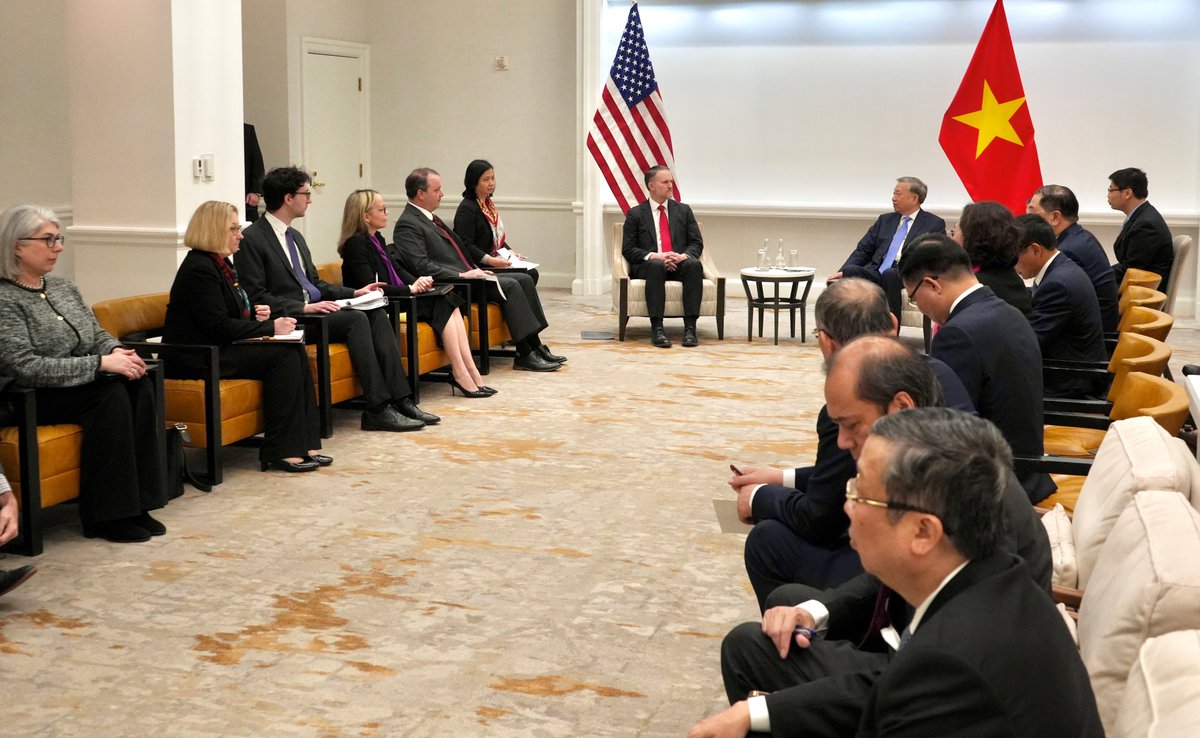

MANILA – The 10 percent tariff that President Donald Trump imposed on Vietnamese goods as a temporary measure while trade negotiations continued was set to expire Friday. Hanoi had a message for Washington the day before: close the investigation, and make the outcome reflect Vietnam’s cooperation.
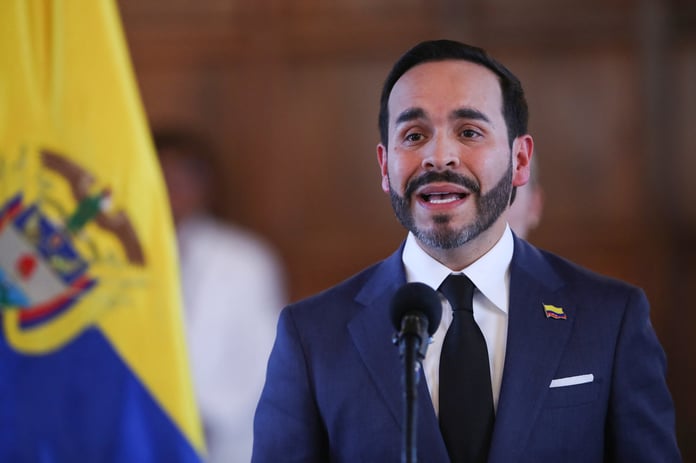
Vietnam’s foreign ministry said Thursday it remained committed to bringing bilateral trade talks with the United States to a conclusion, and called on the US Trade Representative to wrap up its Section 301 investigation into Vietnamese practices with a decision that fully recognises Vietnam’s efforts. The statement was issued in Hanoi the same day Secretary of State Marco Rubio met Vietnamese Foreign Minister Le Hoai Trung on the sidelines of an ASEAN summit in Manila, where both sides discussed ways to strengthen ties and rebalance trade, Reuters reported.
The 10 percent tariff is expiring against a backdrop that Hanoi finds anything but favorable. Vietnam is simultaneously facing three separate Trump administration probes: one targeting what Washington characterizes as excess industrial capacity, a second under Section 301 addressing intellectual property violations, and a third focused on goods produced using forced labor. Each runs on its own track. None has reached a conclusion.
Trung told Rubio that Vietnam is willing to facilitate American firms in expanding their investment and business operations in the country. That offer is the diplomatic vocabulary for a government trying to make itself indispensable as a manufacturing destination during a period when Washington is actively discouraging dependence on China. Vietnam’s pitch is that it is not China, that its factories are filling orders that used to go to Shenzhen and Guangzhou, and that penalizing Vietnamese exports for succeeding at that substitution works against the very industrial strategy the Trump administration says it wants to encourage.
The trade numbers make the pitch and the problem visible at the same time. The US trade deficit with Vietnam reached $75.3 billion in the first half of 2026, an increase of 21 percent from the same period a year earlier, according to Vietnam’s own government data. For Washington, that figure is exactly the kind of bilateral imbalance the Trump tariff architecture was designed to address. For Hanoi, it is evidence of how thoroughly the two economies have become entangled since manufacturing relocated from China to Vietnam across the previous decade.
Section 301 of US trade law authorises the USTR to investigate foreign government practices that burden or restrict US commerce. The Vietnam probe was opened in October 2020 during Trump’s first term, initially focused on currency manipulation by the State Bank of Vietnam and timber sourcing practices. The Biden administration inherited the investigation and pursued it without resolution. The second Trump administration has since added the intellectual property track, opened the forced labor inquiry separately, and has allowed all three probes to run in parallel while Hanoi and Washington negotiated a broader bilateral trade framework. That framework remains incomplete.
A Section 301 finding can result in tariffs. It can also result in a negotiated agreement in which the target government commits to specific reforms in exchange for the probe closing without penalty. Vietnam has been pushing for the second outcome. The Trump administration has not said publicly which direction it is leaning, and Rubio did not comment publicly after Thursday’s meeting with Trung. The USTR has similarly not indicated a timeline for the Section 301 conclusion. Washington is running three probes against Hanoi simultaneously and has given no public signal that any of them is close to resolution.
Vietnam is not the only country facing this combination of pressure. Washington’s Section 301 investigation targeting India over forced labor allegations followed a similar pattern: an investigation opened without a clear timeline, trade negotiations running alongside, and an affected government making public calls for a favorable conclusion while trying not to appear to be negotiating under duress. India’s commerce minister called the pending tariff a gift to domestic manufacturers. Vietnam’s foreign ministry chose a more careful register.
Vietnam’s standing at the ASEAN summit is that of a country trying to remain in good standing with the United States without formally aligning against China, a diplomatic balancing act that requires constant recalibration. Beijing is Vietnam’s largest trading partner. Washington is its largest export market. The $75.3 billion surplus Hanoi runs with the United States is built substantially on Chinese components that arrive in Vietnam, get assembled into finished goods, and ship to American consumers under Vietnamese origin. That structure is precisely what the three US probes are designed to examine and, where warranted, interrupt.
Vietnam has made offers. It has agreed to import more US agricultural products and liquefied natural gas, commitments that appear in the framework talks as rebalancing mechanisms. It has updated intellectual property statutes and signed a supply chain transparency agreement covering timber sourcing. Whether those steps are sufficient to close the Section 301 probe favorably is a judgment the USTR has not yet made, and nothing in Thursday’s Manila meeting suggested an answer was imminent. The Trump administration’s willingness to impose steep tariffs even on longstanding partners has given few governments reason to assume goodwill is enough.
The Friday tariff expiration creates a visible deadline but not a guaranteed decision point. The 10 percent rate was always a placeholder. It can be extended. It can be replaced with something higher or lower. The administration has not said what comes next. Vietnam’s statement Thursday was a request for clarity dressed in diplomatic language – cooperation reaffirmed, efforts acknowledged, conclusions urged. What Rubio said in return is not known.
Related Posts