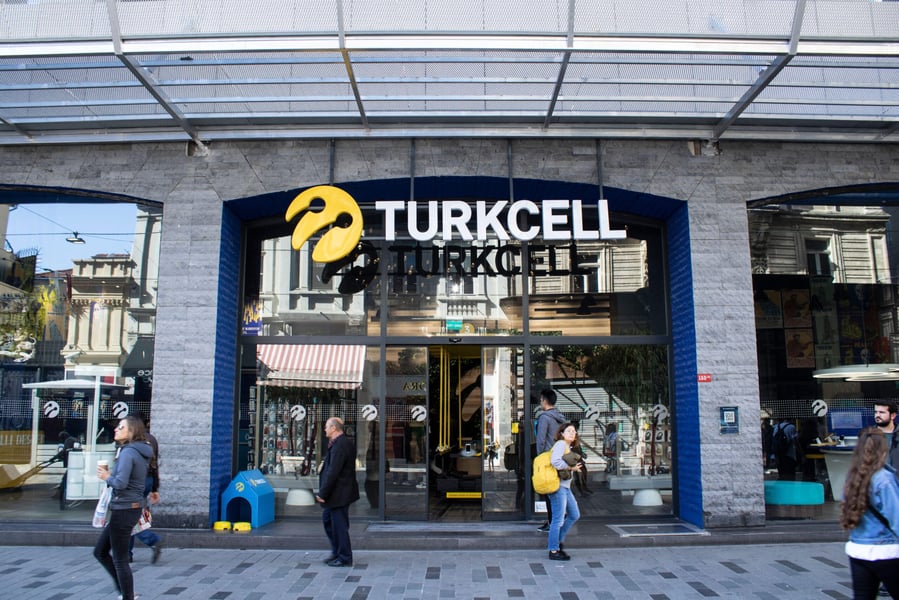

ISTANBUL – For years, switching your mobile operator in Turkey came with a tacit reward: the new carrier would offer you the kind of deal your old one never would. Staying loyal, it turned out, was quietly penalized.
The cumulative cost of that market structure is now visible in a single number. According to the Information and Communication Technologies Authority, known in Turkish as BTK, the total count of mobile number portability transfers recorded in Turkey since the service was introduced has reached 207 million 834 thousand 45 – a figure that is 2.4 times the country’s population of roughly 86 million people.
The data, drawn from the BTK’s quarterly telecommunications market report, captures something more than consumer preference. It is a measure of structural dysfunction in a market where three carriers – Turkcell, Vodafone Turkey, and Türk Telekom – collectively hold more than 95 percent of the country’s 99.7 million active mobile subscribers, and where the pricing logic has long worked against the people who chose not to leave.
The BTK report covers only portability within the mobile segment. A parallel figure for fixed-line number transfers – a service introduced in Turkey in September 2009 – stood at just 2 million 874 thousand by the same point. The difference is telling: Turkish consumers voted overwhelmingly with their SIM cards, not their landline sockets.
In 2025 alone, the annual transfer count reached 17 million 833 thousand 627. Breaking that down by quarter shows something important about timing: the first quarter saw a relatively restrained 3 million transfers, but by the second quarter the pace had nearly doubled to just under 5 million, and it held there for the rest of the year. The acceleration tracks closely with successive rounds of tariff increases across the industry.
Those increases drew public attention that was difficult to ignore. One subscriber, as Türkiye Today reported, described watching her monthly bill rise from 265 lira to 1,200 lira in a single renewal cycle – an increase of more than 350 percent. Many customers reported tariff hikes of nearly 500 percent over two years, flooding social media with complaints that carriers were selling the same package to different subscribers at sharply different prices. Türk Telekom’s chief executive, responding to the uproar, argued that internet tariffs in Turkey remained cheaper than bottled water when calculated per unit of data.
That comparison did not land well. What followed, documented in the BTK figures, was a sustained wave of defections that no carrier could insulate itself from entirely.

The postpaid segment’s rise complicates the picture. While subscribers churned aggressively between operators, they were simultaneously moving toward contract plans rather than prepaid ones. The share of postpaid subscribers climbed from 78.2 percent to 82.6 percent of the active mobile base over the past year, a gain of more than four percentage points. Prepaid cards, once a dominant feature of Turkish mobile usage, now account for barely 17.4 percent of active lines. Roughly 79 percent of subscribers are individual consumers; the remaining 21 percent are corporate accounts, which tend to churn at lower rates.
The pattern suggests that Turkish consumers were not abandoning the postpaid model itself – they were abandoning specific carriers. They wanted contracts; they did not want the contracts their current operator was offering them.
The three-carrier market that produced this dynamic is concentrated by design. France’s recent consolidation from four mobile operators to three attracted scrutiny over whether fewer competitors would harm consumers; Turkey’s experience offers a live data set on what that market structure can produce over time when carriers coordinate implicitly on pricing for existing customers while competing aggressively for switchers.
Turkcell holds the largest share of the market, with coverage advantages that extend into rural and mountainous regions where the other two operators are weaker. In October 2025, the company won Turkey’s 5G spectrum tender at approximately 1.2 billion dollars, a figure that will shape its capital expenditure for years. Vodafone Turkey competes more aggressively on the western coast and in urban centers. Türk Telekom, the privatized successor to the state telephone monopoly, has the broadest fixed-line infrastructure but a smaller mobile footprint relative to its landline legacy.
All three face the same underlying constraint: they are selling a service denominated in Turkish lira at a moment when infrastructure costs are largely priced in dollars and euros, and when Turkcell’s own financial disclosures classify Turkey as a hyperinflationary economy under international accounting standards, requiring all reported figures to be restated in current purchasing power. The squeeze is real. What the portability data shows is that Turkish subscribers, given the mechanism of number portability, have responded to that squeeze not by accepting higher bills passively but by forcing carriers to compete for them at each contract renewal.
Whether that competition has produced genuinely lower prices is a separate question the BTK data does not answer. Carriers can compete intensely for new customers with promotional rates while still maintaining high steady-state pricing for subscribers who do not switch. The 207 million transfer figure tells you about the volume of movement. It does not tell you whether the movement has been enough.
The woman who watched her bill quadruple is presumably among the 17 million who moved last year. Whether she found what she was looking for at the new carrier, or whether she will be moving again when that contract expires, is precisely what the data does not yet show.