
PITTSBURGH – The number that should concern the Pittsburgh Steelers most is not seven. It is forty-two.
Seven is the sack total T.J. Watt posted last season, his lowest since 2018 and the figure at the center of a Bleacher Report ranking that placed his three-year, $123 million extension among the ten worst contracts in the NFL entering 2026. Forty-two is the annual cap hit – in millions of dollars – that Watt’s deal now costs Pittsburgh for each of the next two seasons, a balloon payment the Steelers agreed to at the precise moment they had to know a second massive pass-rusher commitment was coming for Nick Herbig.
Put those two facts together and what emerges is not simply a disappointing individual contract. It is a structural decision the franchise made with eyes open, and one that will define what the Steelers can and cannot do in 2027 and beyond under new head coach Mike McCarthy.
Bleacher Report’s Brad Gagnon, in a piece ranking the league’s most problematic deals ahead of the 2026 season, placed Watt fifth – below only Nick Bosa, Dan Moore Jr., Chris Godwin, and Deshaun Watson on his list. The knock was straightforward: Watt’s sack production has declined in each of the past three seasons, dropping from 19 in 2023 to 11.5 in 2024 to seven last year, and the deal carries $108 million in guaranteed money. Even if Pittsburgh moves on after 2027, the contract will have cost the franchise $94 million in salary and dead-cap charges for two seasons of work at declining production, according to Bleacher Report’s analysis.
The critique is legitimate. But it misses the more consequential part of the story.
When the Steelers signed Watt ahead of the 2025 season, making him the highest-paid non-quarterback in NFL history at the time, the move carried internal logic. Watt had just recorded 19 sacks in 2023 and was still the most disruptive defensive player in Pittsburgh’s system – a franchise cornerstone who had earned every dollar of his previous extension. The question the front office should have been asking, and appears not to have asked loudly enough, was what happens to the defensive front when the Herbig extension lands.
It landed this spring. Four years, $100 million, with the bulk of it kicking in for the 2027 season. Alex Highsmith, also under contract, costs the team significant cap space. The Steelers now have three starting-caliber pass rushers locked into long-term deals simultaneously, with Watt consuming roughly $42 million of cap space annually at a moment when Pittsburgh badly needs financial flexibility to build around Aaron Rodgers – who has confirmed that 2026 will be his final season – and eventually replace him at quarterback.
What Gagnon’s ranking surfaces, then, is a symptom. The illness is a front-office philosophy that paid for yesterday’s Watt while simultaneously committing to tomorrow’s Herbig, without a clear answer for what happens when those two decisions collide on the same ledger at the same time.
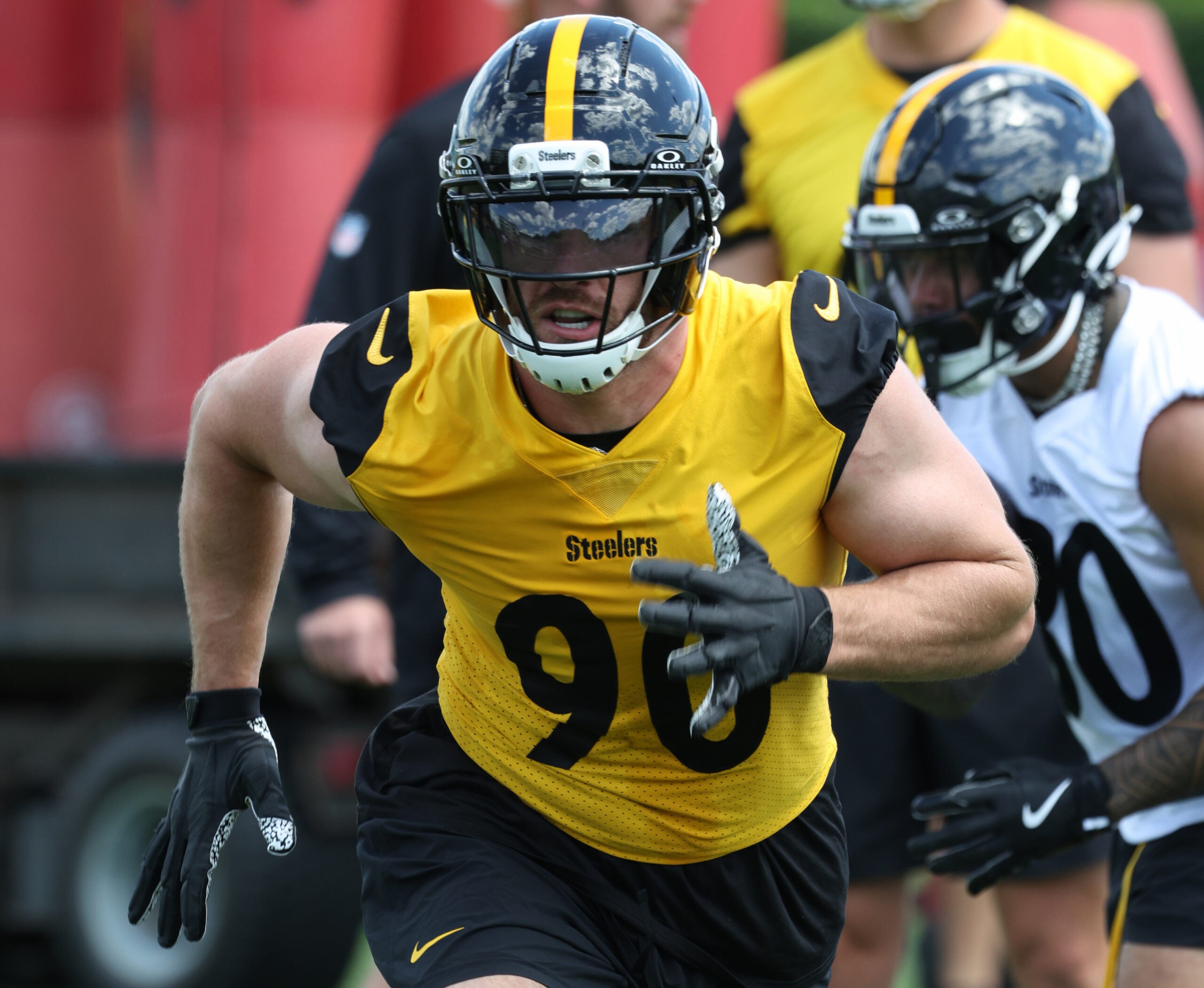
There is still a version of this working out for Pittsburgh. Watt, who turns 32 this year, has spoken publicly about his willingness to move around the defensive formation in 2026 under McCarthy’s system – a departure from spending nearly his entire career aligned to the left side. If that positional flexibility generates a genuine resurgence in disruption, whether through sacks, pressures, or the kind of run-stopping dominance that still marks his play even in lean sack years, the conversation around this contract shifts entirely. Pass rushers have extended productive careers into their mid-30s before, particularly those who transition from pure speed to power and leverage.
But the structural problem does not disappear even if Watt bounces back. The Steelers’ ability to address quarterback, offensive line, or skill positions in the next two offseasons is materially constrained by a defensive front that consumes a historically large proportion of their payroll. The Myles Garrett trade to the Los Angeles Rams – which netted the Browns a significant draft haul – demonstrated what teams can do when they accept that a great defensive player’s value on the trade market sometimes exceeds his value in-system. Pittsburgh has entertained no such conversations about Watt, at least publicly.
The Steelers’ front office position is that all three – Watt, Highsmith, and Herbig – remain on the roster for 2026, and the arithmetic makes clear why. Cutting or trading Watt generates no salary-cap savings this season given the dead-cap mechanics of his deal. Moving him after 2027 at least recovers some flexibility, but that scenario, described by Gagnon as the most likely exit point, still leaves the team absorbing $94 million in total charges for two seasons of football from a player who may never again reach the All-Pro standard that justified the contract.
Contracts that age badly typically do so for one of two reasons: injury or decline. Watt’s situation is more complicated than either. His advanced metrics in 2025 showed a measurable loss of first-step quickness – the explosive get-off that has defined his pass-rushing identity since entering the league – but he remained effective against the run and continued to affect games in ways that rarely appear in the sack column. Whether that is the profile of a player in terminal decline or one adapting to the middle stages of a long career is a question Pittsburgh’s coaching staff, not a ranking published in June, will answer in the coming months.
What the Bleacher Report ranking cannot tell you is how the Steelers pay for a quarterback after Rodgers. That is the number the front office should be losing sleep over – not seven sacks, and not fifth on a list.