
ROCHESTER, Minn. — For decades, immunologists have thought of the thymus as a finishing school, a place where the immune system graduates its soldiers before sending them into the bloodstream to begin training for war. Zhiming Mao, a researcher at the Mayo Clinic Graduate School of Biomedical Sciences, spent years inside that assumption. On Thursday, his team published a paper in Nature Communications that dismantles it.
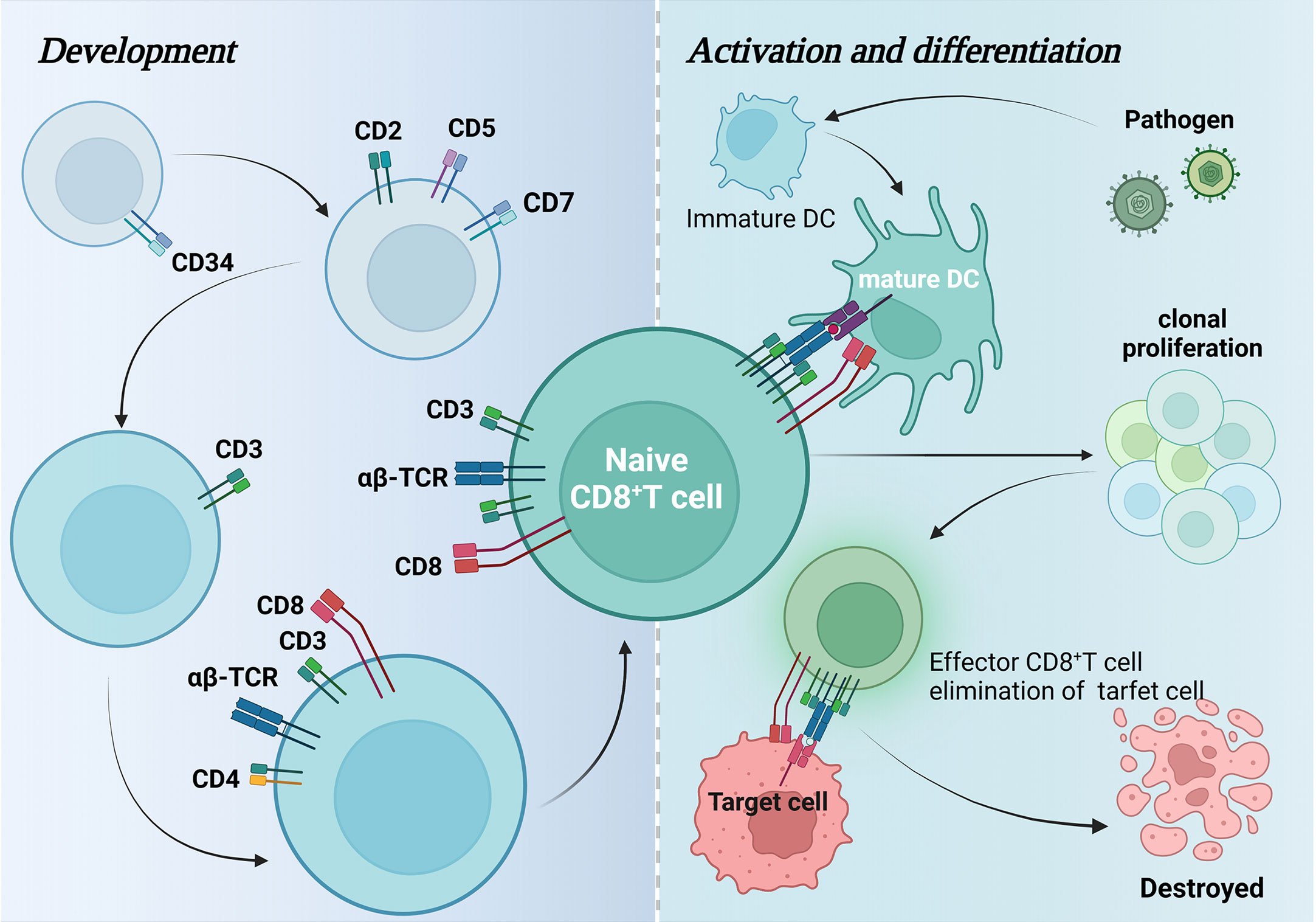
The study shows that CD8+ T cells, the cytotoxic cells the immune system deploys against tumors and infected tissue, begin acquiring cancer-fighting capacity while they are still maturing inside the thymus, long before they enter circulation. More precisely, the research identifies PD-1, the protein at the center of one of medicine’s most lucrative drug classes, as the brake that prevents those early T cells from exhausting themselves before the body ever needs them.
The finding does not produce a new drug on Thursday. What it does is alter the foundational map oncologists and immunologists have used to understand how checkpoint inhibitors, drugs like Keytruda and Opdivo that have extended survival for patients with melanoma, lung cancer, and a growing list of other malignancies, actually function at the cellular level. That map, it turns out, was missing the first chapter.
PD-1 is a protein expressed on the surface of T cells. When it binds to its counterpart proteins on tumor cells, it suppresses the T cell’s killing capacity, allowing tumors to hide from immune surveillance. The drugs that block that interaction have transformed oncology over the past decade. What Mao’s team found is that PD-1 is not passive until a tumor triggers it; it is already active inside the thymus, modulating a process the field had never looked for in that location.
The process Mao identified is what the paper calls “latent effector differentiation,” a state in which CD8+ T cells, while still in the thymus, begin the molecular programming that will allow them to kill cancer cells later. PD-1 appears to regulate how far that early differentiation proceeds, acting as a throttle on premature activation. Remove the brake entirely, and the T cells exhaust before the patient ever develops a tumor. Leave it in place too long, and the tumor exploits it. The balance, the paper suggests, is more delicate and earlier-originating than previously understood.
“We’ve discovered that the immune system may begin preparing for its fight against cancer much earlier than we realized,” Mao said in a statement. “That insight could help us design therapies that are both more powerful and more durable.” The restraint of that statement masks the scale of the revision: if cancer-fighting differentiation begins in the thymus, then therapeutic strategies aimed only at circulating T cells have been, in the language of engineering, optimizing a system midstream while ignoring the source.
The implications for checkpoint inhibitor design are still theoretical but structurally significant. The drugs currently in use block PD-1 in peripheral blood and tumor microenvironments. If PD-1’s role in thymic development turns out to be as critical as this research suggests, a treatment that bluntly blocks it everywhere may be interfering with functions that medicine never intended to touch. That could help explain one of the field’s persistent frustrations: why checkpoint inhibitors produce durable remissions in some patients and almost no response in others.
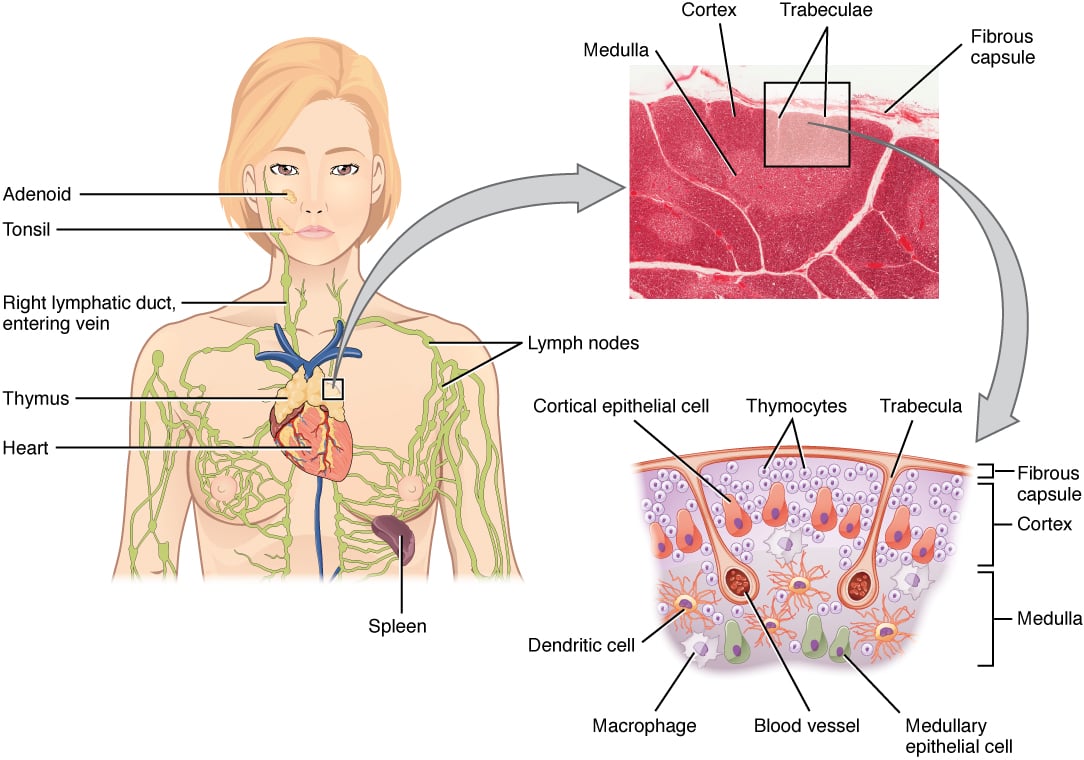
Separate research has increasingly tied the thymus to longevity and cancer outcomes in ways that extend well beyond its role in adolescent immune development, suggesting the organ remains a relevant variable in adult oncology long after its primary growth phase ends. Mao’s paper adds a new dimension to that picture, placing PD-1 at the intersection of thymic function and the earliest stages of anti-tumor immune readiness.
The research was conducted using mouse models, which is both the standard starting point for this kind of mechanistic discovery and its immediate limitation. Whether human CD8+ T cells undergo the same thymic latent effector differentiation, and whether the PD-1 regulatory role Mao observed translates precisely across species, remains the open question the paper itself acknowledges. Moving from mouse thymus to human clinical application requires a chain of evidence that Nature Communications cannot complete in one paper.
What the study can do is redirect where researchers look next. If the thymic phase of CD8+ T cell development is now understood to carry immunological consequence for cancer outcomes, clinical researchers designing the next generation of checkpoint inhibitors will need data on what those drugs do to cells that have not yet left the thymus, not only to cells circulating in peripheral blood. That is a different experimental question than the field has been asking, and asking it requires different tools, different models, and a longer developmental lens.
For patients currently on pembrolizumab or nivolumab, the paper changes nothing immediately. Treatment protocols are not revised on the basis of a single mechanistic study in mice, and oncologists are trained to hold basic-science findings at a careful distance until clinical replication begins. But the questions Mao’s team has raised travel upstream in a way that most cancer immunology research does not. They go not to the tumor microenvironment or the peripheral blood, but to the organ where the immune system first learns what it is supposed to protect, and what it is supposed to destroy.
The checkpoint inhibitor era has already produced some of the most dramatic cancer survival curves in modern oncology. Patients with metastatic melanoma who would have faced a median survival measured in months now number among the longest-lived responders in oncological history. Understanding why that happens for some patients but not others has been the field’s most consequential open question. Mao’s paper does not answer it. But it points to a place where the answer may have been forming before the cancer ever arrived, in a gland most people never think about after childhood, doing something medicine had not known to look for.
The study, titled “PD-1 regulates latent effector differentiation of thymic cytotoxic CD8+ T cells,” was published Thursday in Nature Communications. Funding and additional author affiliations were not immediately available from the journal release. Independent commentary from peer oncology researchers had not been published as of Thursday morning.