
PROVIDENCE — When an older adult is admitted to a skilled nursing facility, the clinical team works through an intake process measured in hours. Medications need reconciling. Pressure-sore risk needs scoring. Cognitive baselines need establishing. Fall histories need logging. Somewhere on that list is a question about immunizations. For most patients, the shingles vaccine has not been given.
A new study published in Annals of Internal Medicine has measured that gap precisely, and found it worth caring about. Of 509,926 Medicare patients who moved through more than 5,500 skilled nursing facilities across the United States between 2017 and 2022, exactly 8,843 received the recombinant shingles vaccine within 12 months of their admission. That is roughly 1.7 percent. The other 501,000 did not.
“This study looks at the newest vaccine only in an older, vulnerable adult population who were not up to date with shingles vaccination and are at a very clear clinical point in care: entering a skilled nursing facility,” said Kaley Hayes, an assistant professor at Brown University School of Public Health who led the research.
The finding that follows from those 8,843 vaccinated patients is notable: they had a 24 percent lower risk of being diagnosed with dementia over the four years after their admission than patients who were not vaccinated. In absolute terms, 18.8 percent of vaccinated patients developed dementia within four years. Among those who were not vaccinated, the figure was 24.6 percent. “Our findings show that as many as 1 in every 17 dementia diagnoses may be prevented through shingles vaccination,” Hayes said.
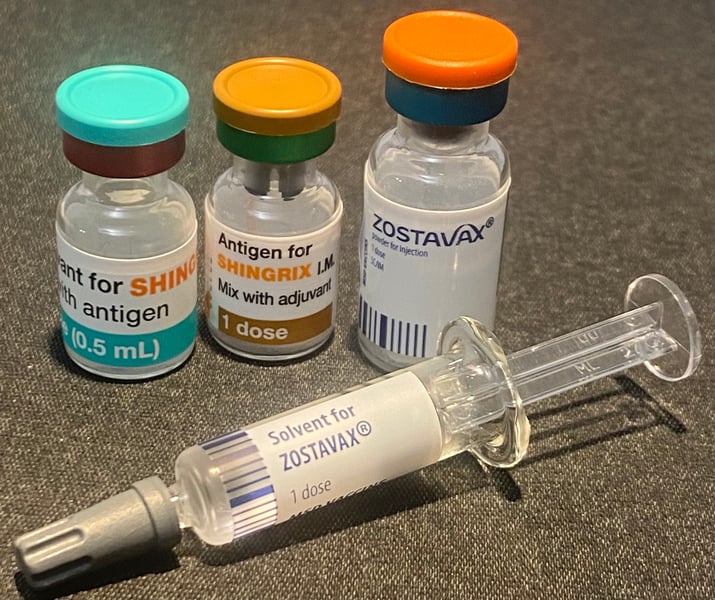
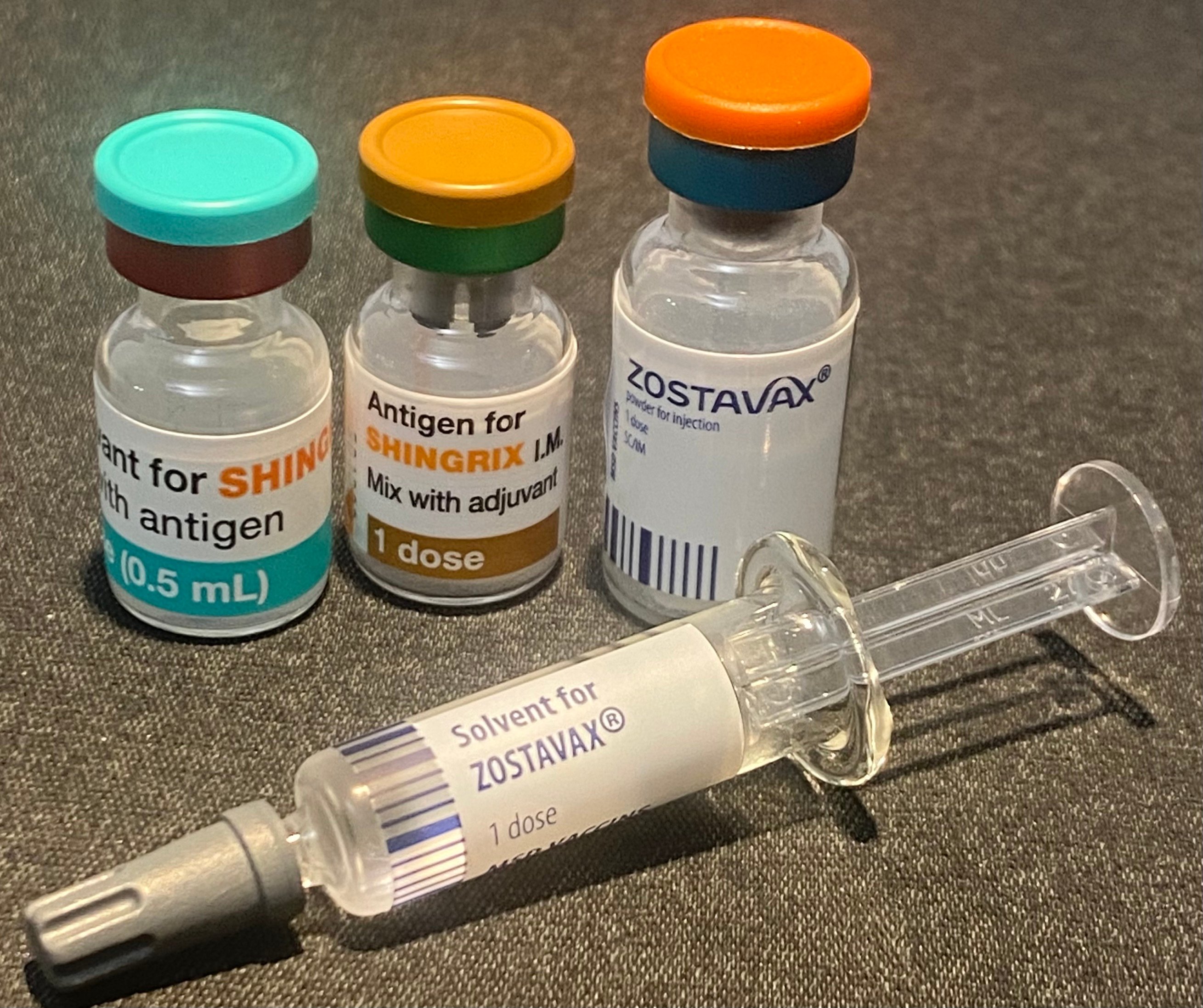
Why a shingles vaccine might affect dementia risk is not immediately obvious. The recombinant zoster vaccine, sold as Shingrix, is designed to prevent a painful flare-up of the varicella-zoster virus, the same pathogen that causes chickenpox. But herpes zoster has properties the clinical community is still working to understand. When the virus reactivates (sometimes visibly, as shingles; sometimes subclinically, without the patient knowing), it can trigger neuroinflammation, damage the brain’s small blood vessels, and potentially accelerate the aggregation of amyloid and tau proteins associated with Alzheimer’s disease. “The most obvious factor is through the reduction of shingles infections, which cause neuroinflammation and increase the risk of stroke,” Hayes said, adding that certainty about the mechanism remains out of reach: “We don’t know with certainty why the risk of dementia is lower with shingles vaccination, but we have a lot of ideas.”
The study, published June 15 in Annals of Internal Medicine, used Medicare claims and electronic health records from those nursing facilities in a method researchers call a target trial emulation, an approach designed to approximate a randomized clinical trial when conducting one is not yet practical. Researchers from the University of Delaware and the Providence Veterans Affairs Medical Center contributed alongside Hayes’s team.
Dementia research has produced a string of findings connecting unlikely variables to cognitive decline, among them evidence that frequent laxative use increases dementia risk and that plant-based diets carry cognitive benefits that depend heavily on nutritional completeness. What makes the shingles vaccine finding distinct is that it points toward something the health system already has: a vaccine covered by Medicare for all adults over 50, recommended by the Centers for Disease Control and Prevention, and available in virtually every pharmacy in the country.
The gap between that availability and its actual use inside skilled nursing facilities is the uncomfortable part of Hayes’s data. These patients are, by definition, at elevated medical risk, often living with multiple chronic conditions, and at the demographic age most likely to develop dementia. They are also admitted at a moment when the clinical team is managing acute and post-acute care demands, and when the question of whether a patient’s immunizations are current can be easy to defer. Shingrix requires two doses. Many nursing facility stays, even extended ones, may not last long enough for the follow-up appointment.
The study’s most significant limitation is one Hayes acknowledged directly. Target trial emulation controls for confounders that appear in claims data and electronic records, but it cannot rule out the possibility that patients healthy enough to be vaccinated during a nursing facility stay were also, for reasons invisible in the data, less likely to develop dementia regardless. That is the question only a randomized controlled trial can resolve definitively. Such a trial, designed specifically to test whether Shingrix prevents dementia, is now registered, but results are years away.
In the meantime, the families making admission decisions for an aging parent or spouse will encounter that same immunization checkbox on the intake form. The study does not yet tell them with certainty what happens if the box is checked. It suggests, with more force than any previous analysis of the newer vaccine, that it may matter more than anyone working through that intake list has stopped to consider.
Related Posts