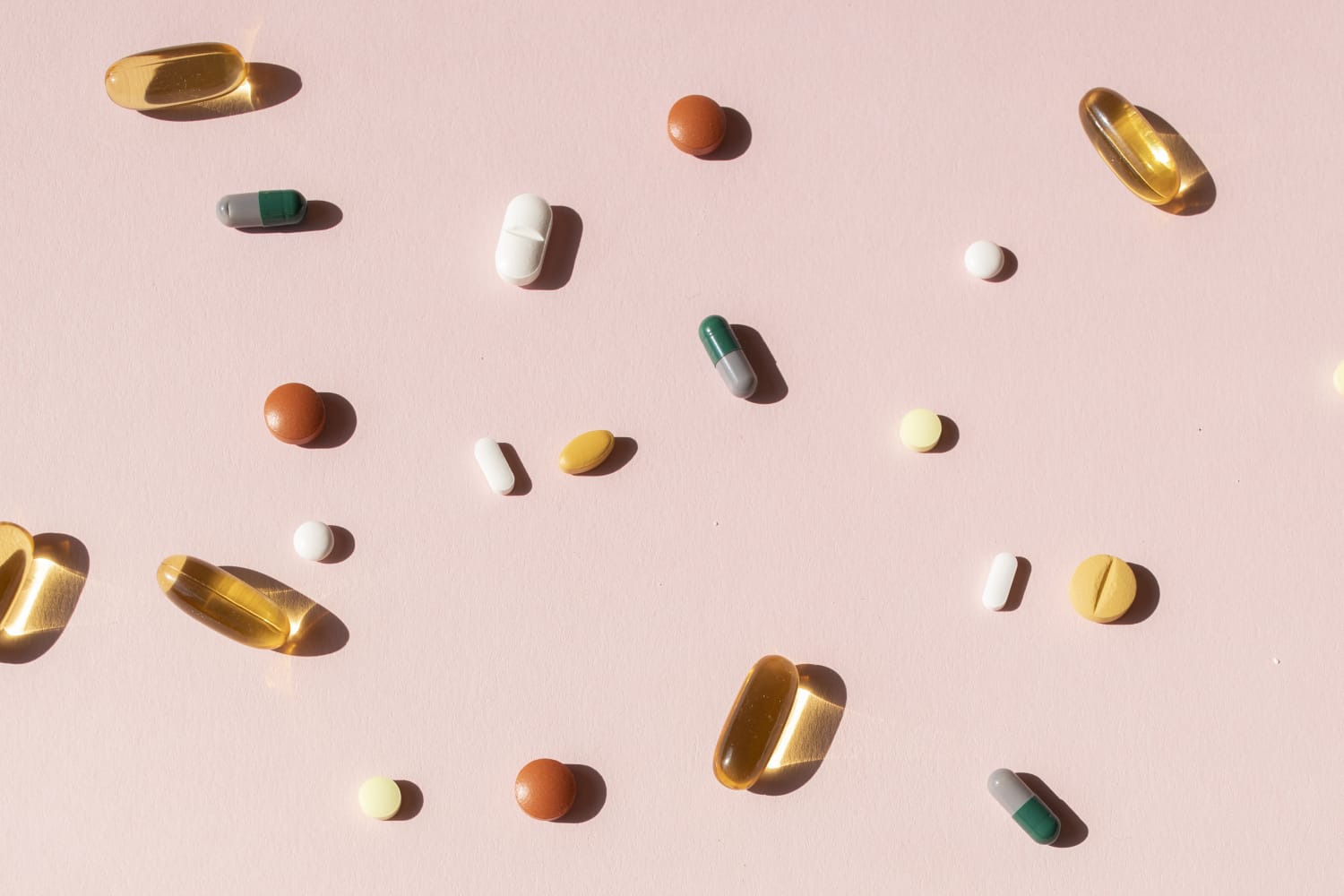

BOSTON – For the roughly 50 million Americans over 65 who live at home and intend to stay there, a new finding from one of the largest supplement trials ever conducted offers a modest but specific signal that a daily multivitamin may be doing more than filling nutritional gaps. Researchers at Brigham and Women’s Hospital and Harvard Medical School found that older adults who had been taking a daily multivitamin-mineral supplement were about 30 percent less likely to develop symptomatic COVID-19 than those taking a placebo. It is a finding that does not prove much on its own. But in a population where a serious respiratory illness can mark the practical line between home and a care facility, a 30 percent reduction in odds of becoming ill carries a different weight than it might in a younger cohort.
The analysis appears in the July 2026 issue of the American Journal of Clinical Nutrition and draws on data from the COcoa Supplement and Multivitamin Outcomes Study, known as COSMOS, a randomized controlled trial that enrolled 21,442 adults aged 60 and older across the United States. Participants were assigned to take either Centrum Silver, a widely available over-the-counter multivitamin-mineral tablet, or an identical placebo. Neither participants nor the clinicians collecting outcome data knew who received which. The study tracked participants from June 2015 through December 2020, which meant the trial captured the early months of the pandemic with an existing, randomly assigned population.
Among the 18,205 participants still enrolled as of January 1, 2020, as the pandemic took hold in the United States, 382 had been assigned to the multivitamin and 404 to placebo. Both groups faced comparable exposure conditions. The number of documented COVID-19 infections was similar across the two arms: the hazard ratio for incidence was 0.93, meaning the supplement did not meaningfully reduce the likelihood of catching the virus in the first place. But among those who did get infected, the picture shifted. The odds of developing symptomatic illness were 30 percent lower in the multivitamin group, with an odds ratio of 0.70. Among participants who had been fully adherent to their daily pill, the reduction reached 40 percent, with an odds ratio of 0.60.
The lead authors, Jun Li, JoAnn E. Manson, Pamela M. Rist, and Howard D. Sesso, all at Brigham and Women’s Hospital and Harvard School of Public Health, concluded that the supplement “does not significantly reduce COVID-19 incidence among older adults but shows a promising signal lowering the odds of symptomatic COVID-19 illness.” The symptomatic COVID finding did not cross the threshold of conventional statistical significance by itself. The authors described it as hypothesis-generating rather than practice-changing, and they called for confirmation in larger datasets.
The mechanism that might explain the difference is not settled. Vitamins C, D, and zinc, all present in Centrum Silver, have each been studied in connection with immune function and upper respiratory tract defense. Whether the signal in the COSMOS data reflects one of these specifically, a combination, or something else entirely is not answered by the trial design, which tested the whole multivitamin formulation as a unit. That gap is among the study’s most significant limitations and makes translating these findings into a precise public health recommendation genuinely difficult.
This COVID analysis is the newest addition to a growing body of COSMOS findings. An earlier report, published in Nature Medicine in March 2026, found that daily multivitamin use slowed biological aging, as measured by two epigenetic clocks, by approximately four months over a 24-month period. The epigenetic changes tracked in that study are indicators of cellular health thought to correlate with risks for age-related disease and functional decline. Participants whose cells had been aging most rapidly at enrollment appeared to benefit most, with roughly double the slowing effect. Sesso said at the time that “it’s hard to know what those four months truly translate to” in practical terms of life expectancy or function. What they indicate is that the supplement is affecting the molecular biology of aging in a measurable, if not yet explicable, way.
Whether the COVID symptom reduction and the epigenetic aging signal share a common mechanism is one of the more consequential open questions in this research area. Both are consistent with the general hypothesis that correcting subclinical micronutrient deficiencies improves immune and cellular maintenance in older adults. But COSMOS was not designed to test that hypothesis directly. The trial enrolled generally healthy, predominantly white, and college-educated participants who were not screened for nutritional status before joining. Whether these benefits concentrate in adults with genuine dietary inadequacies, or apply broadly to well-nourished adults, remains unanswered and would require a differently designed study to resolve.
The population limits matter for interpreting the COVID findings specifically. The pandemic-era analysis drew on a subset of enrolled participants, and the numbers in each arm were small enough that confidence intervals around the symptomatic COVID odds ratios are wide. The finding at OR 0.70 is biologically plausible and directionally consistent with separate work on micronutrients and respiratory illness. It is not, by itself, robust enough to shift clinical guidance for older adults.
That guidance has not changed. The US Preventive Services Task Force reviewed the evidence on vitamin and mineral supplementation for chronic disease prevention in 2022 and concluded it was insufficient to recommend routine supplementation for the general adult population. The COSMOS data accumulating since then represents the most rigorous randomized evidence yet available for this age group. Whether it is sufficient to prompt a formal reassessment by the task force is not a determination the researchers made, and no such reassessment has been announced.
For the millions of older adults who already take a daily multivitamin, the COSMOS COVID data provides a more specific and more recent rationale than previously existed. For those who do not, the evidence does not yet make a compelling clinical case for starting, particularly for adults whose diets are nutritionally adequate. What the accumulating COSMOS findings do, paper by paper, is pose the same question more sharply each time: whether a low-cost, widely available tablet is interacting with how older bodies handle infection and aging in ways that matter for independence at home. The COVID signal adds a specific dimension to that question. Which nutrients are responsible, and whether the findings translate across more diverse populations, is the unresolved work the trial has not finished running.
Related Posts