
DAVIS — Getting to 90 without a dementia diagnosis carries a certain quiet logic: the worst, perhaps, is past. The neurons that were going to fail have failed. The rest are holding.
A study published Monday in The Lancet Healthy Longevity tells a different story. For the 800-plus adults enrolled in the LifeAfter90 cohort, tracked from their early 90s through the final years of life, the risk of developing dementia was still very much present, still climbing, and still sorting itself along lines of race and sex in ways that researchers say mirror what the field has long documented in people decades younger.
Women 90 and older faced roughly twice the dementia risk of men in the same age group. Black participants had a 75 percent greater risk than Asian participants. These were not margins that narrowed at the extreme end of life. They held.
“It is striking that the racial and ethnic disparities in dementia risk observed in younger adults continue into the 10th decade of life,” said Hilary L. Colbeth, the study’s lead author. That persistence, she said, is what distinguished the LifeAfter90 findings from what prior research had allowed her to expect.
The cohort was built to fill a specific gap in dementia science. Most large longitudinal studies enroll participants in their 60s or 70s, and by the time the data reaches the very-old-age window, past 85 and past 90, the sample has thinned and statistical power has eroded. The LifeAfter90 project, led by principal investigator Rachel Whitmer at UC Davis Health and supported by the National Institutes of Health’s National Institute on Aging, recruited from Kaiser Permanente Northern California’s membership, deliberately starting at 90. The result is one of the only prospective datasets that treats extreme old age as a starting point rather than an endpoint. Enrollment continues, and the study’s design allows researchers to track cognitive function, physical capability, and mortality across a population that most longitudinal research has historically treated as too complex or too variable to study rigorously.

The genetics findings were the most unexpected part of the paper. The APOE4 allele, the variant most strongly associated with late-onset Alzheimer’s disease across populations, doubled the dementia risk specifically among Black participants in the cohort. That compounding effect did not replicate uniformly across other groups. The APOE2 allele, which confers protection, reduced overall dementia risk by about 60 percent.
“We saw evidence that APOE4 impacts males and females differently after age 90,” Colbeth said. Why APOE4 concentrates its effect more heavily in Black adults, who already carry higher baseline dementia rates from structural and social conditions earlier in life, is something the study identifies without resolving. The mechanism behind that interaction remains unexplained.
Prior work has examined dementia risk from multiple angles. One recent study on the shingles vaccine dementia link suggested that viral history may play a role in cognitive decline. A separate Lancet-published analysis found that leisure-time physical activity was associated with reduced risk across age groups. What the LifeAfter90 data adds is a cleaner picture of how those baseline risks are distributed once people have already survived into extreme old age.
The cohort’s demographic breadth was intentional. By recruiting through Kaiser Permanente Northern California, researchers assembled a multiracial sample including white, Black, Asian, and Hispanic participants, then linked clinical records, genetic data, and long-term follow-up in a population that most studies lose too early to analyze with precision. That design is what gave the team the statistical power to detect differences that would have been invisible in a predominantly white cohort.
For women, the roughly doubled risk relative to men fits within a pattern the field has been building for years. Women live longer on average, and a higher share survive into their 90s, which affects how incidence rates are calculated. But longer survival does not fully account for elevated dementia rates. Differences in how the APOE4 allele expresses across sexes, in hormonal history, and in cardiovascular profile are all thought to contribute, though the relative weight of each remains unsettled. What is clear from the LifeAfter90 data is that whatever those mechanisms are, they are still operating at 90 and 92 and 95. The sex disparity does not smooth out at the end.
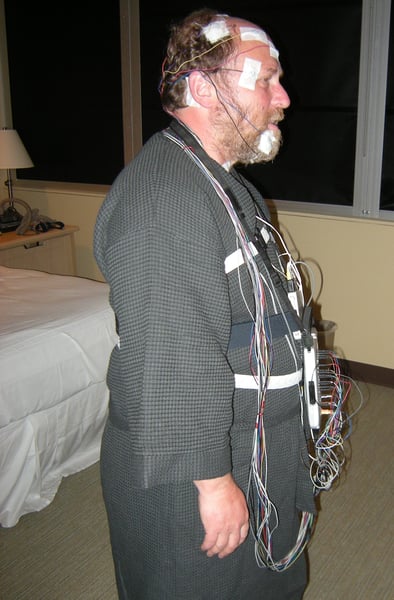
One dimension the study did not capture is the relationship between sleep disruption and dementia in extreme old age. Earlier research on Alzheimer’s genetic risk and sleep has pointed toward micro-awakenings as compounding factors in neurological vulnerability, particularly in individuals carrying APOE4. Whether that interaction plays out differently past 90 remains unmapped. The LifeAfter90 protocol was not designed to capture overnight sleep data, and that gap reflects a broader challenge in what clinical research has been able to measure in very old adults.
The team is continuing to follow participants. The cohort enrolled beginning in 2018, and longitudinal data on how dementia risk patterns evolve among people who started the study at 92 and are now reaching their late 90s is still accumulating. The current findings cover the first five years. What the extended follow-up will show about the interplay of APOE4, sex, and race at ages that very few datasets reach is something the field does not yet have.
The findings were published September 1, 2026, in its study in The Lancet Healthy Longevity. UC Davis Health described the cohort design in its research announcement.
Related Posts