
BERLIN — She had tried eight drugs. The most recent, a biologic targeting a specific protein in the immune cascade, had worked for a few months before losing effect. By the time she arrived at Charité — Universitätsmedizin Berlin, she was in her forties and could no longer button a shirt without stopping to rest. Rheumatoid arthritis had reorganized her life around its demands.
What happened next has never happened before in medicine. Researchers at the Berlin hospital gave her a single infusion of engineered immune cells — the same technology oncologists use against blood cancers — and her disease went silent. Weeks later, she stopped all her medication. A year after treatment, she still had not gone back on it.
She was one of three patients out of six in the world’s first clinical trial of chimeric antigen receptor T-cell therapy, known as CAR T, for rheumatoid arthritis to achieve sustained drug-free remission. The results, published August 28 in Nature Medicine, mark the first time a treatment has cleared the immune memory that drives one of the world’s most common and debilitating autoimmune diseases.
“The concept here is not just suppression,” said Dr. Fredrik Albach, a researcher in Charité’s Department of Rheumatology and Clinical Immunology, who presented the phase 1 data at the European Alliance of Associations for Rheumatology congress in London. “We are asking whether we can reset the immune system — whether we can clear the cells responsible for the attack and let the body start over.”
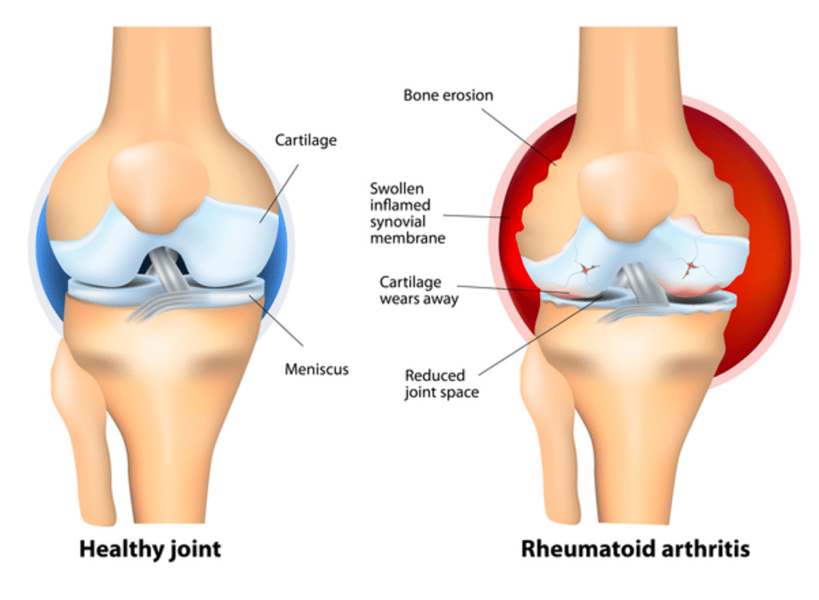
The therapy, mivocabtagene autoleucel — developed by Kyverna Therapeutics — targets a protein called CD19 on the surface of B cells. In rheumatoid arthritis, those B cells have become miscalibrated, producing antibodies that attack the body’s own cartilage and bone. The CDC notes, in its fact sheet on rheumatoid arthritis, that no cure exists — approved treatments suppress the immune attack but cannot reach its root cause. CAR T cells attempted something different: eliminating the source.
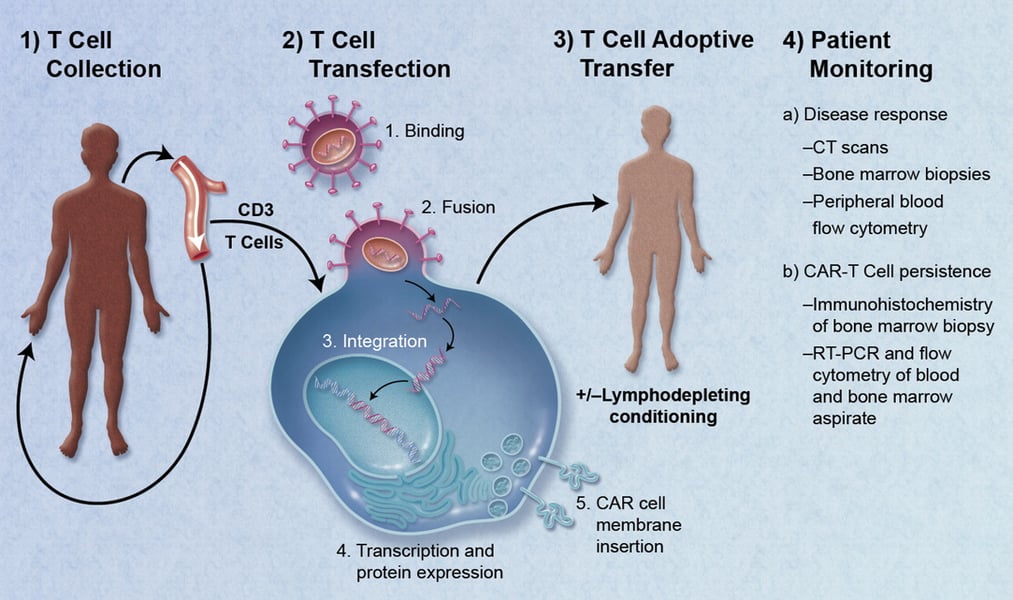
Each patient’s own T cells were extracted, genetically engineered to recognize and bind CD19, and infused back after a brief course of lymphodepletion therapy — a standard chemotherapy preparation that clears space for the modified cells to expand. The approach mirrors oncology practice refined over a decade against leukemia and lymphoma. The Charité trial asked whether it could also work against an immune system attacking itself.
The six patients recruited for the COMPARE phase 1 trial had exhausted the standard toolkit. Their median age was 51. Between them, they had tried a median of 6.5 targeted or biologic therapies over as many as ten years. Four had previously received rituximab, an older B-cell depleting drug, without sufficient benefit. Their physicians had few remaining options.
All six showed substantial improvement in disease activity — a composite score measuring joint tenderness, swelling, inflammatory markers, and patient-reported function. During a follow-up of up to one year, three patients achieved sustained remission without any medication for rheumatoid arthritis. The trial protocol did not require them to stop — they stopped because they no longer needed treatment.
Side effects were limited to cytokine release syndrome, a known and manageable inflammatory response that occurs when activated immune cells flood the bloodstream. All cases were mild to moderate. No patient developed the severe neurological complications that have occasionally complicated CAR T therapy in oncology settings.
The mechanism behind the remission is not fully understood — which is the central unanswered question this trial leaves open. The working hypothesis among the Charité researchers is that eliminating CD19-positive B cells, including those carrying the immunological memory sustaining RA’s autoimmune attack, allows the immune system to re-establish tolerance to the body’s own tissue. This is a different mechanism than what any current anti-inflammatory treatment for autoimmune conditions attempts.
“Current treatments block the damage but do not remove the cells instructed to cause it,” Albach said. If the cells and the memory they carry are eliminated, the instruction may simply not return.
Whether that holds at scale is what phase 2 will determine. The COMPARE trial is now enrolling ten additional patients who will be compared directly against rituximab to assess whether miv-cel produces deeper and longer-lasting remission. Those results will take time.
There are also practical barriers the trial does not address. CAR T cell therapies in cancer cost hundreds of thousands of dollars per infusion and require specialized manufacturing infrastructure available only at major medical centers. Rheumatoid arthritis affects an estimated one percent of the global population — tens of millions of people, the majority receiving care in settings nowhere near a CAR T production facility. Researchers working on joint disease treatment have confronted similar gaps between compelling clinical signals and treatments patients can reach.
How that distance closes is a question neither the Charité team nor Kyverna has publicly answered. The COMPARE trial was designed to establish safety and early efficacy, not scalability or cost. The researchers published in its published findings the signal they set out to find. What happens next remains unwritten.
Six severely ill patients. Six improvements. Three of them, for at least a year, without any medication at all. In a disease defined by the absence of a cure, that is not a small result.