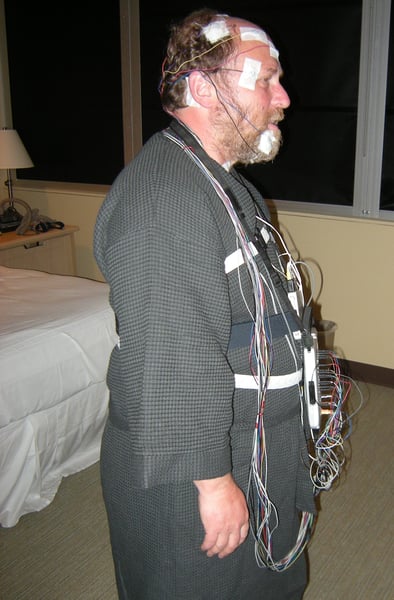

LIÈGE, BELGIUM — In a sleep lab at the University of Liège, a healthy volunteer in their late fifties lay still through the night with electrodes attached to their scalp. They felt fine. No memory concerns, no cognitive complaints. The researchers monitoring their brain activity were not looking for dementia. They were looking for something quieter: the brief, invisible bursts of brain arousal that are quick enough not to wake anyone but that flicker through the EEG record between the deeper rhythms of sleep. And among people in middle age, they found that how often those bursts appeared was already tied to how much genetic risk a person carried for Alzheimer’s disease.
A study published this month in the journal SLEEP presents the most direct evidence yet that the microstructure of sleep, not sleep quality as self-reported, not whether a person can fall asleep or stay asleep in any subjective sense, encodes a marker of Alzheimer’s vulnerability in people who show no other sign that anything is wrong.
Researchers led by Nasrin Mortazavi at the University of Liège’s GIGA Neurosciences laboratory analyzed overnight polysomnographic recordings from more than 500 healthy volunteers divided into two age groups: young adults aged 18 to 31, and older adults between 50 and 69. Each participant received a polygenic risk score, a statistical estimate of their inherited susceptibility to Alzheimer’s based on the specific combination of gene variants they carry. Their sleep recordings were scored for micro-awakenings, the brief EEG surges that mark a transient departure from deeper sleep without crossing into full wakefulness.
The result was age-specific. Among older adults, higher polygenic Alzheimer’s risk was associated with more frequent micro-awakenings. Among younger adults, no such association was found.
The study also went one step further and identified a distinction within micro-awakenings that previous research had not captured in this context. Arousals that occurred at transitions between sleep stages, but without the accompanying burst of muscle activity that typically marks a full-body awakening, were the ones most strongly linked to higher genetic risk and to early signs of memory decline. Arousals that did include increased muscle tone showed the opposite pattern. The directionality of that difference suggests the signal is not simply about disrupted sleep in a generic sense, but about a specific component of sleep architecture that may reflect the brain’s earliest vulnerability.
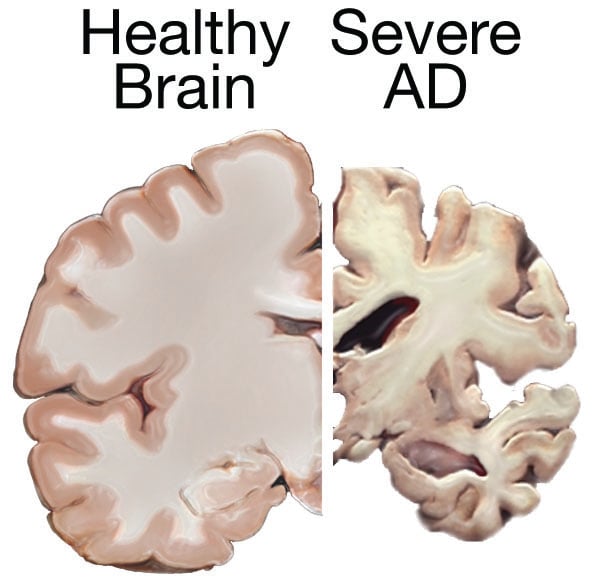
Alzheimer’s disease is known to begin accumulating its characteristic pathology, the amyloid plaques and tau tangles in the brain, 15 to 20 years before clinical symptoms appear. Research over the past decade has established that poor sleep accelerates that accumulation: the brain’s glymphatic system, which clears metabolic waste including amyloid during deep sleep, is suppressed when sleep is fragmented. But the causal question has remained difficult to untangle. Does disrupted sleep worsen the disease? Or does the disease’s early neurological footprint first disrupt sleep? The Liège team’s finding nudges the evidence toward the second explanation: micro-awakenings in genetically susceptible people appear at an age when no other clinical marker has flagged anything wrong, pointing to an early biological process already operating in the brain before it surfaces anywhere else.
The researchers were careful about what the finding does not say. Polygenic risk scores are population-level tools, not individual predictions. A high score reflects an elevated probability at a population scale; it does not tell any one person whether they will develop Alzheimer’s. The study also did not track participants over time to see who eventually received an Alzheimer’s diagnosis, meaning the link between micro-awakenings and future disease progression remains to be established in a longitudinal study. What the team found is an association, consistent and age-specific, not a mechanism or a prediction.
Still, the finding carries clinical implications that researchers in the field have been working toward for years. Sleep monitoring carries no radiation, requires no costly imaging equipment or specialized tracers, and can be conducted in a standard clinical setting. If the pattern holds in larger studies with longer follow-up, micro-awakenings could eventually function as part of a low-burden, early-detection screen for people who carry elevated Alzheimer’s genetic risk, a way to identify who might benefit from closer follow-up or preventive intervention before the window for intervention narrows.
That clinical translation is not yet within reach. Full polysomnography, the overnight recording with EEG, EMG, and eye movement sensors used in this study, is itself expensive and labor-intensive. Consumer sleep trackers can detect some fragmentation but are far less sensitive than laboratory EEG for identifying the specific micro-arousal patterns the Liège team measured. And the most important clinical question remains unanswered: whether addressing sleep disruptions in high-risk individuals would actually reduce dementia risk, or whether the micro-awakenings are a downstream signal of a neurobiological process that sleep intervention alone cannot reverse.
Sleep’s relationship to Alzheimer’s pathology has been confirmed from multiple directions, as the NIH reviewed in its review. What is new here is the genetic anchor: the awakenings are not random noise, and they are not simply the product of aging alone. In healthy people in their fifties and sixties, they track something written into the genome, a vulnerability that the sleeping brain may be registering before any test of cognitive function would catch it, as the team detailed in its published study.