
SOMERVILLE, MASS. — For people who live a few hundred feet from a busy highway, the windows stay shut even on temperate days. The exhaust gust when a truck accelerates is familiar enough not to register. What few residents consider is what is happening to the indoor air when the windows are closed, and what that air, carrying ultrafine particulate matter seeping through doorframes and ventilation gaps, may be doing to the brain over years of exposure.
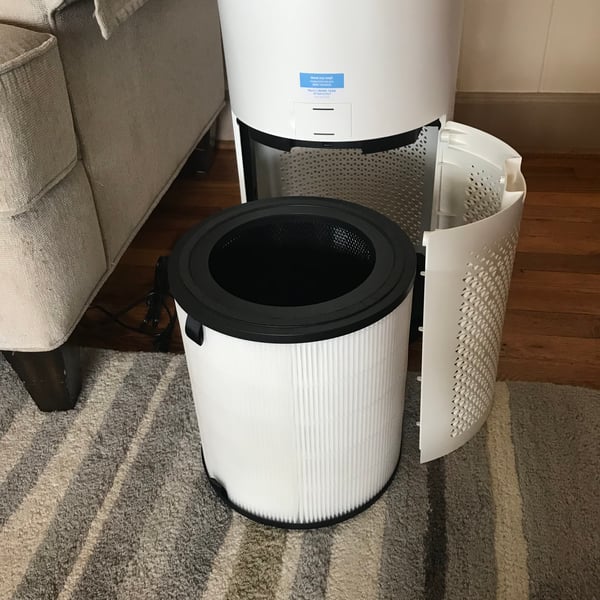
A randomized controlled trial published in Scientific Reports offers the first evidence from a crossover trial design that a home HEPA air purifier can directly improve one of the cognitive functions most vulnerable to air pollution damage, and it can do it in one month.
The study, known as the HAFTRAP trial (the Home Air Filtration for Traffic-Related Air Pollution study), was led by researchers at the University of Connecticut and Tufts University and analyzed data from 119 adults between the ages of 30 and 74 living near high-traffic roads in Somerville, Massachusetts, a dense urban neighborhood flanked by Interstate 93 and Route 28. Participants were randomly assigned to receive a working HEPA air purifier for one month, a washout period of one month, and then a sham purifier for one month, or the reverse sequence. The sham units were identical in appearance but stripped of filtration capacity.
Cognitive performance was measured using the Trail Making Test, a standard neuropsychological tool used to assess attention, processing speed, and executive function. Part A requires connecting numbered dots in sequence; Part B requires alternating between numbers and letters, placing higher demands on cognitive flexibility and working memory. Participants completed both parts at the end of each purifier phase.
Among adults 40 and older, roughly 42 percent of the sample, completing Part B took 12 percent less time after the HEPA month than after the sham month. The authors note the magnitude of that improvement is comparable to what prior research has found from increased daily physical activity. Adults under 40 showed no statistically significant benefit on either measure, a result that tracks with what is known about age-dependent vulnerability: the brain regions most sensitive to air pollution damage are those associated with executive function and cognitive flexibility, and those regions show the earliest age-related decline.
Nicholas Pellegrino, a research associate in public health sciences at the University of Connecticut who co-authored the study alongside Doug Brugge and Tufts University biostatistician Misha Eliasziw, said the findings move a growing body of research on traffic-related air pollution and neurological health into the domain of intervention. Prior evidence had established that living near highways was associated with accelerated cognitive decline over years. This study showed that the same cognitive signature can be detected over a short window and that a household device partially reverses it.
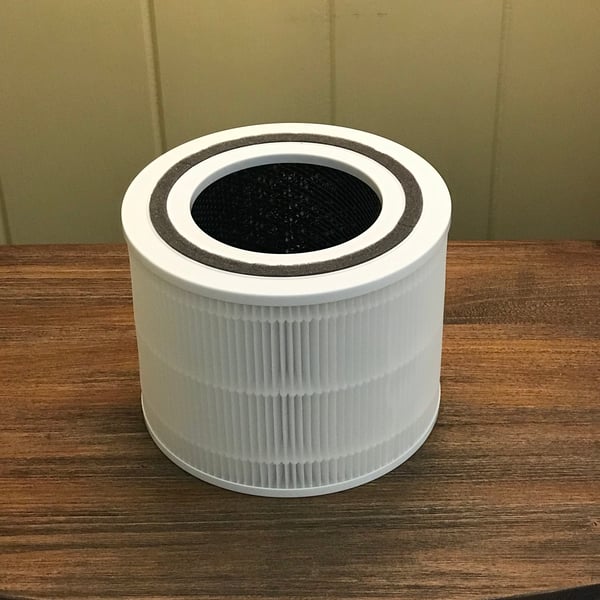
The mechanism is not fully established. Traffic-related air pollution generates a complex mixture of fine and ultrafine particles, nitrogen dioxide, and polycyclic aromatic hydrocarbons. Particulate matter small enough to penetrate interior spaces passes through the lungs into the bloodstream and, in animal models, has been shown to reach the brain directly via the olfactory nerve. Once there, particulates trigger neuroinflammation, the same immune response pathway implicated in accelerated cognitive decline and rising dementia risk. HEPA filtration captures particles down to 0.3 microns, removing more than 99.97 percent of them. Whether the reduction in particulate load translates directly to reduced neuroinflammation, or whether the cognitive effect operates through another pathway, is not established in this study.
The finding has distributional implications that the researchers note but do not fully explore. Roughly 72 million Americans live within a mile of a highway, a concentration that reflects decades of development patterns placing lower-income and minority communities closest to freight corridors and interchanges. The health costs of that exposure, in respiratory disease, cardiovascular outcomes, and cognitive decline tied to sleep disruption from traffic noise and poor air quality, accumulate over years. A HEPA purifier retails for as little as $50 for a small-room unit, and in this trial the cognitive benefit appeared within weeks.
The study carries limitations that matter for interpreting what it suggests about policy. Somerville sits at one of the densest traffic intersections in the northeastern United States; whether a comparable benefit would emerge in lower-exposure environments is unknown. The sample of 119 was small. The trial measured performance at the end of one month, not at three months or six months; whether cognitive gains accumulate with sustained use or plateau remains an open question. The researchers also noted that cognitive function was a secondary outcome in a trial originally designed to measure cardiovascular effects, and that a primary cognitive trial with larger enrollment and longer follow-up would be needed to clarify the durability and scope of what they found.
Whether performance reverts to baseline once the purifier is removed is also unknown. That gap between a promising result measured over four weeks and a confirmed, durable intervention is where most of the meaningful clinical work remains, as the team detailed in its published study.