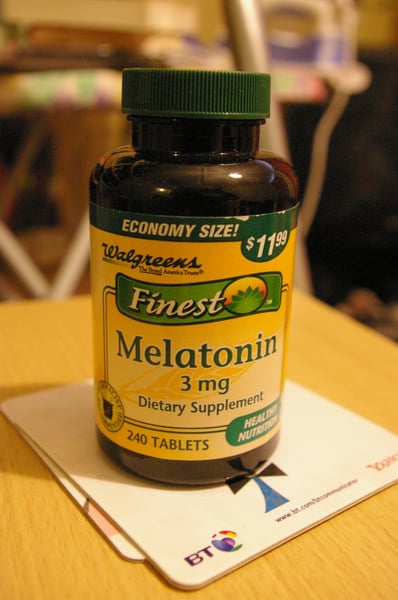

BROOKLYN — Every night, an estimated 6 million Americans take melatonin without a prescription, without a warning label, and without the assumption that a sleep supplement carries cardiac implications. A large analysis of more than 130,000 adults with insomnia, presented at the American Heart Association’s Scientific Sessions, is pressing researchers and physicians to reassess that assumption.
Adults who took melatonin for at least one year had a 90 percent higher hazard of developing heart failure over five years compared with matched controls who did not take the supplement, according to the study. Heart failure-related hospitalizations were nearly three times higher in the melatonin group. All-cause mortality doubled.
The data did not come from a randomized trial. Researchers at SUNY Downstate/Kings County Primary Care in Brooklyn, led by Ekenedilichukwu Nnadi, MD, queried the TriNetX Global Research Network — a database drawn from hospital systems across multiple countries — and identified 65,414 adults diagnosed with insomnia who had been prescribed melatonin for at least a year. They matched each of those patients to a control participant with insomnia and no melatonin exposure, aligning the groups across 15 comorbidities, demographic characteristics, concomitant medications, laboratory values, and vitals. The average participant was 55 years old; nearly two-thirds were women.
Over the five-year follow-up, incident heart failure occurred in 4.6 percent of the melatonin users versus 2.7 percent in the control group. Heart failure hospitalization rates were 19.0 percent among melatonin users compared with 6.6 percent in controls. All-cause mortality: 7.8 percent against 4.3 percent.
“Melatonin supplements may not be as harmless as commonly assumed,” Nnadi noted in its news release. “If our study is confirmed, this could affect how doctors counsel patients about sleep aids.” The findings were published as an abstract in its published abstract in Circulation and represent a preliminary finding that has not yet appeared as a full peer-reviewed manuscript.
The mechanism connecting melatonin to cardiac outcomes is not yet understood. Melatonin does more than signal darkness to the brain — it binds to receptors distributed throughout cardiovascular tissue, including the heart muscle itself, blood vessels, and cells involved in blood pressure regulation. Some earlier laboratory research suggested melatonin could be cardioprotective in acute injury models. How sustained daily supplementation at the doses widely sold in American pharmacies interacts with those receptors over years of use has never been tested in a long-term randomized trial.
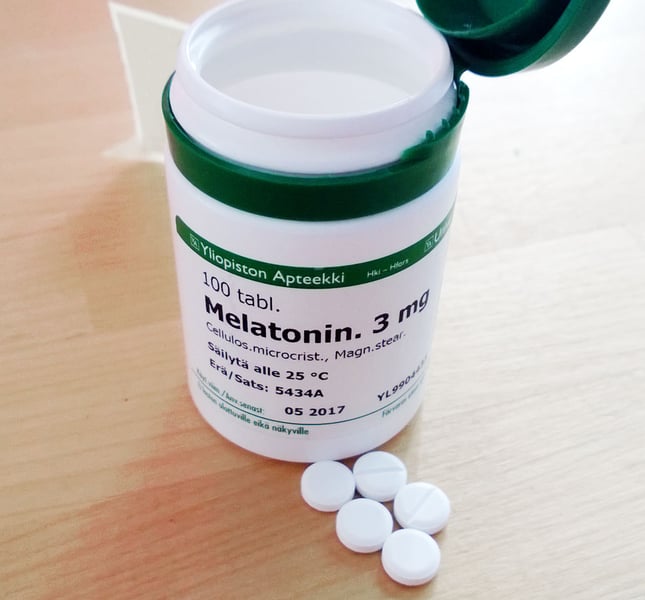
The regulatory gap helps explain why. In the United States, melatonin is classified as a dietary supplement and sold over the counter at doses ranging from 0.5 milligrams to 10 milligrams or more — levels that far exceed what the human pineal gland produces naturally. Unlike pharmaceutical drugs, dietary supplements do not require efficacy or safety testing before going to market. The FDA reviews them reactively, after reports of harm accumulate, rather than proactively. There is no requirement that a melatonin manufacturer test cardiovascular endpoints before a product reaches the pharmacy shelf.
That regulatory environment has allowed melatonin use to expand rapidly without a parallel accumulation of long-term safety data — a pattern that a growing body of research is now straining. Evidence that melatonin’s weak evidence base had already been accumulating before this dataset arrived. What the TriNetX analysis adds is scale: this is not a small trial or a mechanistic mouse study. It is 130,000 people, matched on comorbidity burden, followed for five years.
The study’s critical limitation is the one its authors acknowledge plainly: it is observational, and it cannot establish causation. Doctors who prescribe melatonin for at least a year may be selecting patients with more severe insomnia, more advanced cardiovascular risk factors, or both. Matching the groups on 15 comorbidities and multiple clinical parameters substantially reduces that risk, but cannot eliminate it entirely. Whether melatonin is doing something to the heart, or whether it is serving as a marker for patients whose underlying condition trajectory was already pointing toward heart failure, is a question that only a randomized controlled trial can answer.
That trial does not yet exist. And without it, the clinical implications are complicated. Cardiologists are unlikely to recommend melatonin discontinuation based on preliminary data, and sleep specialists remain focused on the absence of other evidence-based pharmacological options for chronic insomnia that are well tolerated at scale. The finding is an argument for more investigation, not a verdict — though a 90 percent elevated risk in a dataset this large is not the kind of signal that tends to disappear on closer examination. Research recalibrating assumptions about widely used drug safety has a recent history of reshaping clinical practice when the data grows sufficient.
For the tens of millions of Americans who take melatonin without a clinician’s guidance, the most immediate practical implication is transparency: tell your doctor. For patients with existing cardiovascular conditions, or those at elevated cardiac risk, the question of whether long-term melatonin use is appropriate belongs in the clinical conversation — not on a pharmacy shelf, to be resolved without it.