
ST. LOUIS — Most people with neuropathic pain have already tried the obvious treatments. Anti-seizure medications that dull nerve firing. Antidepressants that alter how pain signals are processed. Opioids that work for weeks and then, often as the dose rises, work less well or not at all. What they haven’t had is a clear map of where the problem originates in the brain and which molecular switch might, if flipped back, stop it.
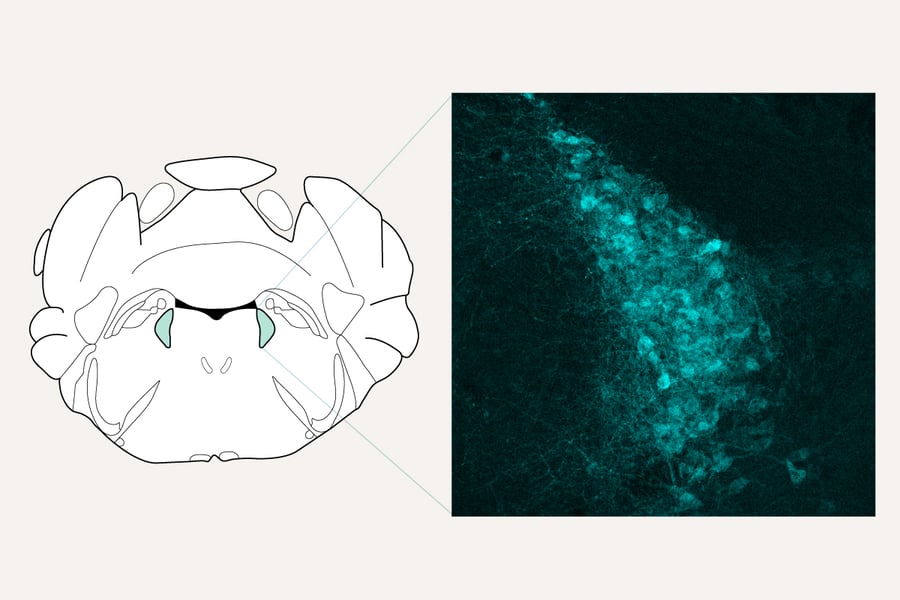
Scientists at Washington University School of Medicine in St. Louis have now identified both. A study published August 17 in Current Biology found that a small brainstem region called the locus coeruleus, one of the brain’s primary stress-response centers, becomes an active driver of chronic pain after nerve injury, and that specific receptors on those brain cells function as a natural brake that, when restored, can reverse pain hypersensitivity in animal models.
The locus coeruleus has historically been understood as a pain-relieving structure. Dense with neurons that produce norepinephrine, it sharpens alertness under stress and, under normal conditions, quiets incoming pain signals. In acute injury, this system does exactly what medicine assumes: it activates briefly and suppresses discomfort long enough to allow a person to respond to danger.
What Jordan McCall’s lab at WashU Medicine has now documented is that this picture reverses after nerve injury. Rather than quieting pain, the locus coeruleus in animals with established neuropathic pain becomes a generator of it. The very system designed to suppress pain signals instead amplifies them, turning the brainstem’s alert center into a source of the hypersensitivity that makes light touch feel like burning and ordinary temperature feel unbearable.
McCall, an associate professor in WashU Medicine’s Department of Anesthesiology and the study’s senior author, and his team confirmed this finding by using optogenetic tools to temporarily inhibit locus coeruleus activity in mice with spared nerve injury, a standard animal model of neuropathic pain. Animals in the neuropathic group became significantly less sensitive to touch and heat. Inhibiting the alert center quieted the pain it was generating.
They then focused on mu opioid receptors, the binding sites scattered throughout the brain and spinal cord that respond both to the body’s natural pain-suppressing opioids and to drugs like morphine. These receptors are also present on locus coeruleus neurons themselves. The team found that when mice with neuropathic pain had these receptors deleted from their locus coeruleus cells, their sensitivity to pain increased. Remove the brake, and pain worsens. When those same receptors were pharmacologically restored, the hypersensitivity reversed.
“Understanding how localized receptors in the locus coeruleus act as gatekeepers could lead to more targeted, effective pain therapies with fewer risks,” McCall said, in its announcement.
The clinical context for this finding is substantial. The Centers for Disease Control and Prevention estimated that more than 50 million Americans live with chronic pain, with roughly 17 million experiencing high-impact chronic pain that limits major life activities, in its data brief. Neuropathic pain, the subset caused by nerve damage from injury, diabetes, shingles, or chemotherapy, is among the most treatment-resistant forms, precisely because it does not originate from persistent tissue injury. The nerve damage happened; the tissue may have healed; but the pain signal persists because the central nervous system never reset.
The finding’s deeper significance is what it implies about targeting. The mu opioid receptor is the same molecule that morphine, oxycodone, and fentanyl bind to. The reason those drugs are not a permanent solution is exactly what makes them dangerous: they bind mu opioid receptors everywhere, including in reward circuits and respiratory centers, producing the dependence and respiratory risk that drove the opioid epidemic. The WashU study’s hypothesis is that targeting mu opioid receptors specifically in the locus coeruleus, without activating the same receptors throughout the rest of the nervous system, might deliver the analgesic effect while leaving the addiction and overdose mechanisms untouched.
That targeting challenge has not been solved. The locus coeruleus sits deep in the brainstem, and no existing pharmacological tool reliably reaches it without engaging receptors across the broader nervous system. McCall’s team is now investigating approaches to alter locus coeruleus activity through more targeted delivery methods. What those methods might be, and whether any proves safe and effective in humans, remains open.
Co-first authors on the paper were Chao-Cheng Kuo, a postdoctoral research associate, and Makenzie R. Norris, a former graduate student, both at WashU Medicine. Their experimental method relied on the spared nerve injury model, in which severing one branch of the sciatic nerve produces lasting mechanical and thermal hypersensitivity comparable to clinical neuropathic pain.
Broader research into how the brain adapts to chronic disease has increasingly found that the brain is not a passive register of damage. It reorganizes itself over time. Work documenting early brain structural shifts in conditions like Alzheimer’s, where changes become detectable years before clinical symptoms appear, has established that the same organizational logic applies across neurodegenerative disease. In chronic pain, the reorganization appears to run through the locus coeruleus and its norepinephrine circuits, converting a protective system into a maintenance system for pain.
The study’s findings also connect to wider interest in how molecular-level changes, including shifts in gene expression patterns within brain cells, shape the long-term responsiveness of pain and inflammation circuits. The locus coeruleus, as a site where opioid receptor expression now confirms regulation of pain output, adds a precise cellular address to a body of work that had established the mechanism’s existence without locating it.
The paper, in the study published in Current Biology, provides what chronic pain research had lacked: a specific molecular target, in a specific brain location, with a reversible outcome in an animal model. Whether that reversal translates to human biology, and whether a therapeutic approach to achieving it safely can be developed, is the question the paper opens without answering.
Chronic pain medicine has more cellular addresses than useful treatments. The WashU study adds one more to the map. Whether a road can be built to it is where the work goes next.