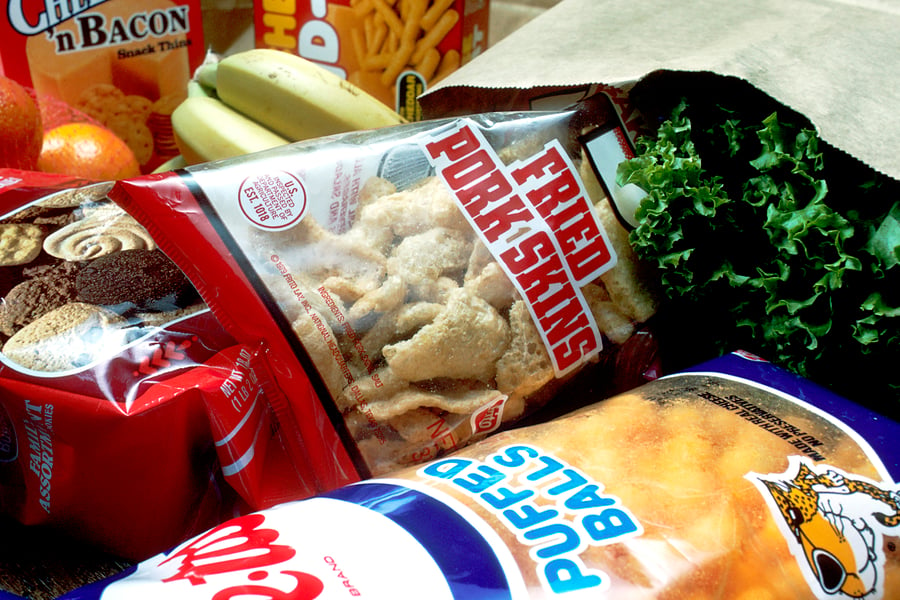

BOCA RATON — For American men, the grocery receipt has become something of a cancer risk assessment. A new analysis of more than 17,000 adults drawn from two decades of nationally representative nutrition data has found that men who consume higher amounts of ultra-processed foods face a 29 to 31 percent greater risk of prostate cancer, a signal researchers at Florida Atlantic University say is too consistent to dismiss.
The study, published in The American Journal of Medicine, analyzed dietary records from 17,024 men who participated in the National Health and Nutrition Examination Survey between 2003 and 2023. Researchers used two 24-hour dietary recalls from each participant to estimate the share of daily calories derived from ultra-processed foods, products classified under the NOVA system as industrially manufactured items containing additives, emulsifiers, and ingredients rarely found in a home kitchen. Those men were then divided into four groups, from the lowest UPF consumers (under 20 percent of daily calories) to the highest (above 44 percent).
Compared with men in the lowest intake group, those in the three higher groups had a 29 percent greater risk of prostate cancer. Narrowing to the two highest intake groups, the risk was 30 percent higher. Even after researchers adjusted for age, race and ethnicity, smoking status, and poverty level, factors that independently shape both diet and cancer incidence, the association held, ranging from 24 to 31 percent.
“Among adult men in this nationally representative US population, those who consumed higher amounts of UPFs had significantly higher risks of the subsequent development of prostate cancer,” wrote Dr. Charles Hennekens, a professor of medicine and preventive medicine at FAU and the study’s senior author, noting in its press release that the findings “add to emerging evidence that UPFs have major adverse health effects.”
What those effects look like inside the prostate is not yet understood. The study identifies a statistical signal; it does not explain the mechanism. Researchers have proposed several pathways: ultra-processed foods tend to be high in refined sugars and saturated fats, both of which drive systemic inflammation, a process that has been implicated in tumor development across multiple cancer types. UPFs also frequently carry additives, emulsifiers, colorants, and preservatives whose interactions with the body’s endocrine system are not comprehensively mapped. Whether any of those elements is specifically driving the prostate signal, or whether some combination is, remains an open research question.
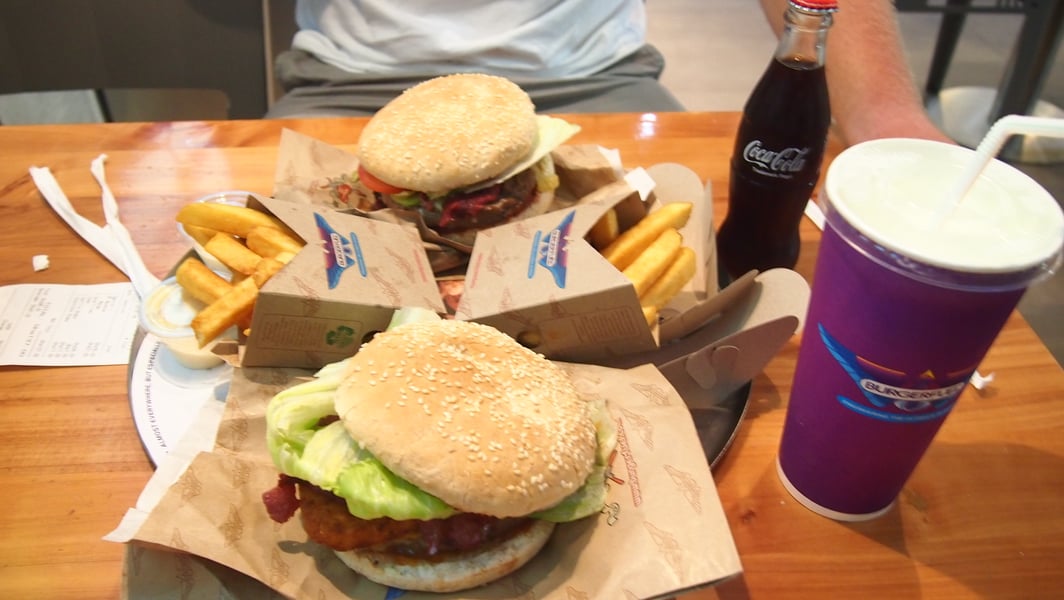
The study carries a qualification the authors name plainly: men in the highest UPF intake group, considered alone, had an estimated 34 percent greater risk of prostate cancer, but that figure was not statistically significant. The researchers attributed the gap to a smaller number of cancer cases within that subgroup, meaning the sample wasn’t large enough to hit conventional significance thresholds. A 34 percent elevation in risk that the data cannot confirm with statistical certainty is not nothing, but it is a genuine limit on what the study can claim at its most extreme end.
There is also the question of what two days of dietary recall can tell you about a lifetime of eating. The NHANES methodology is well validated for population-level estimates, but it is a snapshot, an attempt to infer long-term dietary patterns from 48 hours of reported food intake. Men who ate heavily processed food on those two days may eat very differently the rest of the year, and vice versa. Whether a more precise long-term dietary measure would produce a stronger or weaker association than the one documented here is unknown.
What the study does establish, with reasonable confidence, is that the association between UPF consumption and prostate cancer risk is measurable and consistent across demographic adjustments in a nationally representative sample of more than 17,000 men. That is a different kind of claim than previous, smaller studies could support. Research linking common everyday exposures to unexpected health outcomes, whether a popular melatonin heart failure risk or the specific metabolic benefits of a keto diet liver trial, tends to produce its most reliable results when the data is large enough to survive demographic adjustment. This dataset survives it.
Prostate cancer affects roughly one in eight American men over a lifetime, making it the second most common cancer diagnosis in the male population. Yet the evidence base for dietary risk factors in prostate cancer is notably thinner than in colorectal or breast cancer, where diet has been studied more comprehensively and where some causal pathways are better characterized. The paper, available in its published abstract, draws on two decades of NHANES records and is among the largest to examine UPF intake specifically, rather than dietary quality in general, and to do so in a nationally representative rather than clinical sample.
For the men in the highest UPF consumption quartile, those getting more than 44 percent of their daily calories from processed products, the practical question is what their urologist would say if they shared these numbers. Hennekens offered a direct line for that conversation in its press release: “All healthcare professionals should encourage patients to adopt healthy lifestyle practices and evidence-based therapies, while also helping them reduce their consumption of ultra-processed foods.”
Whether reducing UPF consumption would reduce prostate cancer incidence is the question this study raises and cannot answer. That answer requires a randomized controlled trial, an assignment of some men to reduced-UPF diets and others to their usual eating, followed over years, with cancer incidence as the endpoint. No such trial has been conducted; designing and funding one at the scale needed to produce interpretable results would be an undertaking measured in decades. The association documented in 17,024 men across two decades of NHANES data is the best evidence that currently exists. It is not the last word.