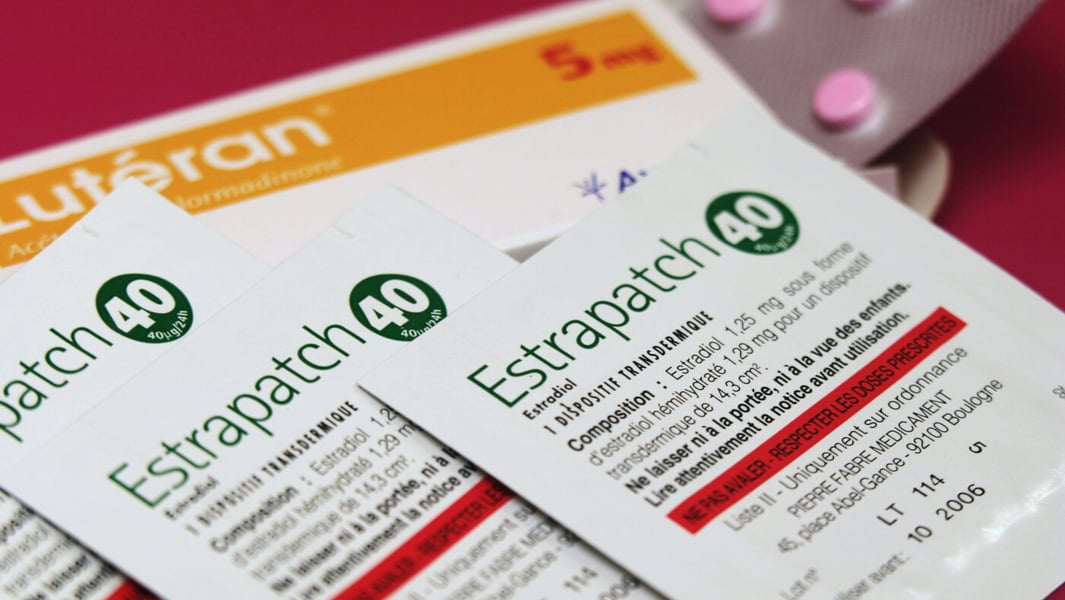

WASHINGTON — American gynecologists have rewritten their advice on menopause symptoms for the first time since 2014, and the treatment their own authors call “in many cases, the best option,” hormone therapy, includes one common form, the estradiol patch, that women have had trouble finding.
The American College of Obstetricians and Gynecologists published Clinical Practice Guideline 13 on Thursday, replacing a 2014 practice bulletin. It lands about a year after the Food and Drug Administration asked manufacturers to strip boxed warnings about breast cancer, cardiovascular disease and probable dementia from menopausal hormone therapy labels. ACOG now tells doctors to start hormone therapy before a patient turns 60, or within 10 years of natural menopause, if she chooses it and has no contraindication, though co-author Robert Kauffman cautioned it “may not be appropriate or helpful for every person.”
Catherine Cansino, a co-author who chairs ACOG’s guidelines committee, told NPR that what is changing is “the breadth of options that we now have.” That breadth includes nonhormonal pills for women who cannot or would rather not take hormones: the neurokinin receptor blockers fezolinetant and elinzanetant, along with antidepressants of the SSRI and SNRI class.

Demand for hormones was already climbing. NPR reported that estrogen patches have been hard for pharmacies to keep in stock in recent months. The FDA’s September notice says patches “remain available” and that it is working with all six manufacturers, and it ties the rise in demand to the agency’s own label change. It uses the phrase “difficulty readily accessing” where Cansino used a plainer word.
Cansino told NPR the shortage of transdermal estrogen “highlights the fact that we have all of this attention about hormone therapy, and not necessarily enough about other treatment options.” The guideline’s nondrug advice, cognitive behavioral therapy, exercise, mindfulness, hypnosis and acupuncture, rests on weaker evidence than hormones, NPR noted.
The guideline also calls for earlier patient education so women recognize symptoms sooner, and it warns that phytoestrogens and herbal supplements are unsupported by evidence and not tested for purity. ACOG puts the share of menopausal women with hot flashes or night sweats at 50 to 92 percent, a range it does not narrow.
The full guideline text was not available to TEH, which relied on ACOG’s release, the guideline’s summary page and NPR’s reporting, and the FDA’s notice gives no date by which patches will be back on shelves. Whether a woman handed a new prescription this winter can actually fill it is a question neither document answers.