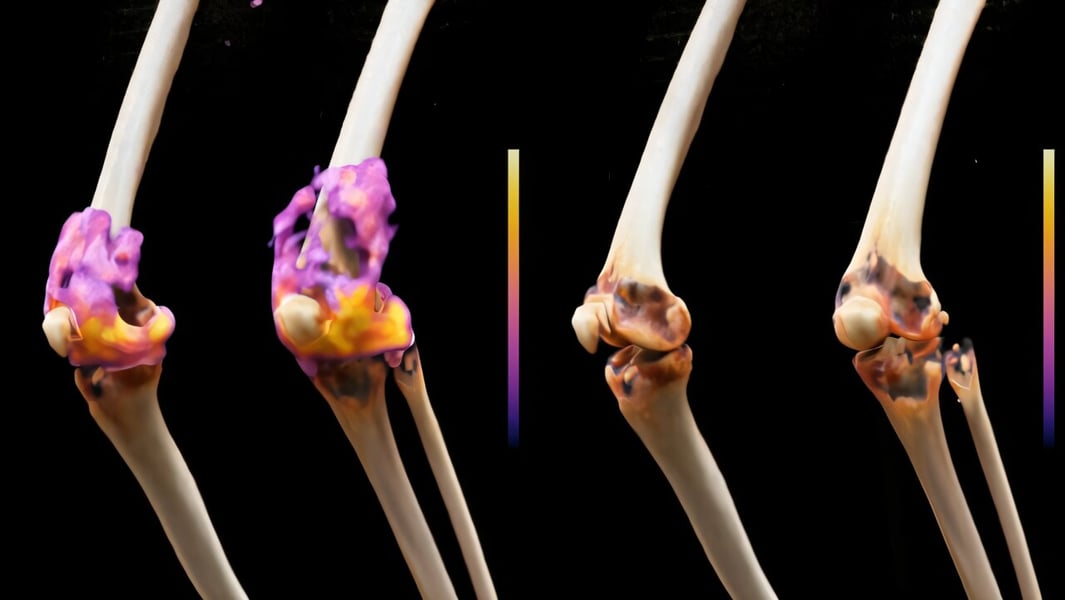

BERLIN — For three decades, rheumatoid arthritis patients who exhaust their biologic therapy options have had few places left to turn. The disease, which erodes joints, inflames tissue, and in its most severe forms persists despite every available drug, has resisted the kind of breakthrough that transformed it from a near-certain disability into a managed condition for many but not all. Roughly 20 to 40 percent of patients fail multiple lines of therapy and remain on medications that never fully control their disease.
A Phase 1 trial at Charité–Universitätsmedizin Berlin has now produced something rheumatologists had not seen before: medication-free remission in patients who had run out of options.
The COMPARE trial enrolled six adults with seropositive, anti-citrullinated protein antibody-positive rheumatoid arthritis, three men and three women ranging from 31 to 69 years old, who had each failed between four and eight prior therapies including conventional disease-modifying drugs, biologics, and JAK inhibitors. Their average disease duration before enrolling was ten years. Researchers administered a single infusion of mivocabtagene autoleucel, an autologous CD19-targeted CAR T-cell therapy developed by Kyverna Therapeutics. The research team reported in the study, published Thursday in Nature Medicine, that disease activity decreased substantially in all six patients. Three of the six achieved sustained medication-free remission for up to one year, with no maintenance therapy required.
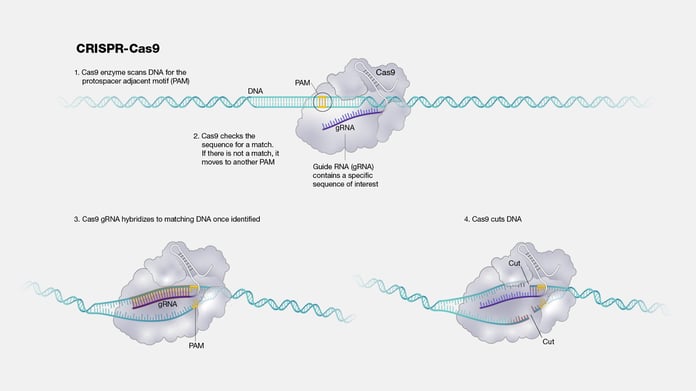
The mechanism traces back to the same biology that made CAR T-cell therapy transformative in blood cancers. In rheumatoid arthritis, auto-reactive B cells, the immune cells that produce antibodies attacking joint tissue, sustain the inflammatory cycle driving the disease. Mivocabtagene autoleucel is engineered from the patient’s own T cells. Those cells are extracted, modified in a laboratory to carry a receptor targeting CD19, a protein on the surface of B cells, and then reinfused. The engineered cells systematically eliminate CD19-positive B cells throughout the body, disrupting the autoimmune cascade at its source. The immune system repopulates afterward with B cells that have not been primed to attack the patient’s own tissue, a process researchers describe as a reset of the pathological immune memory responsible for sustained joint inflammation.
“This is the first peer-reviewed Phase 1 evidence that CAR T-cell therapy can achieve sustained remission in treatment-refractory seropositive RA,” the research team noted. The six patients enrolled had cycled through every standard option their physicians could offer, and several had been on continuous biologic therapy for years.
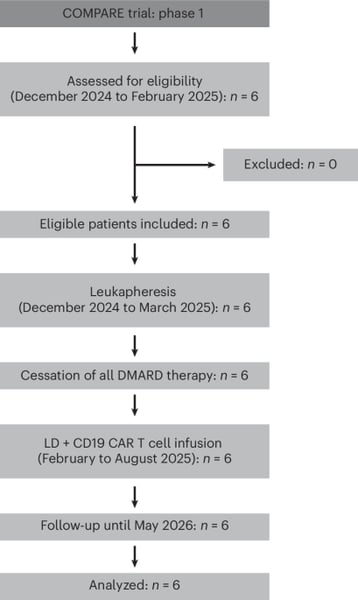
The safety data was tracked closely, given that CAR T-cell therapy carries known toxicity risks in cancer patients, including cytokine release syndrome, a systemic inflammatory response triggered by rapid immune cell activation, and neurotoxicity classified as immune effector cell-associated neurotoxicity syndrome. In the COMPARE trial, three of the six patients developed cytokine release syndrome, all mild to moderate in severity. No patient experienced ICANS. No unexpected toxicities emerged.
The absence of severe toxicity matters because the trial deliberately avoided the intensive chemotherapy-based lymphodepletion typically used in cancer settings, opting instead for a lower-intensity approach designed to reduce risk in patients facing autoimmune disease rather than an immediately life-threatening cancer. Whether that modified conditioning limits the treatment’s efficacy compared with full-intensity cancer protocols remains unknown and will require comparison in future trials.
The trial’s most significant limitation is its size. Six patients is proof of concept, not proof of efficacy. All six were ACPA-positive, a specific RA subgroup defined by particular autoimmune antibodies. Whether mivocabtagene autoleucel would produce similar results in ACPA-negative rheumatoid arthritis, which has a different immunological signature, is untested. The study had no control arm; every patient received the treatment, leaving the question of how much observed benefit reflects the therapy versus the natural fluctuation of disease activity in this population.
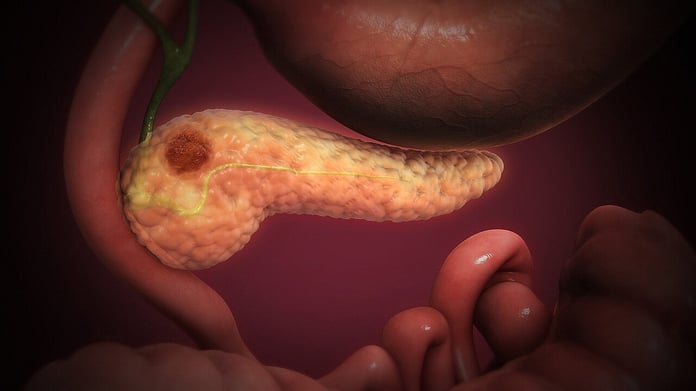
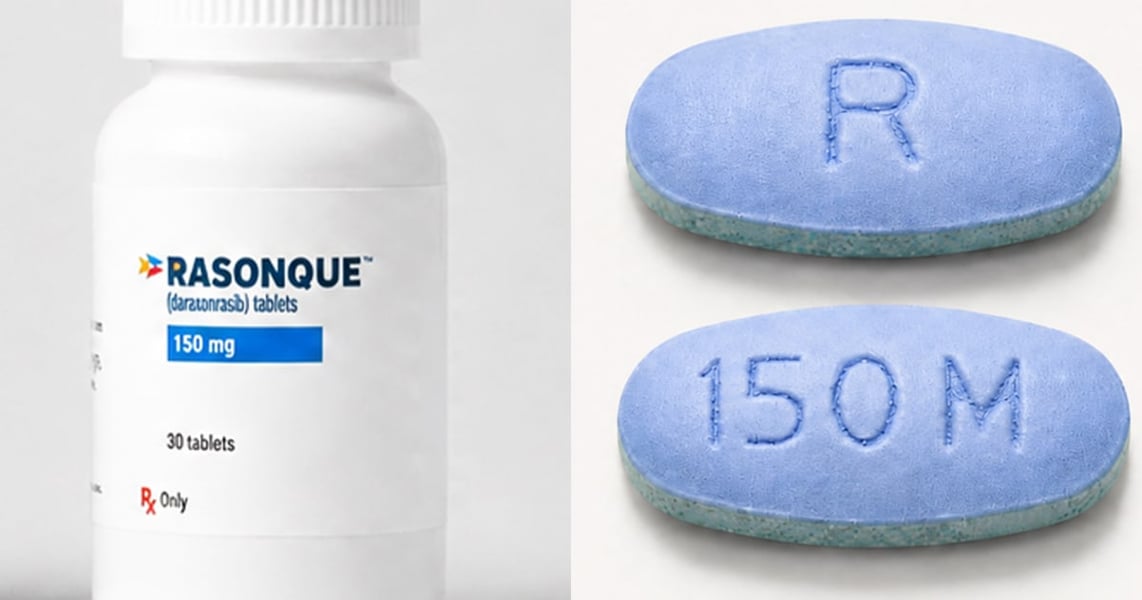
Rheumatoid arthritis is typically treated through sustained immunosuppression rather than immune reconstitution. The broader scientific argument for disrupting that approach has been building: recent research into shingles vaccine effects on inflammation suggested that targeted immune interventions can reach far beyond their intended indications, reinforcing the case for exploring immune-reset strategies in autoimmune disease. This year, the FDA approved a pancreatic cancer treatment built on a similar logic, targeting molecular pathways that oncology had long labeled intractable. The move from cancer to autoimmune disease reflects the same premise: that clearing malfunctioning cells and allowing the system to rebuild may prove more durable than suppressing the damage indefinitely.
For the roughly 1.3 million Americans and 20 million patients worldwide living with rheumatoid arthritis, the distance between a six-patient Phase 1 trial and a treatment option at their rheumatologist’s office remains enormous. Kyverna Therapeutics has not announced a Phase 2 enrollment timeline. Cost projections for CAR T-cell therapy in autoimmune disease track the oncology precedent, where comparable treatments run from $400,000 to over $600,000. The NIH describes the disease as currently incurable and requiring lifelong medication management in its guidance, a characterization the COMPARE findings do not yet challenge at scale.
What the trial established, and what Thursday’s publication in Nature Medicine places on the scientific record, is that three patients who had failed every available treatment went a year without taking a single medication for their disease.
Whether that holds longer, and whether it replicates in hundreds of patients rather than six, is the question Phase 2 must answer. The answer so far is that the question is worth taking seriously.
Related Posts