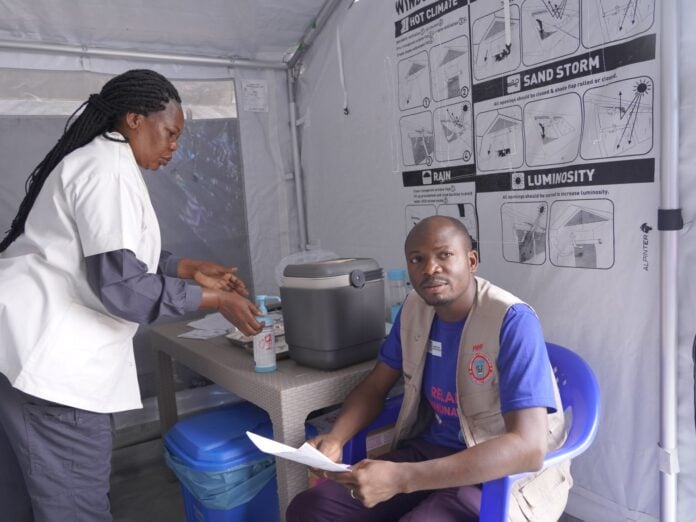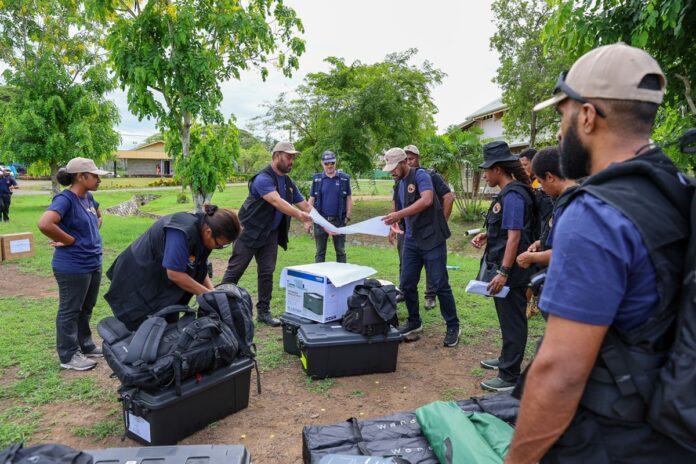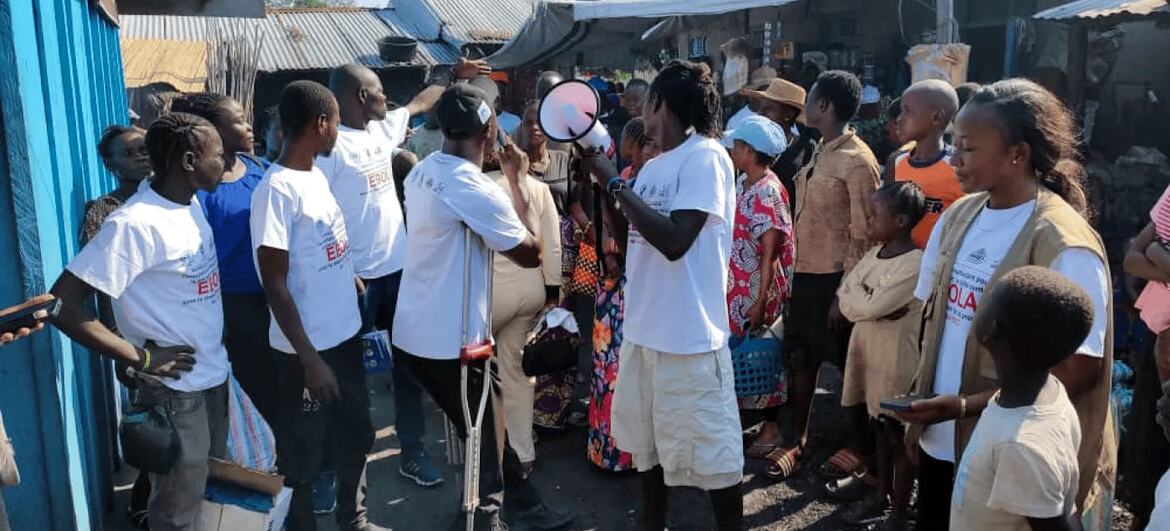

KINSHASA — The nurse arrived at the Bunia treatment center on a morning in July already wearing two pairs of gloves. She knew one of the patients inside, a market vendor from her neighborhood whose husband had died the week before. By the time she finished her shift, she could not recall how many times she had touched the prayer rug left at the foot of his bed, because nobody had told her it was contaminated. She survived. Many of her colleagues did not.
That single gap in the chain of protection, a prayer rug and an uninformed nurse, encapsulates why the world’s most lethal Ebola outbreak since 2014 is now killing faster than the response designed to stop it. On August 27, UN Secretary-General António Guterres told reporters at UN headquarters that the international community has contracted what he called a second pathogen, “the virus of indifference,” and demanded an additional $1.1 billion to contain a crisis that has grown to 5,794 confirmed cases and 2,786 deaths in six provinces across northeastern Democratic Republic of Congo.
The numbers have changed. The international calculus has not. The humanitarian response remains only 48 percent funded.
“We know how to contain Ebola, how to interrupt transmission, and how to save lives,” Guterres said. “But we must also overcome another virus: the virus of indifference.”
The appeal came one day after DRC’s Ministry of Public Health launched an emergency vaccination campaign for frontline workers using the Merck ERVEBO vaccine in Kisangani, the largest city in the affected zone. There is one problem: ERVEBO was developed against the Zaire ebolavirus strain. The current outbreak is caused by the Bundibugyo virus, a related but distinct pathogen for which no licensed vaccine or approved treatment exists. Scientists are working on experimental candidates, but results will not arrive before transmission does.
The WHO declared this outbreak a Public Health Emergency of International Concern on May 16, within days of the first confirmed case in Ituri Province. A second IHR Emergency Committee meeting on August 24 upheld that declaration, which represents the highest alert level the organization can issue. Neither declaration has materially changed the funding picture.
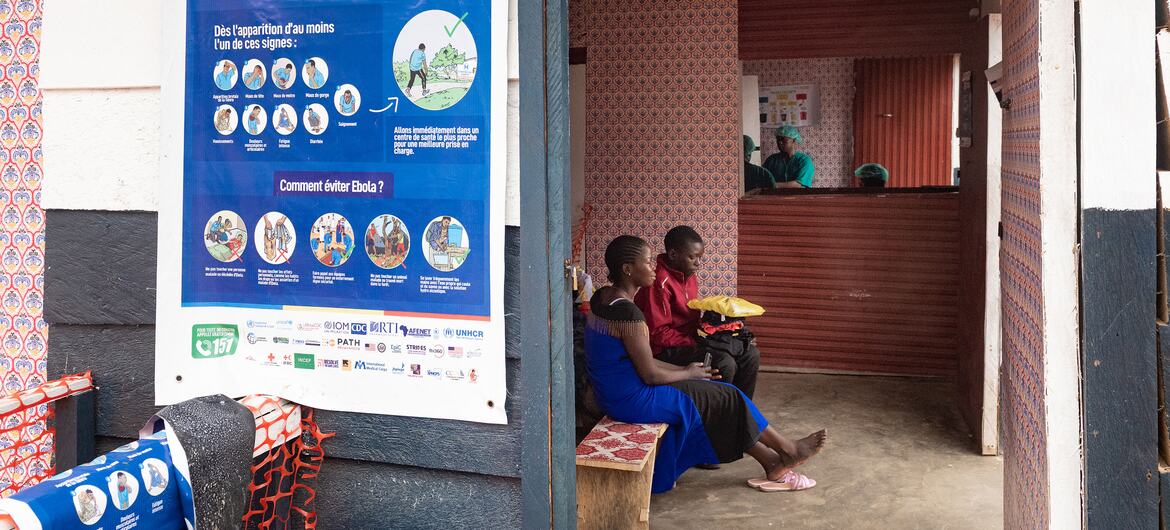
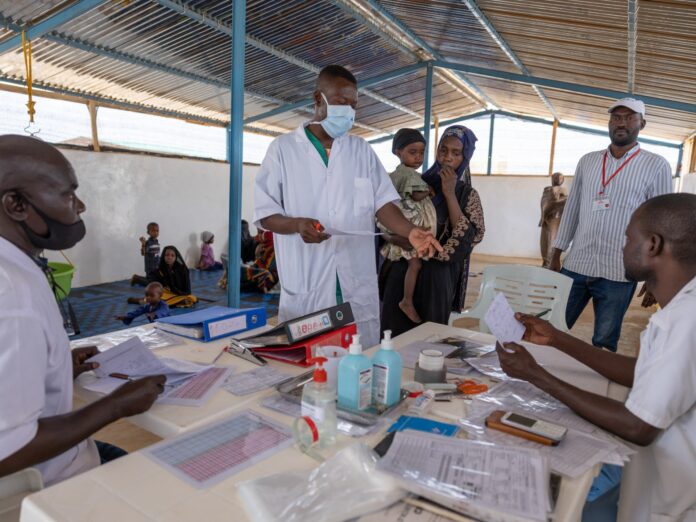
More than 160 health workers have been infected. At least 45 have died, according to WHO’s August 20 situation report. These are people with training, with PPE, with institutional awareness of the disease. And still the virus found them. In the affected provinces of Tshopo, Bas-Uele, and Haut-Uele, armed groups have attacked health facilities, cut off road access for response teams, and driven sick patients away from treatment centers that represent their only chance of survival. Fear, in this context, is not irrational. It is a rational response to the absence of protection: from the disease and from the violence surrounding it.
“If we do not urgently scale up the response, we risk losing the gains already made,” said Dr. Jean Kaseya, Director-General of the Africa CDC, which last week warned that the true case count may be significantly higher than official tallies suggest, given the gaps in surveillance across remote zones.
Guterres was not only asking for money. He was asking for attention. The Bundibugyo outbreak is spreading at a rate unprecedented in DRC’s long and painful history with Ebola, now running at 500 new cases per week across 60 of the country’s 151 health zones. The 2018-2020 outbreak in North Kivu, the previous record-holder for DRC, took 235 days to surpass 1,000 confirmed cases. This one reached 1,000 in 40 days.
The scale gap between what is happening and what the world is watching is, by any measure, significant. Part of the explanation is structural: the Gaza conflict, the Sudan civil war, and the Ukraine front remain the dominant frames through which global humanitarian attention is allocated. Part of it is specific to this disease. Ebola, despite its lethality, does not travel by air in the way SARS or COVID-19 did. One confirmed imported case has been detected in France; Uganda has reported 20 cases among people who crossed the border from DRC. The epidemiological math, for wealthy donor countries, still feels distant.
Guterres is arguing that this arithmetic is wrong, not just morally but strategically. An underfunded outbreak is a longer outbreak. A longer outbreak creates more opportunities for mutation, more exported cases, and a widening geographic footprint that eventually becomes harder for any country to ignore. He framed the $1.1 billion request not as charity but as risk management.
What neither the Secretary-General nor the DRC government has resolved publicly is how the response gets safer for the people delivering it. The 45 dead health workers are not a rounding error. They represent the collapse of a key supply chain, trained personnel willing to enter treatment zones, that no amount of international funding can quickly rebuild. Community health workers in Ituri Province told reporters earlier this summer that they were staying home. Their colleagues had died. The payment schedules were months behind. The PPE supply was inconsistent. No health system can sustain that combination.
The DRC has managed previous Ebola outbreaks, 16 of them since 1976, through a combination of community trust, ring vaccination, and contact tracing. The 2018-2020 response, the most sophisticated yet deployed, eventually contained the North Kivu outbreak through what researchers described as adaptive, persistent, community-engaged contact tracing, a methodology that the current crisis has already surpassed in scale and may outpace in duration.
That playbook exists. The funding to run it does not, at least not at the scale the outbreak now demands. As Xinhua noted in its report, Guterres called this a moment for the international community to decide whether lives in the DRC count as much as lives elsewhere, and offered no prediction of the answer.
In the meantime, a nurse in Bunia is changing her gloves before entering a ward where she knows the patients’ names. She was among the first generation of frontline workers mobilized when the outbreak was confirmed in May. The vaccine she was given may not work against this strain. She is still there. Whether the rest of the world still is: that is the question Guterres put to reporters on Thursday, and left unanswered.