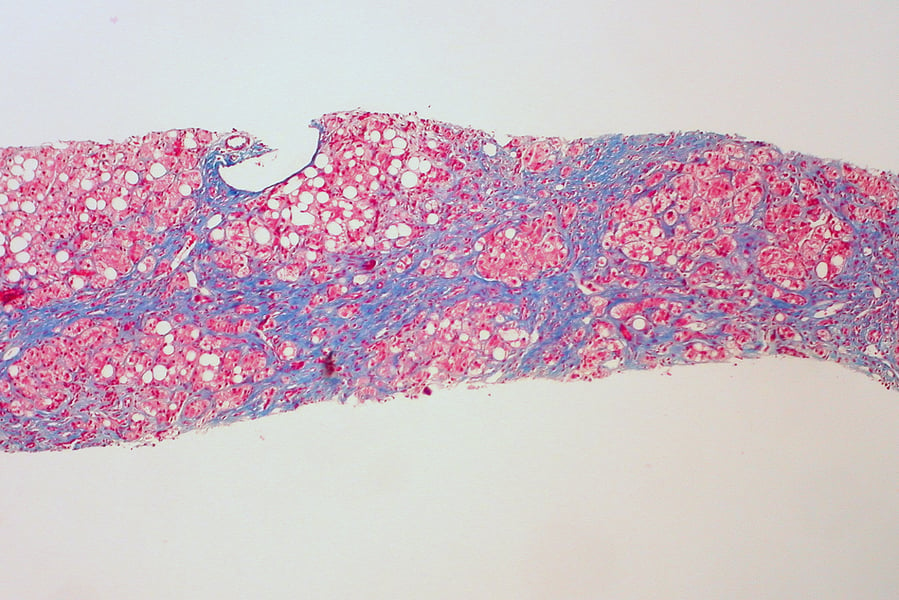

CHICAGO — The patients who arrive in hepatology units having already stopped drinking, sometimes months ago, sometimes longer, represent one of the harder conversations in liver medicine. Their sobriety is real. Their test results are not improving. And the organ famous for being able to regenerate significant portions of itself is refusing to do it. New research published in Nature Communications identifies the molecular mechanism responsible: a single protein, depleted by years of alcohol exposure, has jammed the liver’s genetic editing machinery, leaving cells suspended in a developmental state where neither normal function nor tissue repair is possible.
The study, conducted by researchers at the University of Illinois Urbana-Champaign, Duke University, and the Chan Zuckerberg Biohub Chicago, centres on a protein called ESRP2. Under normal conditions, ESRP2 binds to messenger RNA inside liver cells and splices the genetic instructions into a form that allows mature hepatocyte functions to proceed. In alcohol-associated liver disease, that process breaks down, but not in a simple or straightforward way.
Immune cells and structural support cells, drawn to the liver tissue by years of alcohol-processing damage, release high concentrations of inflammatory signals, particularly the growth factor TGF-β. Those signals suppress ESRP2 production. With the protein absent or diminished, RNA splicing inside liver cells begins producing patterns more characteristic of younger progenitor cells, the immature type that ordinarily divide and rebuild damaged tissue. But the cell cannot commit fully to that progenitor identity either. The result is a functional dead end: cells that are “neither functional adult cells nor proliferative progenitor cells,” incapable of doing either job.
“Since they are not functioning, more pressure builds on the remaining cells,” the researchers noted. “And that’s what is causing liver failure.”
Two downstream proteins regulated by ESRP2, Tcf4 and Slk, are specifically disrupted by the splicing failure. Both participate in the WNT and Hippo signalling pathways, the molecular communication systems the liver uses to coordinate cell growth and tissue repair after injury. Incorrect splicing causes Tcf4 and Slk to mislocate inside the cell, cutting off the regenerative signals those pathways would normally send.
Auinash Kalsotra, a professor of biochemistry at the University of Illinois who led the research, said the team used multiomic profiling, simultaneously mapping gene expression, protein output, and RNA splicing across human liver samples, to identify ESRP2 deficiency as a direct driver of the disease rather than a secondary consequence, as the team detailed in its published study. “I’m hopeful these findings will become a launching pad for future clinical studies,” Kalsotra said. “We can use these misspliced RNAs as diagnostic markers or develop treatments that can curb the inflammation. And if we can correct the splicing defects, then maybe we can improve recovery and restore damaged livers.”
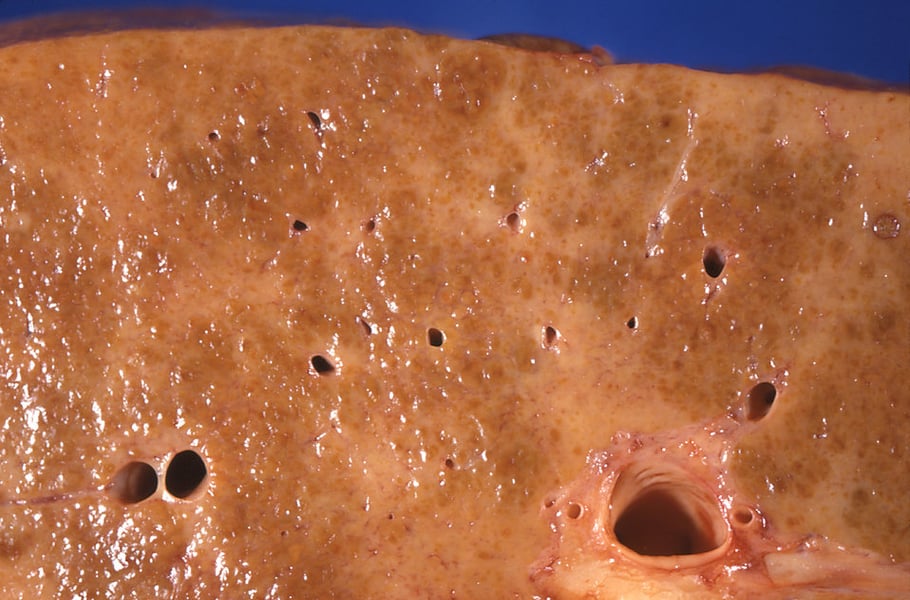
Alcohol-associated liver disease has quietly become the leading cause of liver transplantation in the United States. Age-adjusted mortality rates roughly doubled between 1999 and 2022, reaching 12.53 deaths per 100,000, with acceleration sharpest during the COVID-19 pandemic years, according to data published in its published data by the National Institutes of Health. Among those under 55, mortality rates climbed from 3.9 per 100,000 in 1999 to 9.7 in 2022, with projections pointing toward 14.4 by 2030. Patients who survive without transplantation often carry cascading organ damage. Research into chronic sleep disruption has found associations with elevated heart failure risk, tracking the systemic cost of years of physiological stress on multiple organs simultaneously.
For patients at the severe end of this spectrum, those with alcoholic hepatitis who have stopped drinking but whose livers are still failing, current treatment options are narrow. No approved pharmacotherapy directly targets hepatocyte function loss in this stage of disease. Dietary interventions have reduced liver fat meaningfully in earlier-stage metabolic liver disease, but the Illinois study addresses a more advanced disease state, one where the question is not how much fat the liver is carrying but whether its cells can function and renew at all.
Kalsotra sees two potential clinical applications emerging from the research. The misspliced RNA sequences the team mapped could serve as diagnostic biomarkers, signatures detectable in liver samples or potentially in blood, that identify which patients with alcohol-associated liver disease are at highest risk for regenerative failure before overt clinical deterioration sets in. Separately, restoring ESRP2 activity directly, or reducing the TGF-β-driven inflammation that depletes it, represents a therapeutic strategy no currently approved drug is designed to achieve.
The research team included graduate students Diptatanu Das and Subhashis Natua at Illinois, Rajesh Dutta of the Duke University School of Medicine, and collaborators from Johns Hopkins and Northwestern University. The study was conducted on human liver tissue, giving the mechanistic findings a direct translational basis. Clinical trials designed to test therapeutic strategies targeting the ESRP2 pathway have not yet begun. How those trials would be designed, which patient populations would be enrolled first, and whether restoring a protein so deeply affected by years of inflammatory insult can achieve meaningful clinical reversal remains unanswered. The distance between a molecular mechanism and a treatment patients can receive has historically been measured in years, and this research gives no indication the timeline here will be different.