
BOSTON — There are diseases that expose the gap between what artificial intelligence can demonstrate and what it can do when the stakes are a human life. Parkinson’s is one of them. About ten million people worldwide live with the condition, and there is still no therapy that slows its progression. The company Yann LeCun joined today is staking part of its argument on the idea that an AI architecture he built as an alternative to language models is a plausible tool for changing that.
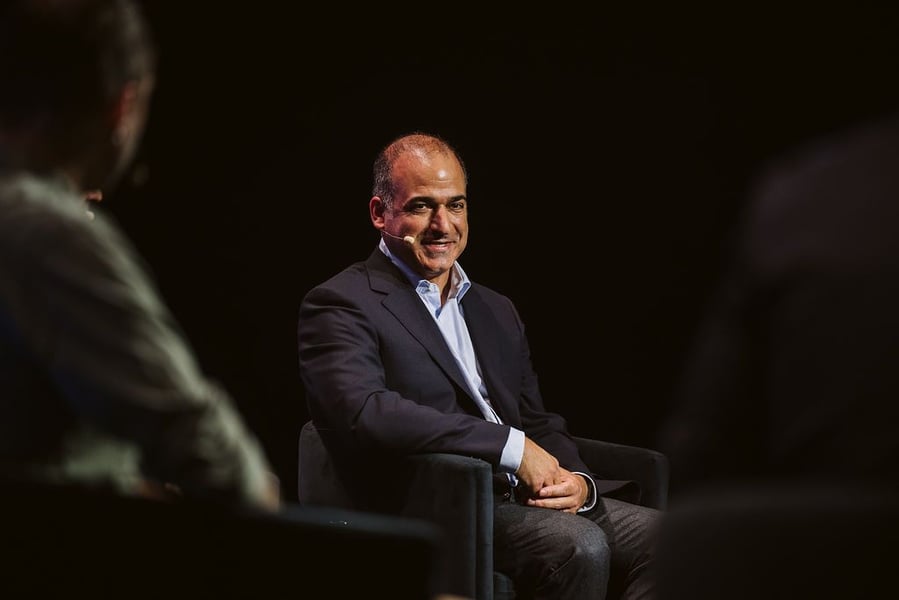
Cellular Intelligence, a Boston-based startup building a universal foundation model of cell signaling, announced Monday that LeCun has joined its Scientific Advisory Board. He is joined by Robert “Bob” Langer, MIT Institute Professor and Moderna co-founder, along with Jens Nielsen, founding director of the Novo Nordisk Foundation’s BioInnovation Institute, and Fabian Theis, director of computational biology at Helmholtz Munich. Langer also takes a seat on the company’s Board of Directors as an observer. Between them, the four carry a Turing Award, the foundational science behind mRNA vaccine delivery, and Germany’s highest research honor.
LeCun departed Meta at the end of 2025 after twelve years building its Fundamental AI Research lab into one of the most productive academic AI groups in the world. He left with a position he had been sharpening for years: that the dominant approach to AI would not produce systems capable of genuine understanding. In March 2026, he raised $1.03 billion for AMI Labs, the company he co-founded to build what he calls world models.
JEPA, the Joint Embedding Predictive Architecture LeCun developed at Meta, is the theoretical core of the effort. Unlike systems that learn by predicting the next token in a text sequence, JEPA learns abstract representations of how a system behaves, modeling latent structure rather than surface patterns. As MIT Technology Review reported in January, LeCun regards this as the more fundamental approach to learning: modeling physical causality rather than statistical co-occurrence.
Large language models are trained on text; DeltaStem, Cellular Intelligence’s foundation model, is trained on cell biology data. But the structural argument LeCun would make about DeltaStem is the same one he makes about JEPA broadly: that the right way to model cells is to learn the latent dynamics of how they respond, not to predict the next item in a sequence. Whether that distinction matters at the level of actual drug development is the question the company has not yet answered publicly.
The most concrete claim in Cellular Intelligence’s history is the deal it struck with Novo Nordisk in May 2026. The company acquired global rights to STEM-PD, a Parkinson’s cell therapy designed to replace the dopamine-producing neurons the disease destroys. A Phase 1/2 study in eight patients had already been completed before the acquisition: seven remained stable over twelve months, and six meaningfully reduced their dopaminergic medication. The program carries FDA Fast Track designation. Novo Nordisk retained an equity stake and future milestone rights. Cellular Intelligence’s stated intent is to use DeltaStem to compress the manufacturing and development timelines that have made cell therapies expensive to scale.
That connection sits oddly alongside the philosophical break. Meta has since deepened its LLM investments through Llama models, Muse Spark, and billions in annual compute spending. That is precisely what LeCun has spent his post-departure time arguing against. The capital his current employer has received from Zuckerberg-backed sources does not contradict that argument, but it does complicate the clean narrative of rupture.
The question advisory board appointments never answer is whether the science holds. Colossal Biosciences, another AI-native life sciences company built around prominent scientific advisors, has attracted significant capital while its core technical claims remain without peer-reviewed clinical validation. Cellular Intelligence has not published comparative benchmarks establishing whether DeltaStem outperforms existing computational biology tools at any specific task. The STEM-PD clinical results predate the acquisition and do not test the architecture the company now promotes.
TechCrunch reported yesterday that world model companies broadly maintain unusual opacity around their technical approaches, a pattern that mirrors the secrecy AI labs adopted around 2022. The opacity makes Cellular Intelligence’s announcement easier to evaluate on its face than on its substance.
TypeSafe AI, which builds non-transformer decision architecture, has faced the same scrutiny: architectural alternatives to transformers carry compelling theoretical properties that have proven slow to demonstrate at production scale.
The appointment does not constitute a clinical endorsement and does not produce a peer-reviewed result. What it names is a bet: that the architecture LeCun has staked his post-Meta career on is suited to predicting how living cells respond to intervention. Whether that bet becomes visible in the clinic first, or in the more forgiving environments AMI Labs targets initially, is an open question. The STEM-PD program is the first place where an answer will be testable.