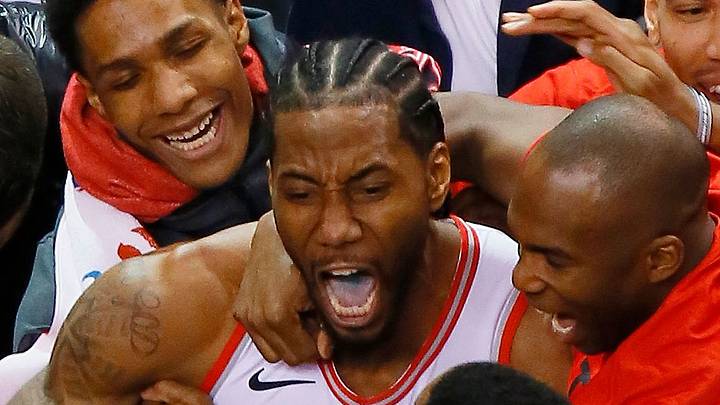

The last time Kawhi Leonard wore a Raptors jersey that mattered, the ball bounced four times on the rim in Philadelphia and fell in, and an entire country still keeps the video queued up. Seven years and one championship parade later, he is putting the jersey back on.
The Los Angeles Clippers are trading Leonard to the Toronto Raptors, according to a report from NBA.com, in exchange for Brandon Ingram, Gradey Dick, unprotected first-round picks in 2031 and 2033, second-round picks in 2030 and 2033, and a first-round swap in 2027. Leonard, who turned 35 on Monday, is expected to sign a two-year extension with Toronto through the 2028-29 season once the deal is finalized.
The Clippers made the move because the alternative was worse. Leonard’s current deal runs through next season, and the team was reportedly unwilling to hand a 35-year-old with his medical history another lucrative extension, according to a report from CBS Sports, choosing instead to trade him while his value was near its peak rather than risk losing him for nothing in 2027 free agency.
That medical history is not a footnote. Leonard has played 9, 60, 57, 52, 52, 68, 37 and 65 games across his last eight NBA seasons, a stretch defined as much by what “load management” came to mean around his name as by the two championships and two Finals MVPs he won along the way. Last season was the healthiest of the bunch, 65 games and a career-best 27.9 points a night, which is precisely why the Clippers decided to sell now rather than wait and see if 2026-27 looked more like the 9-game years than the 65-game one.
Brandon Ingram is headed back to the market where his career started, having spent one season in Toronto after years with the Lakers and Pelicans, and Gradey Dick, the 13th pick in the 2023 draft, joins him in the return package the Raptors sent west. For Toronto, the return is about pairing Leonard’s two-way ceiling with Scottie Barnes, the 24-year-old former Rookie of the Year the franchise has built its post-Ujiri era around, betting that a healthy Leonard turns a promising young core into something closer to a genuine Eastern Conference contender rather than just a good regular-season team.
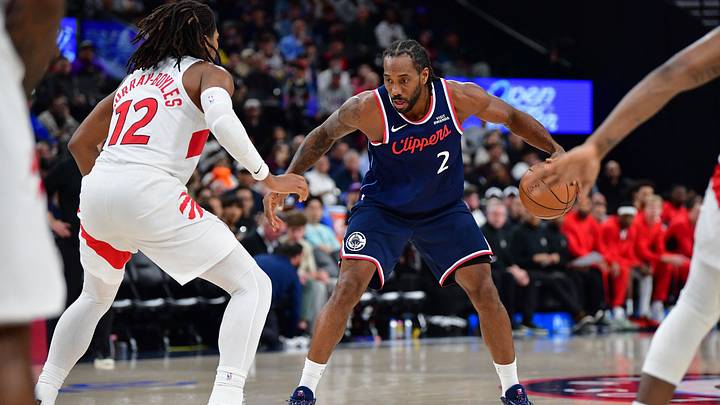
Analysts cannot agree on who won the trade, which is itself the more interesting story. Yahoo Sports graded Toronto’s return an A+ and the Clippers a B-, arguing the Raptors landed a top-five talent to pair with Scottie Barnes at a price that only stings if the picks turn out to matter. CBS Sports reached close to the opposite conclusion, grading the Clippers an A+ for a “masterful pivot” and the Raptors a C+ for gambling two unprotected first-round picks on a 35-year-old whose next knee injury is always one hard cut away, in a league where the rules governing those very picks could look completely different by the time either one is drafted.
Leonard’s own preference, by multiple accounts, was reportedly to stay in Los Angeles if the Clippers had been willing to make a longer commitment. They were not, and so the storybook version of this, redemption tour, hometown hero returns, is a version the front office wrote for him rather than one he necessarily chose. Toronto is the team that still remembers him fondly. Whether Leonard remembers Toronto the same way, with one championship in the rearview mirror and a body that has quietly betrayed him more often than it has cooperated, is a different question than whether the trade makes basketball sense.
It also arrives without the front-office architect who built the 2019 champion still around to enjoy the symmetry. Masai Ujiri, the executive who assembled that Raptors title team and then watched Leonard leave for Los Angeles in free agency months later, exited the organization last summer, meaning the reunion is being staged by a management group that inherited the relationship rather than negotiated its ending.
This is not the first time Leonard’s free agency has been picked apart for hidden meaning. His decision to snub the Lakers and sign with the Clippers in 2019, months after winning the title in Toronto, spawned years of theories about why, and the full story of that choice still shapes how people read everything he does with his career since. The Raptors trade will get the same treatment, whether Leonard wants it or not.
None of that answers the only question that will actually decide whether this trade was smart: whether a 35-year-old who has averaged fewer than 55 games a season since 2018 can hold up long enough, deep enough into a playoff run, to make two mortgaged draft classes worth it. Toronto will not know until the games start counting.